





By Matt Ruggieri, Co-Founder and Head of Product Development
If you have sensitive skin, you have probably had the experience of finding a cleanser that seems fine for a few days, then watching your skin slowly become redder, tighter, or more reactive over time. Or worse, you try something new and your skin tells you immediately that it was the wrong choice.
Sensitive skin is not a flaw in your skin. It is a characteristic that requires different ingredient standards than a skin type that tolerates more. The good news is that once you understand what to look for on a label and what to avoid, choosing a cleanser becomes significantly less trial-and-error. This guide breaks down the science and the practical shortcuts.
What "Sensitive Skin" Actually Means
Sensitive skin is not a single skin type. It is a tendency toward heightened reactivity, and it can occur in combination with any other skin type: dry, oily, combination, or normal. People with sensitive skin have a skin barrier that is more permeable than average, which means irritants penetrate more easily, moisture escapes more readily, and the immune response at the skin surface fires more readily in response to external triggers.
The practical result is a skin surface that is quicker to show redness, more prone to stinging or burning when exposed to active ingredients, and slower to recover after a disruption. The cleanser sits at the front line of this: it is the first product that contacts your skin every single day, often twice a day, and it has the most direct access to the barrier of anything in your routine.
A cleanser that disrupts even a healthy barrier will do considerably more damage to a sensitive one. Which is why the standards for a sensitive-skin cleanser need to be higher than for the general population.
What Makes a Cleanser Bad for Sensitive Skin
Harsh Sulfates
Sodium Lauryl Sulfate (SLS) is the most studied skin irritant in cosmetic formulation. It is effective at removing oil and creating lather, but it disrupts the lipid organization of the stratum corneum, increases skin permeability, and causes measurable transepidermal water loss at typical use concentrations. For sensitive skin, this is not a minor inconvenience. A barrier that was already more permeable than average becomes more permeable still, and the cumulative effect of daily use compounds over time.
Sodium Laureth Sulfate (SLES) is less irritating than SLS but is still a significant concern for reactive skin at repeated use concentrations. If either of these appears early on a cleanser's ingredient list, it is worth finding an alternative before committing to daily use.
Synthetic Fragrance
Synthetic fragrance is the most common cause of contact dermatitis in cosmetic products, and it is almost always listed simply as "fragrance" or "parfum" on the ingredient label. That single word can represent a blend of dozens of undisclosed synthetic compounds. For sensitive or reactive skin, this opacity is a real problem: if your skin reacts, you cannot identify which component caused it, and you cannot avoid it in future products because you do not know what it is.
Free of synthetic fragrance is the standard worth holding a sensitive-skin cleanser to. That does not necessarily mean completely scent-free: some cleansers use natural essential oils for scent. Essential oils are more identifiable on a label and more predictable in their skin behavior, though they can still cause reactions in people with very reactive or fragrance-sensitive skin. If you fall into that category, a completely unscented formula is the safest choice.
High-Concentration Alcohol
Ethanol (alcohol denat.) in meaningful concentrations is drying and barrier-disrupting. It appears in some cleansing formulas as a solubilizing agent or to create a lighter texture. For sensitive skin, it is worth checking the ingredient list and avoiding formulas where alcohol appears in the first half, which would indicate a concentration high enough to affect the barrier.
High pH
Healthy skin has a naturally acidic pH of around 4.5 to 5.5. Traditional soap bars are highly alkaline, with a pH of 9 to 10, which disrupts the acid mantle and leaves skin prone to irritation and bacterial imbalance. Many mass-market liquid cleansers are also formulated at a higher pH than skin's natural range. A cleanser formulated at skin-compatible pH (ideally between 4.5 and 6.5) works with the skin rather than against it.
Harsh Exfoliating Ingredients
Cleansers with physical scrub particles, high concentrations of AHAs, or enzymatic exfoliants are not appropriate for daily use on sensitive skin. Exfoliation on an already reactive surface accelerates disruption. If you want to include exfoliation in a sensitive-skin routine, it belongs in a separate, occasional step with carefully controlled concentration and contact time, not in your daily cleanser.
What to Look For on the Label
Mild, Sulfate-Free Surfactants
The surfactant system tells you almost everything about how a cleanser will behave. The following are reliable indicators of a gentle formula:
- Cocamidopropyl Hydroxysultaine: a coconut-derived amphoteric surfactant that is exceptionally mild and conditioning, with a very low irritation profile
- Decyl Glucoside and Lauryl Glucoside: sugar-based surfactants derived from plant starch and coconut, gentle on the barrier and biodegradable
- Sodium Methyl Cocoyl Taurate: an amino acid-derived surfactant that cleans effectively at very low concentrations without disrupting the lipid barrier
- Disodium Laureth Sulfosuccinate: a mild secondary surfactant (distinct from SLS and SLES, despite the similar-looking name) with good conditioning properties
- Coco Glucoside: another sugar-based mild surfactant, common in gentle and sensitive-skin formulas
When you see a combination of two or more of these on an ingredient list, with SLS and SLES absent, you are looking at a surfactant system designed for tolerance rather than maximum foam output.
Humectants That Replenish While Cleansing
Sensitive skin benefits from a cleanser that actively replaces moisture during the cleansing process rather than stripping and leaving skin to recover on its own. Look for Glycerin, Panthenol (Vitamin B5), and Hydrolyzed Hyaluronic Acid. Of these, Hydrolyzed Hyaluronic Acid is worth calling out specifically: its smaller molecular weight allows it to work below the skin surface even in the contact time of a rinse-off product, which makes it more useful in a cleanser than standard sodium hyaluronate, which largely rinses away.
A Barrier-Calming Active
For skin that shows visible redness or reactivity, an ingredient with demonstrated soothing properties is worth looking for beyond the surfactant system. Aloe Barbadensis Leaf Juice (aloe vera), plant-based polysaccharides, and proprietary blends of calming botanical extracts can help skin look calmer and more even during and after the cleanse. These are not cosmetic additions: for reactive skin, reducing visible redness and calming the surface is a functional benefit.
A Short, Readable Ingredient List
This is a heuristic, not a rule, but it holds up: cleansers with shorter ingredient lists tend to have fewer potential sensitizers. Each additional ingredient is an additional opportunity for a reaction in reactive skin. Minimalism in formulation is a practical advantage for sensitive skin, provided the essential actives are present.
Why Cream Cleansers Tend to Work Best for Sensitive Skin
The format of a cleanser matters as much as its ingredient list. Gel cleansers typically require higher surfactant concentrations to achieve their texture and feel. Foaming cleansers, especially those that produce aggressive lather, rely on surfactant levels that are often too high for sensitive skin. Micellar waters are gentle but frequently leave residue that can accumulate over time with daily use.
Cream cleansers, and cream-to-lather formulas that start as a rich cream and build a gentle foam with water, tend to use lower total surfactant concentrations, include more emollient and humectant ingredients, and produce a cleansing experience that is inherently less stripping. The texture indicates what the formula prioritizes: richness and gentleness over maximum lather and oil removal.
For people with sensitive skin who have avoided foaming cleansers entirely because of past reactions, a properly formulated cream-to-lather is worth trying. The lather from a mild multi-surfactant system using sugar-based and amino acid-derived surfactants behaves very differently from the lather produced by SLS.

Cleanser Recommendations for Sensitive Skin
For Sensitive and Combination Skin: Radical Repair® Nourishing Cream Cleanser
The Radical Repair® Nourishing Cream Cleanser was built around the specific challenge of cleansing effectively without compromising the skin barrier. It is dermatologist tested and clinically tested as non-irritating.
The surfactant system is entirely sulfate-free: Cocamidopropyl Hydroxysultaine, Lauryl Glucoside, Decyl Glucoside, Sodium Methyl Cocoyl Taurate, Disodium Laureth Sulfosuccinate, and Sodium Lauryl Sulfoacetate (a mild lather booster that is distinct from Sodium Lauryl Sulfate). Together these produce a genuine cream-to-lather that removes waterproof makeup, SPF, and daily buildup without the barrier disruption that follows a sulfate-based formula.
Three humectant actives remain on skin after rinsing: Pentavitin® (Saccharide Isomerate), which bonds directly to skin proteins and is not rinsed away with water; Hydrolyzed Hyaluronic Acid, which supports moisture retention below the skin surface; and Panthenol (Vitamin B5), which draws moisture to the skin and helps the barrier feel soft and comfortable post-cleanse.
HydraCactus Complex®, Onekind's proprietary blend of prickly pear cactus extract and desert date oil, helps calm the look of redness and supports a balanced, resilient-looking skin barrier with every use. This is particularly relevant for sensitive skin that tends to look flushed or reactive after cleansing.
A note on scent: the Radical Repair® Nourishing Cream Cleanser is free of synthetic fragrance, but it does have a noticeable scent and a cooling sensation from spearmint, peppermint, and lavandin essential oils. For most sensitive skin types this is well tolerated, and the formula is clinically tested as non-irritating. For skin that is specifically reactive to mint or highly fragrance-sensitive, patch testing is recommended, or consider the Clean Slate Barrier Boosting Cleanser as an alternative.
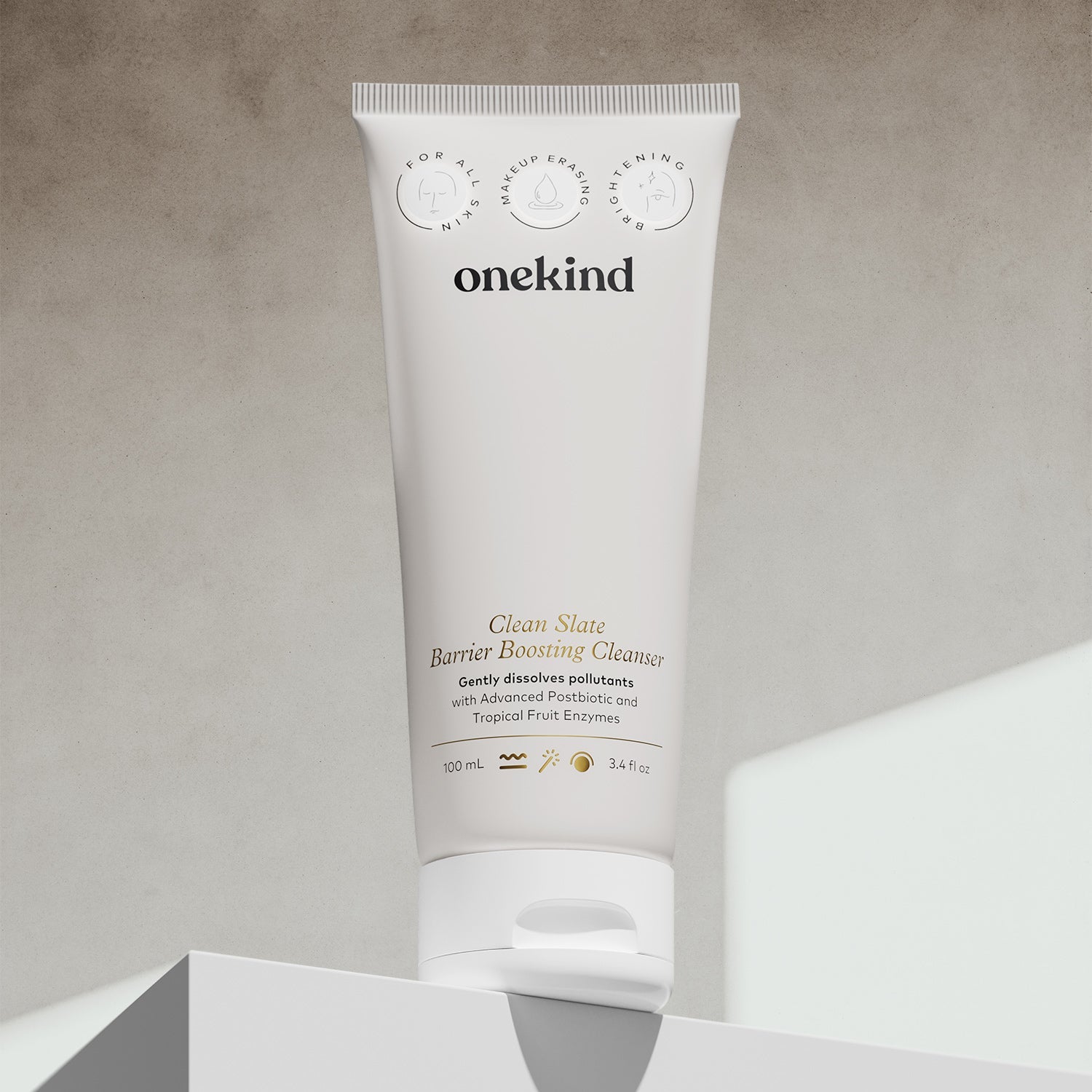
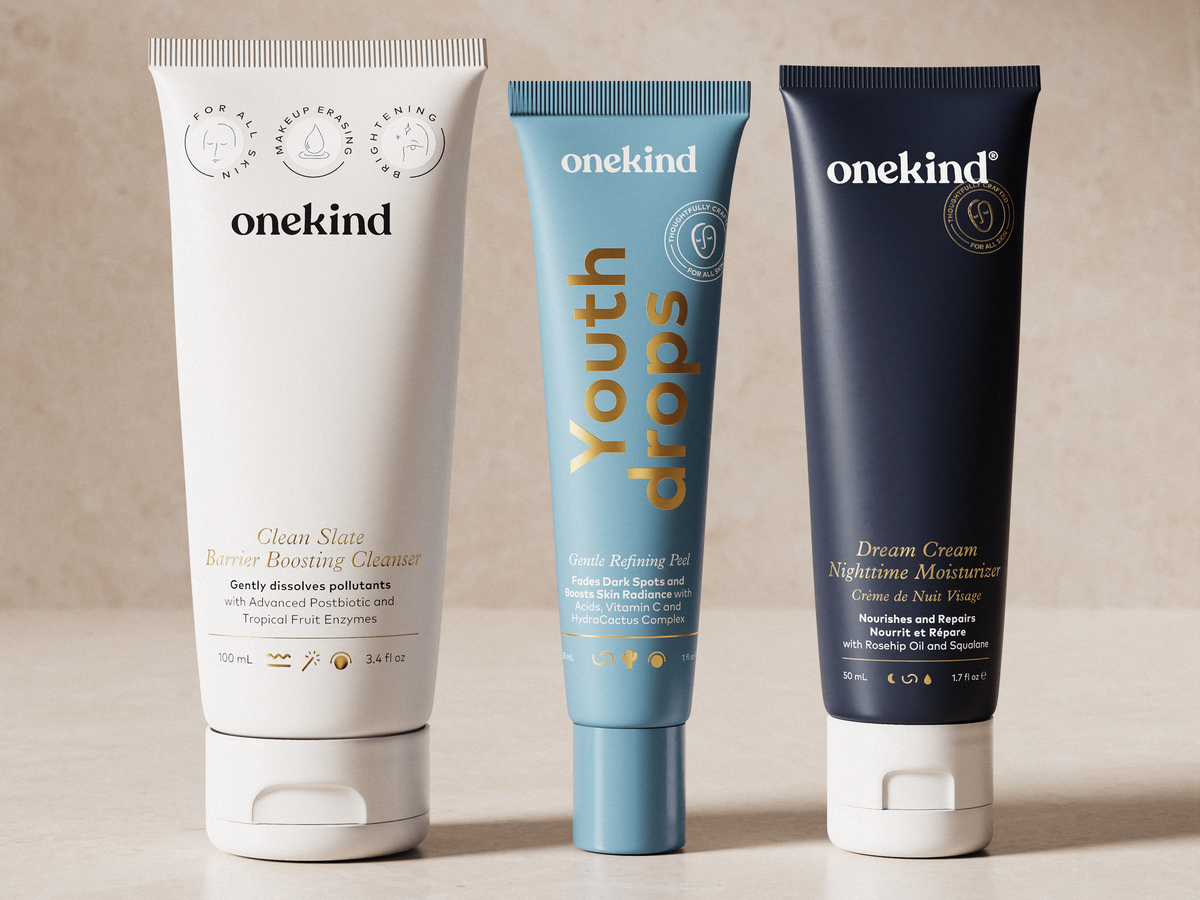
For Very Dry, Reactive, or Fragrance-Sensitive Skin: Clean Slate Barrier Boosting Cleanser
The Clean Slate Barrier Boosting Cleanser is a non-foaming emollient cream that uses a single mild sugar surfactant (Coco Glucoside) and a blend of five nourishing botanical oils to dissolve makeup and buildup without any lather. For skin that has had reactions to foaming cleansers, the complete absence of foam can itself be reassuring.
It contains glycolipids, a postbiotic ingredient that supports the skin's natural microbiome balance, which plays a meaningful role in barrier integrity and reactivity. It leaves a light emollient finish on skin rather than rinsing completely clean, which suits very dry or compromised skin types particularly well. Free of synthetic fragrance. The scent is a soft floral from damask rose, chamomile, and lavender essential oils.
For people with sensitive skin who also wear daily SPF and makeup, the Clean Slate Barrier Boosting Cleanser works well as a first cleanse at night, followed by the Radical Repair® Nourishing Cream Cleanser as a gentle second cleanse. This double cleanse approach allows each formula to do the job it is best suited for while keeping the total cleansing load on the barrier as low as possible.

How to Test a New Cleanser If You Have Sensitive Skin
Introduce any new cleanser with a patch test first. Apply a small amount to the inside of your wrist or behind the ear, leave it for 24 hours, and check for any reaction before using it on your face. When you do begin using it on your face, start with once-daily use in the evening and observe your skin's response over five to seven days before moving to twice-daily use. This approach lets you identify any reaction before it becomes cumulative and harder to diagnose.
Pay attention to how your skin feels three minutes after rinsing, before you apply anything else. That three-minute window is the cleanser's report card: comfortable means the barrier is intact, tight or stinging means the formula is stripping.
Frequently Asked Questions
What is the best face cleanser for sensitive skin?
The best cleanser for sensitive skin is sulfate-free, free of synthetic fragrance, and formulated with humectants that replace moisture during the cleanse. Cream and cream-to-lather formulas tend to outperform gel and foam cleansers for sensitive skin because they use lower surfactant concentrations and include more barrier-supportive ingredients. Dermatologist-tested and clinically tested claims are worth looking for, as they indicate the formula has been evaluated for irritation potential under controlled conditions.
What ingredients should sensitive skin avoid in a cleanser?
The primary ingredients to avoid are Sodium Lauryl Sulfate (SLS), Sodium Laureth Sulfate (SLES), synthetic fragrance (listed as "fragrance" or "parfum"), high-concentration alcohol (ethanol/alcohol denat. appearing early in the ingredient list), and physical or chemical exfoliants in a daily cleanser. Secondary considerations include essential oils for people with known fragrance sensitivities, and any ingredient you have previously identified as a personal trigger.
Is a cream cleanser better for sensitive skin than a gel or foam cleanser?
Generally, yes. Cream cleansers and cream-to-lather formulas use lower total surfactant concentrations and include more emollient and humectant ingredients than most gel or foam cleansers. This makes them inherently less stripping. However, format alone does not guarantee gentleness: a cream cleanser that contains SLS or synthetic fragrance is not appropriate for sensitive skin regardless of its texture. Read the ingredient list, not just the format description.
Can sensitive skin use a foaming cleanser?
Yes, provided the foam is produced by a mild, sulfate-free surfactant system. The tight, irritated reaction many sensitive skin types experience after foaming cleansers is caused by the surfactant chemistry (typically SLS or SLES), not the foam itself. A cream-to-lather formula that uses sugar-based and amino acid-derived surfactants produces a genuine lather with a very different impact on the barrier. If you have avoided foaming cleansers due to past reactions, the surfactant system is the variable worth investigating before ruling out the format entirely.
What does "dermatologist tested" mean on a cleanser label?
Dermatologist tested indicates that the product was evaluated by a dermatologist, typically in a controlled setting. It does not automatically mean dermatologist recommended or approved, but it does indicate that the formula underwent evaluation beyond standard cosmetic testing. "Clinically tested as non-irritating" is a more specific claim that the product was assessed for irritation potential in a formal clinical protocol. Both claims together are meaningful indicators that the formula was developed with skin tolerance as a priority.
Is fragrance bad for sensitive skin?
Synthetic fragrance, listed as "fragrance" or "parfum," is the most common cause of contact dermatitis in skincare and should generally be avoided by sensitive or reactive skin. Natural fragrance from essential oils is more identifiable on a label and more predictable, but can still cause reactions in people with known fragrance sensitivities or very reactive skin. The safest approach for highly reactive skin is a completely unscented formula. For most sensitive skin types, a formula that is free of synthetic fragrance and uses identifiable natural scent sources is well tolerated with patch testing.
How do I know if my cleanser is irritating my skin?
The clearest indicator is how your skin feels three minutes after rinsing, before you apply anything else. If it feels tight, dry, or uncomfortable, the cleanser is stripping the barrier. Visible redness, stinging during or after rinsing, increased breakouts concentrated around the areas you cleanse, or gradual worsening of skin texture over weeks of use are all signs the formula is not well-suited to your skin. Switching the cleanser first and allowing two weeks of observation will tell you whether the cleanser was the variable.
Should I cleanse sensitive skin twice a day?
Yes, with the right cleanser. Twice-daily cleansing with a gentle, sulfate-free formula is appropriate for sensitive skin and is actually preferable to skipping the morning cleanse, which would allow overnight product residue and sebum to sit on the skin through your morning routine. The key is using a cleanser that is genuinely mild enough for twice-daily use without cumulative disruption. If your skin is more reactive in the morning, using a milder or briefer cleanse in the AM and saving the fuller cleanse for the evening is a reasonable adjustment.
What is the difference between sensitive skin and reactive skin?
Sensitive skin typically refers to a baseline skin type that is more easily irritated than average, prone to redness, and reactive to a range of environmental and product triggers. Reactive skin often describes a skin state rather than a type: skin that has become more reactive due to a compromised barrier, whether from over-exfoliation, harsh products, environmental stress, or a skin condition like rosacea or eczema. The distinction matters because reactive skin can often be improved significantly by repairing the barrier, while sensitive skin is a longer-term characteristic that requires ongoing gentle management. For both, cleanser choice is a foundational factor.
Is the Radical Repair® Nourishing Cream Cleanser good for rosacea-prone skin?
The Radical Repair® Nourishing Cream Cleanser is dermatologist tested, clinically tested as non-irritating, sulfate-free, and free of synthetic fragrance, which makes it appropriate for many people with rosacea-prone skin. HydraCactus Complex® helps calm the look of visible redness, and the barrier-supportive humectant actives help skin feel more balanced after cleansing. However, rosacea triggers vary significantly from person to person, and the essential oils (spearmint, peppermint, lavandin) in the formula can be a concern for some rosacea-prone skin types. If you have rosacea and are sensitive to heat or tingling sensations, a patch test is strongly recommended, or consider the Clean Slate Barrier Boosting Cleanser, which has a cooler, gentler sensory profile.
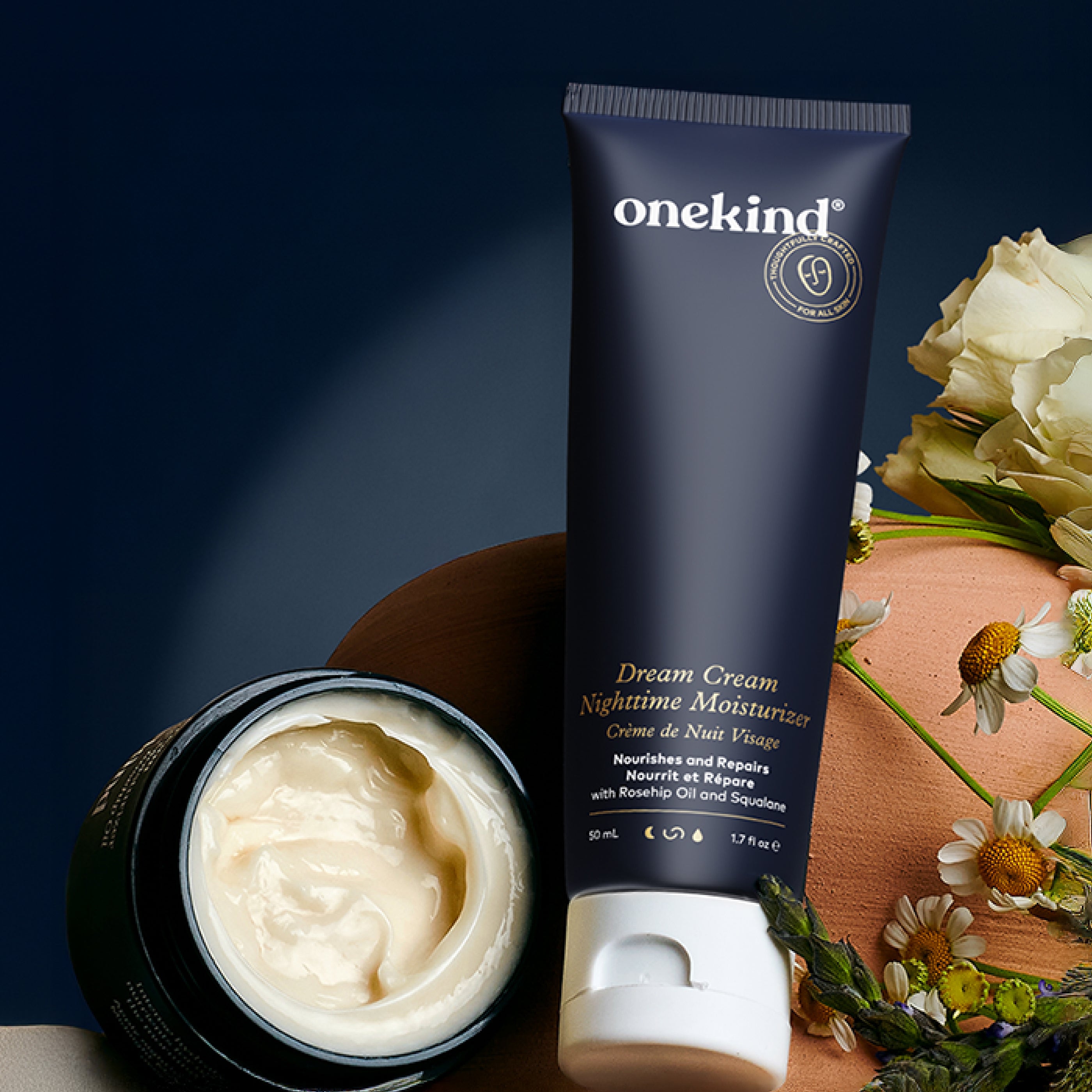
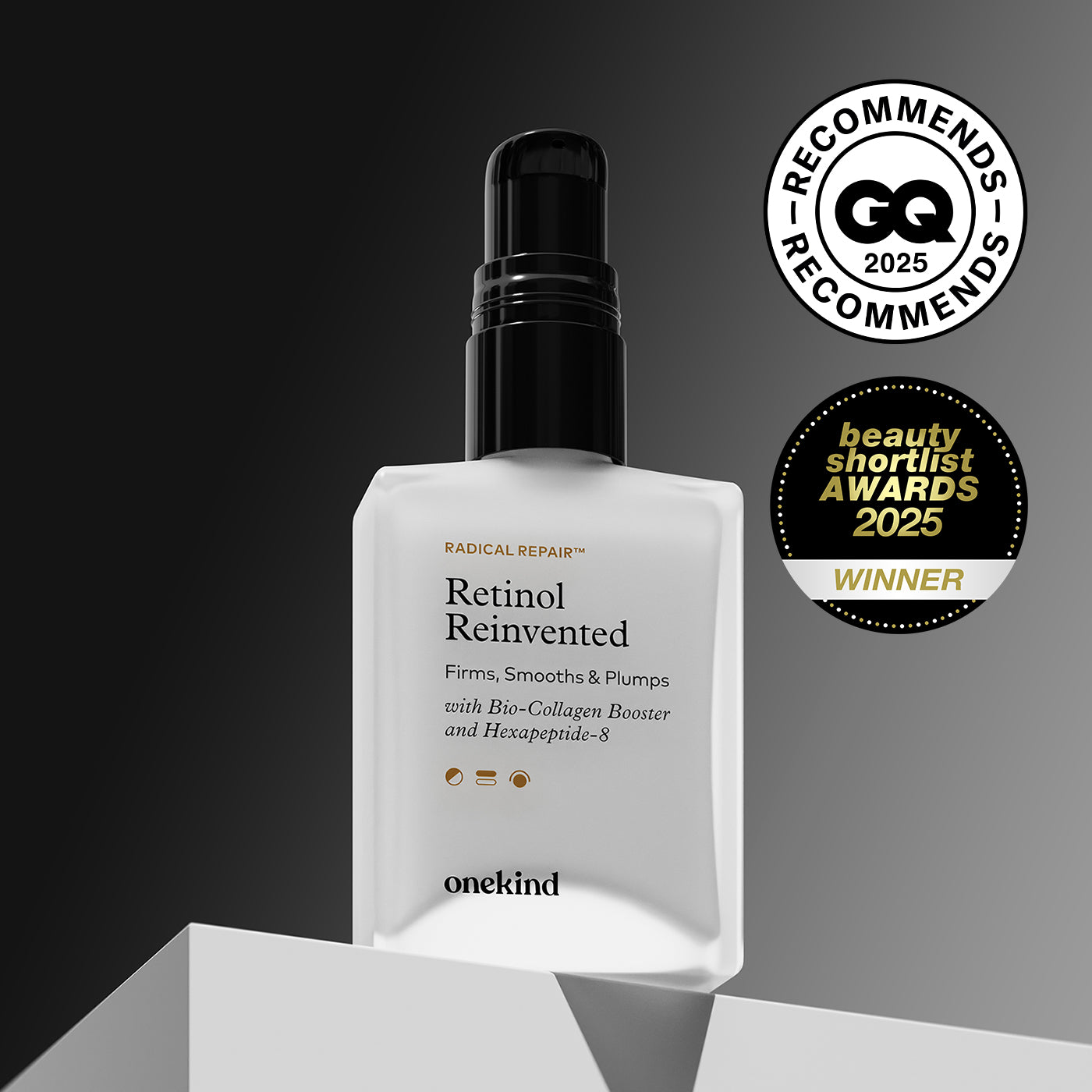
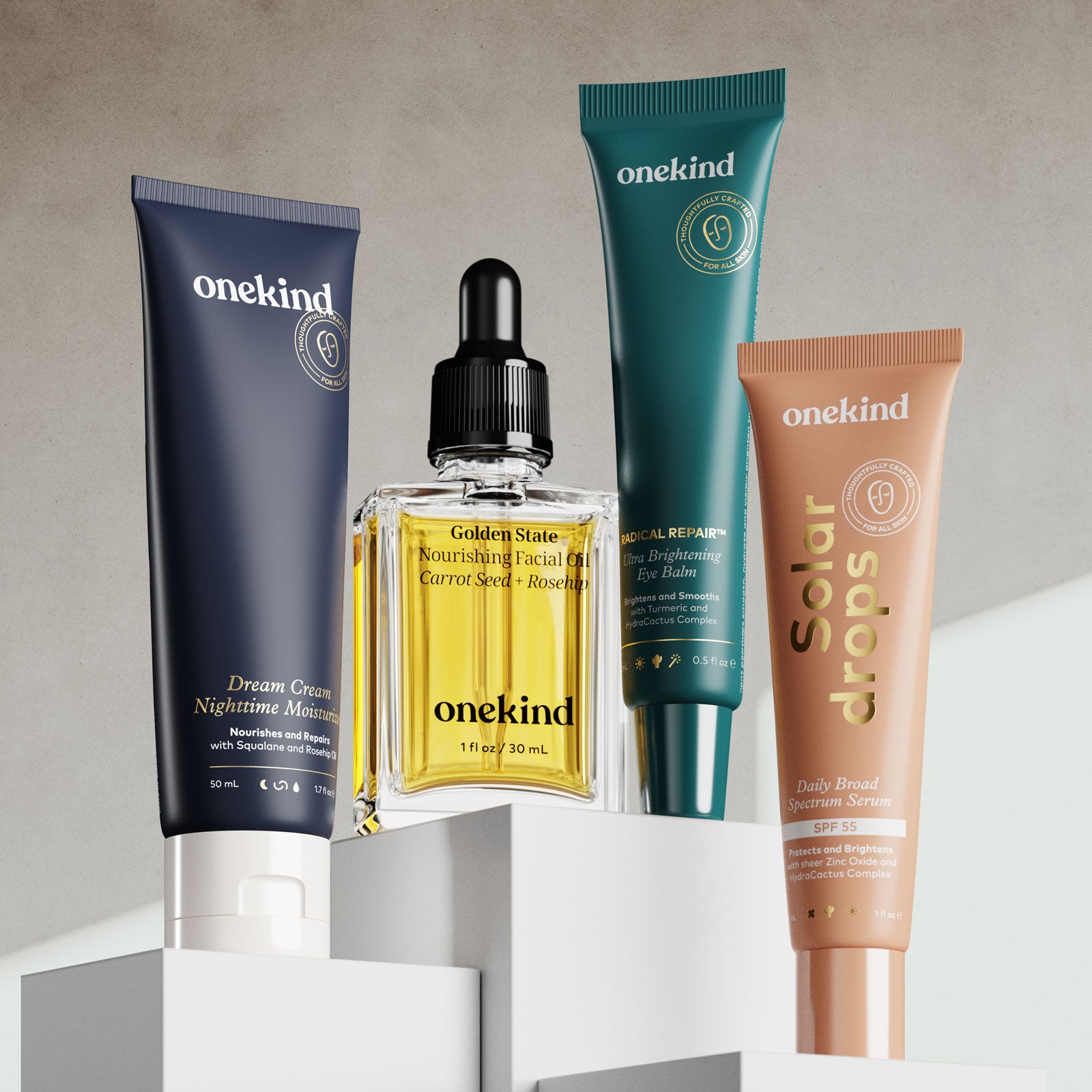
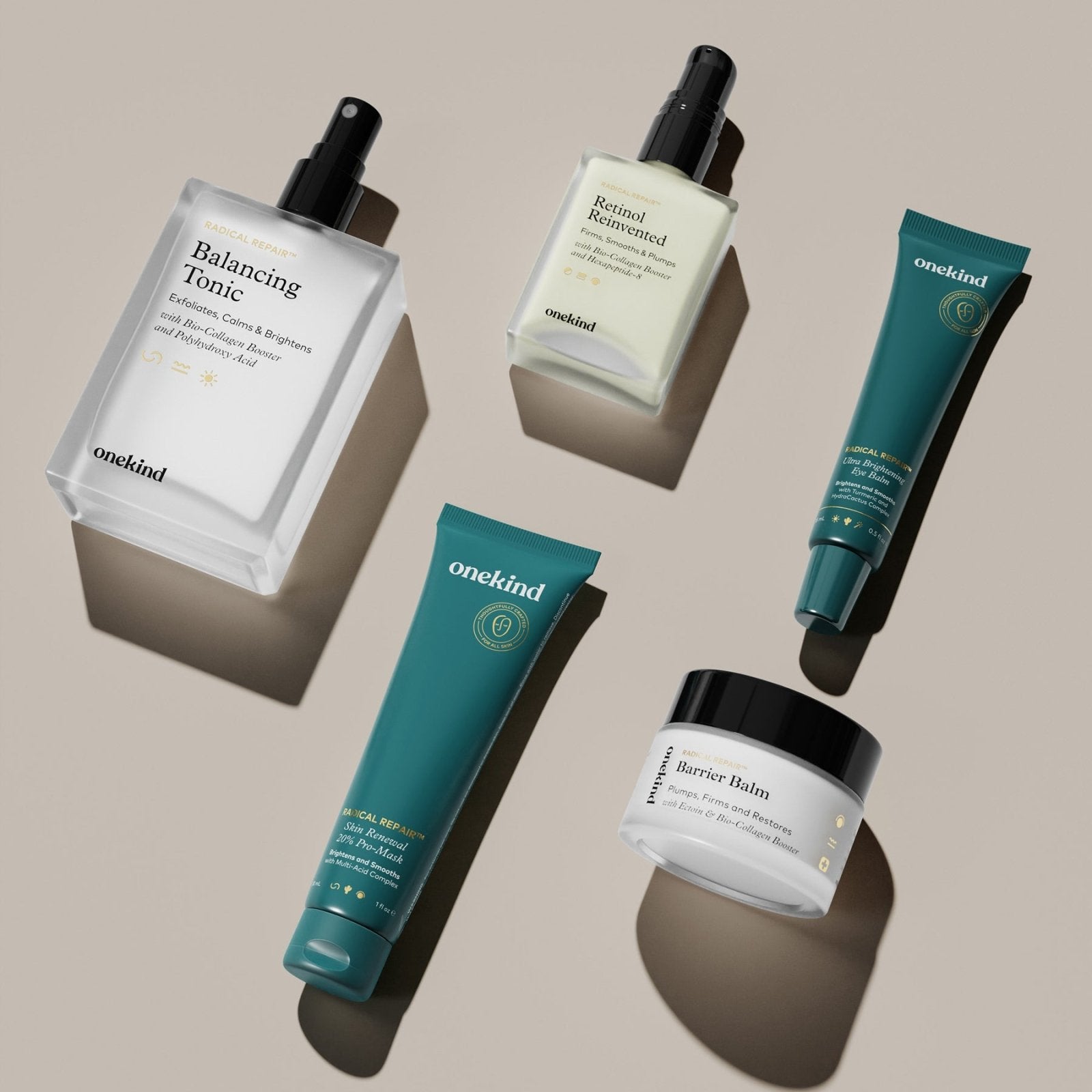
Once you've found a cleanser your skin can tolerate, the rest of your routine matters just as much. The Dream Cream Nighttime Moisturizer is built for sensitive skin — dermatologist-tested, free of synthetic fragrance, and formulated with squalane and rosehip oil to support a hydrated, calm-looking complexion overnight. If your routine includes retinol, the Radical Repair® Retinol Reinvented Serum uses a time-released delivery system that's designed to be gentle enough for sensitive skin.
Written by Matt Ruggieri, Co-Founder & Head of Product Development at Onekind, with 15+ years of experience in beauty product formulation and development.