





By Matt Ruggieri, Co-founder & Head of Product Development, Onekind
Your nighttime skincare routine is the most important part of your skincare practice — and it's not particularly close. Skin has a circadian rhythm. At night, it shifts into repair mode: cell turnover accelerates, blood flow to the surface increases, and the skin barrier actively works to recover from the day's damage — UV exposure, pollution, temperature changes, stress. The active ingredients you apply at night get to work on receptive, repair-ready skin without competing with sunscreen, makeup, or environmental stressors. This is the window that matters.
I've been thinking about nighttime skincare since before we started Onekind. It's why our first product was a nighttime moisturizer, and why we formulated it the way we did. Here's the routine I actually use — and the thinking behind each step.
Why Your Skin Needs More at Night Than During the Day
During the day, skin is in defense mode. It's managing UV exposure, regulating temperature, and maintaining the barrier against everything you come into contact with. Active ingredients like retinol and antioxidants can still work, but the skin is also doing a lot of other things at the same time.
At night, that changes. Without UV exposure, retinol can work without the risk of photodegradation. Without a full day of transepidermal water loss ahead, heavier emollients can actually sink in and stay. The skin's peak repair activity happens roughly between 11pm and 4am — so what you apply before sleep is what your skin has available during its most productive hours.
This is also why sleeping in makeup is so genuinely damaging. You're not just skipping your products — you're blocking the skin's access to oxygen during the one window it's working hardest to regenerate.
Step 1: Cleanse — Remove Everything Before You Start
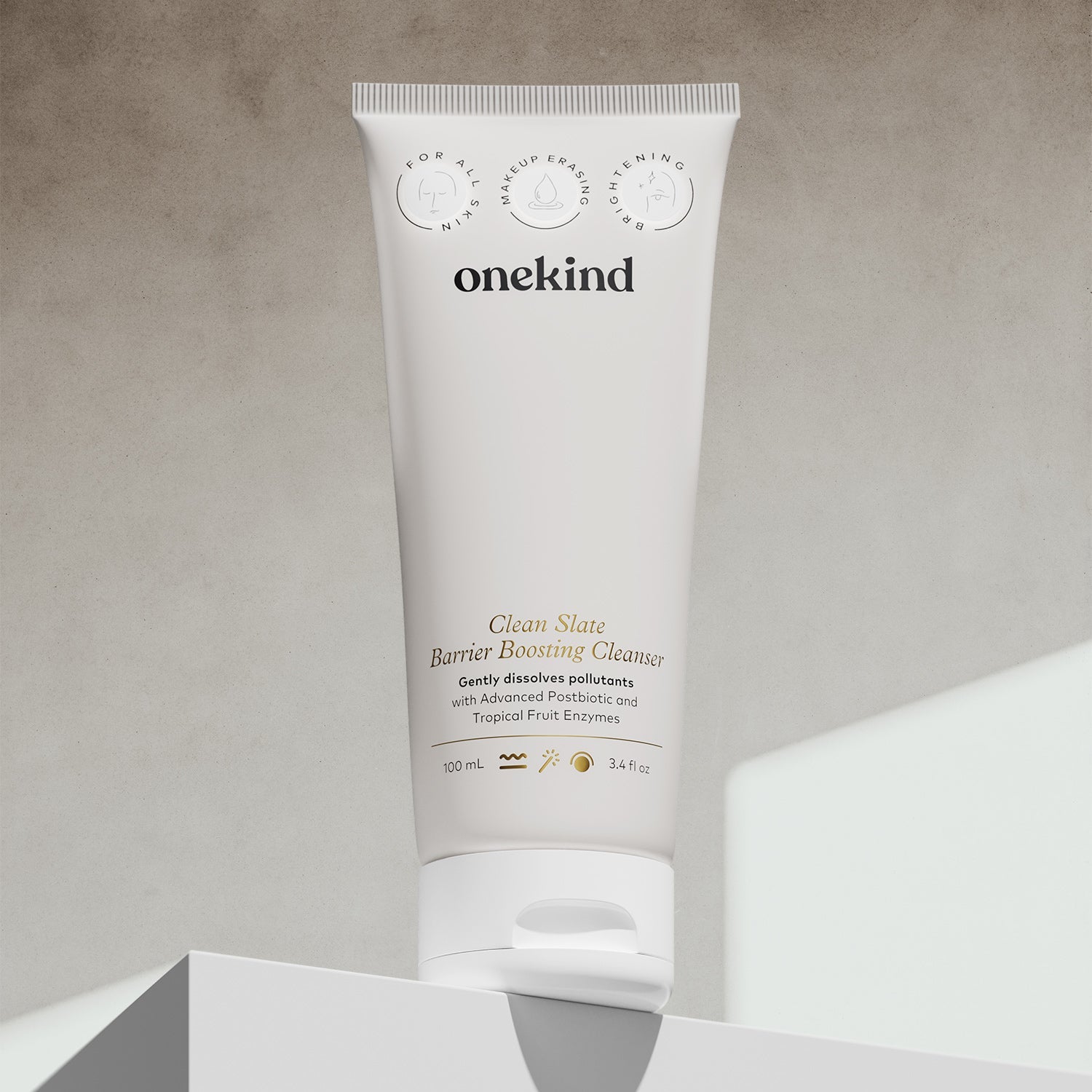
The cleanse step is less glamorous than the rest but more important than any of them. Anything left on your skin — SPF residue, pollution, sebum buildup — sits between your skin and every product you apply afterward. Active ingredients can't penetrate what they can't reach.
For dry and sensitive skin, I'd push you toward a cream or oil-based cleanser that doesn't foam. Foaming cleansers typically use sulfates to create lather, and sulfates strip the natural oils that keep the skin barrier intact. You want clean skin, not stripped skin. After cleansing, your skin should feel comfortable and soft — not tight or dry.
If you wear SPF daily (and you should), a double cleanse — oil cleanser first, then cream cleanser — ensures complete removal without over-stripping.
Step 2: Serums — The Active Work Happens Here
Serums go on before heavier products because of their texture — they're lightweight, fast-absorbing, and designed to deliver concentrated actives directly to skin. At night, this is where you put in the work.
If it's a retinol night: Apply your retinol serum here. Retinol accelerates cell turnover, which is why it's best at night — the cell renewal process it triggers aligns with the skin's natural repair cycle. If you're new to retinol, start with every other night to let your skin adjust before building to daily use. For a full guide to introducing retinol without irritation, see The Beginner's Guide to Retinol.
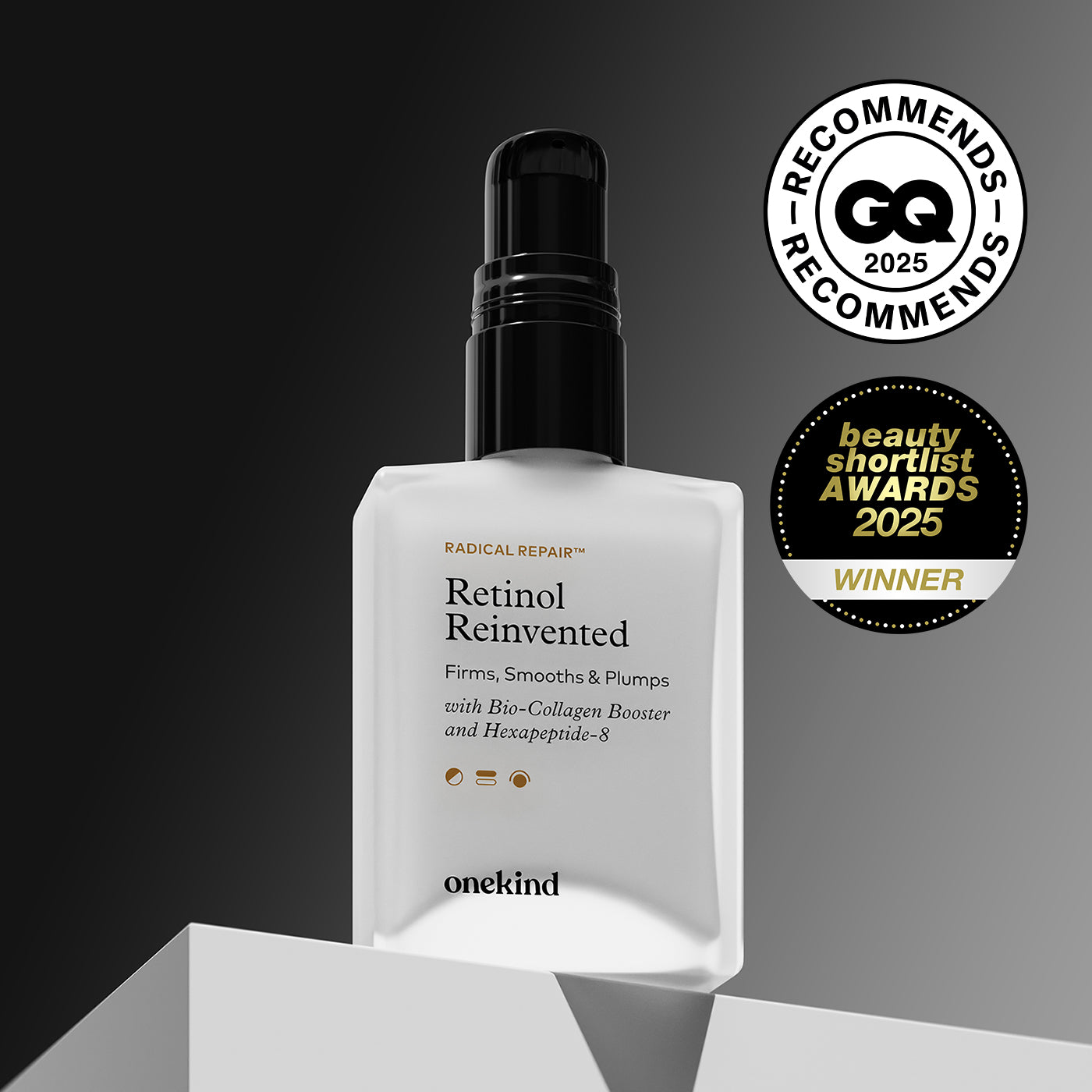
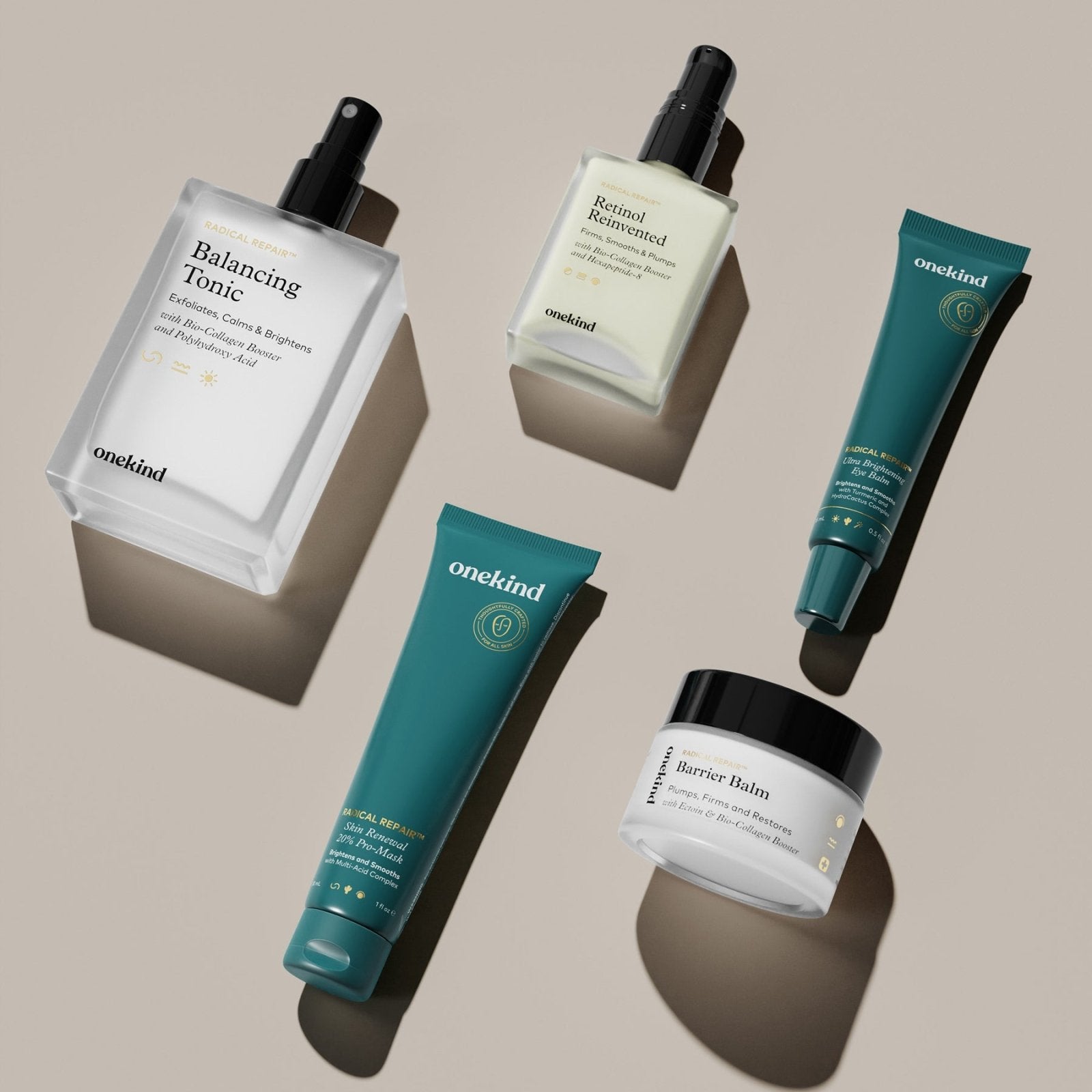
Our Radical Repair® Retinol Reinvented Serum pairs retinol linoleate with algae-derived bio-retinol and Ectoin — a combination designed specifically for people whose skin has historically been too reactive for traditional retinol formulas.
If it's a non-retinol night: A peptide serum or antioxidant serum works well here. Peptides support the look of firmness and help skin recover from daily stress. Alternating retinol nights with peptide nights gives skin recovery time while still delivering active support every night.

Step 3: Facial Oil — Lock In, Don't Layer Over
This is where most people get confused about facial oils. They think of them as the final, heaviest step — something you put on top to seal everything in. That's partly right, but the more important function is different: a facial oil creates an emollient layer that helps prevent the transepidermal water loss that happens overnight.
Your skin loses moisture while you sleep. A well-formulated facial oil slows that process, keeps the active ingredients from the serum step in contact with skin for longer, and delivers its own nourishing compounds as it absorbs. This is why I think facial oils belong in a nighttime routine even for people who wouldn't touch them in the morning.
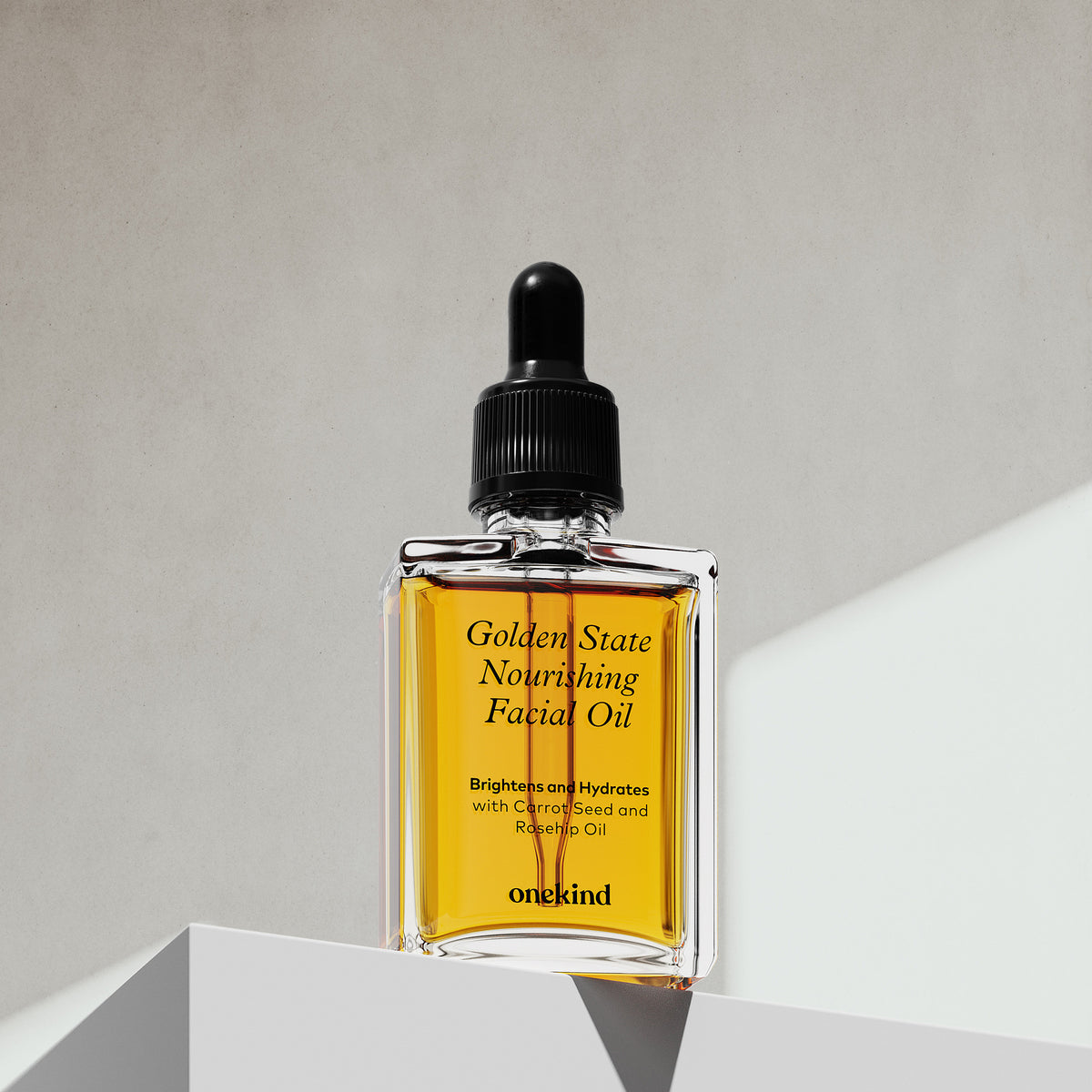
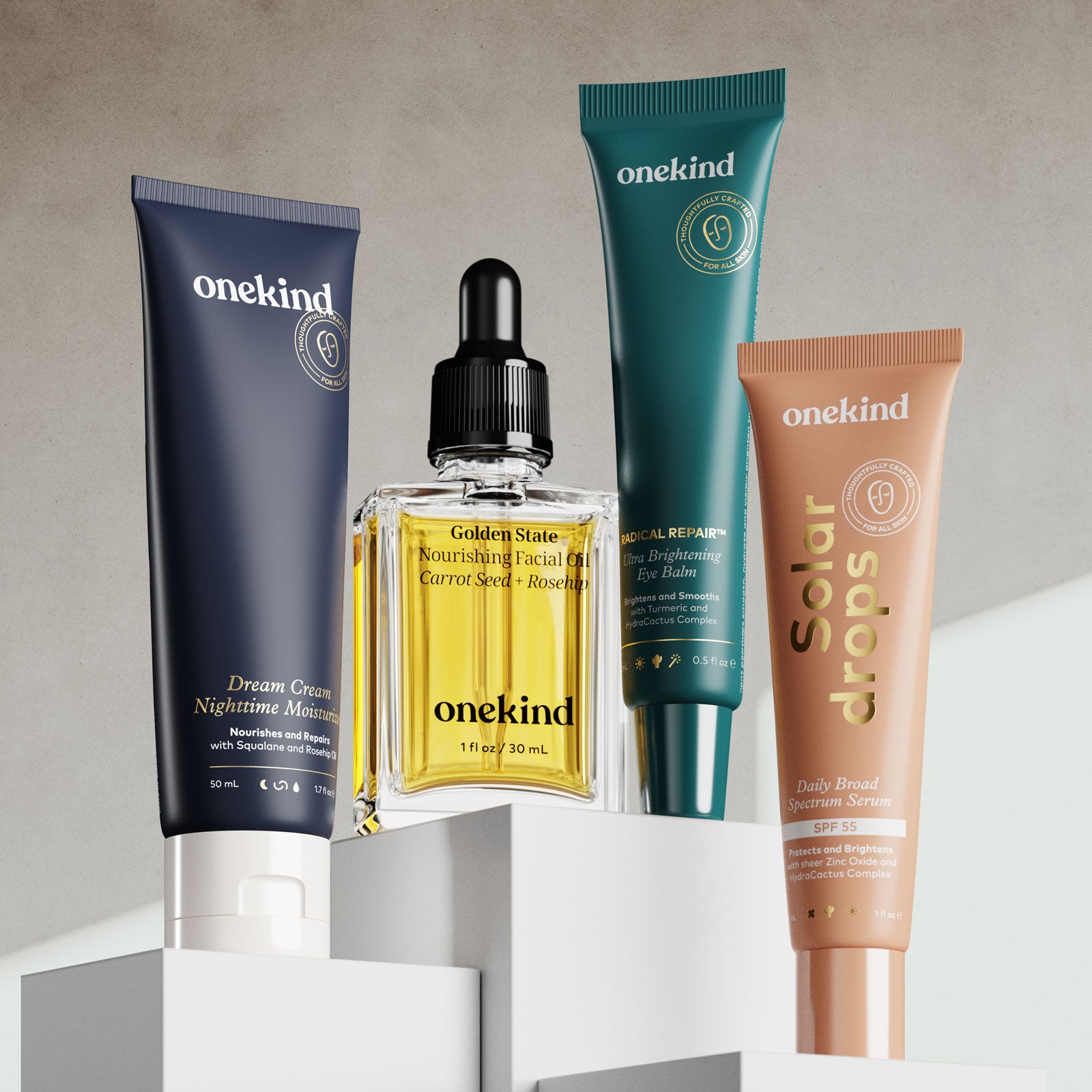
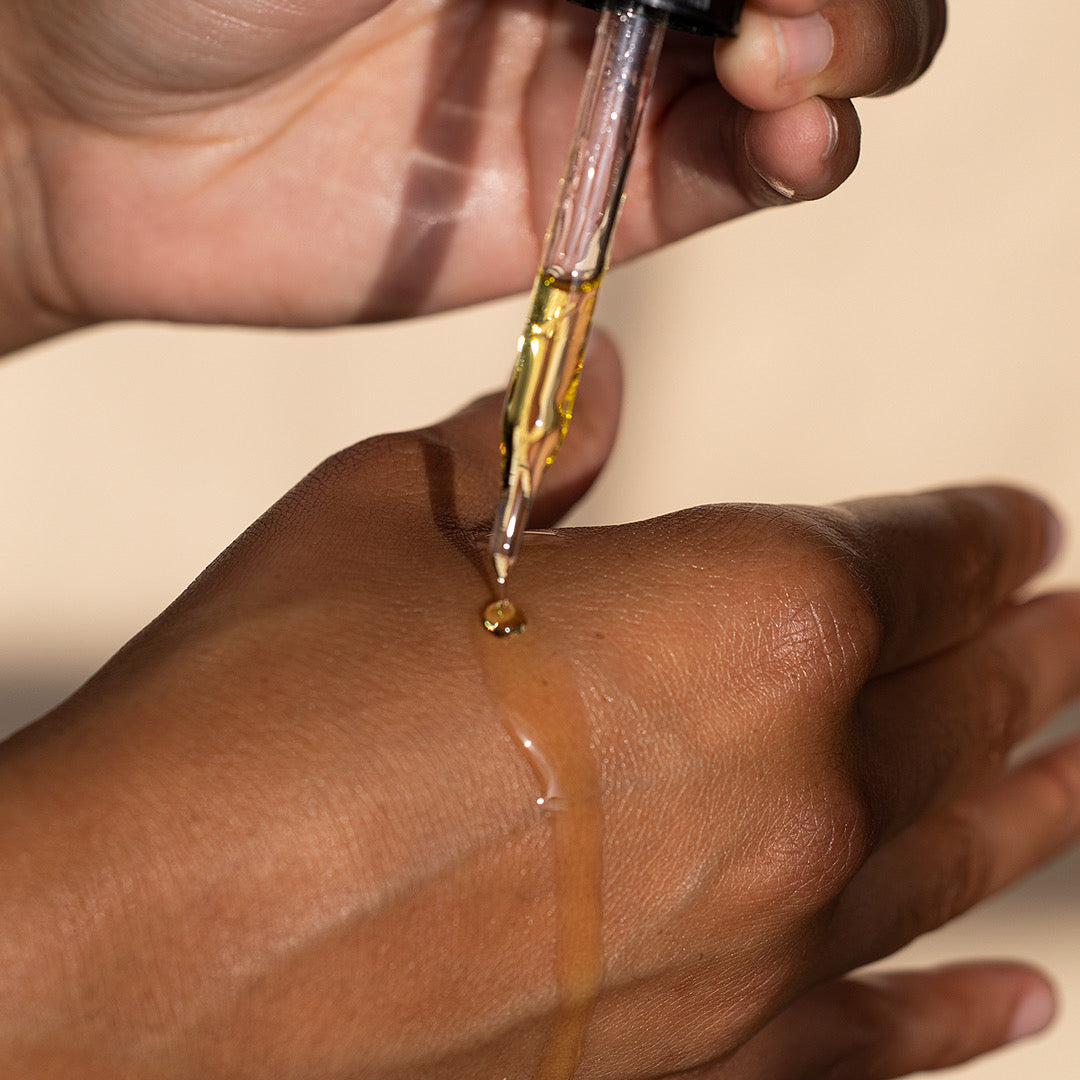
I formulated Golden State Nourishing Facial Oil around rosehip oil and carrot seed oil specifically because of their overnight performance. Rosehip is naturally rich in vitamin A and essential fatty acids — compounds that support skin's repair processes while you sleep. Carrot seed oil adds a meaningful antioxidant contribution. The full blend is 20+ oils, but those two do the most work at night. Apply 3–4 drops to damp or freshly serumized skin and press in gently — don't rub, which can disrupt the serum layer underneath.

Step 4: Nighttime Moisturizer — The Foundation of the Routine
The nighttime moisturizer is the last substantive step, and it's the one doing the heaviest lifting across the whole night. Its job is threefold: seal in everything you've applied, maintain the hydration gradient in skin while you sleep, and deliver its own active ingredients over several hours.
This is the step I spent the most time developing at Onekind, because I couldn't find a night cream that did all three things without being heavy, greasy, or full of synthetic fragrance. Most rich night creams are formulated around occlusive ingredients that sit on top of skin rather than absorbing into it. You wake up with residue on your pillowcase and skin that feels coated rather than nourished.
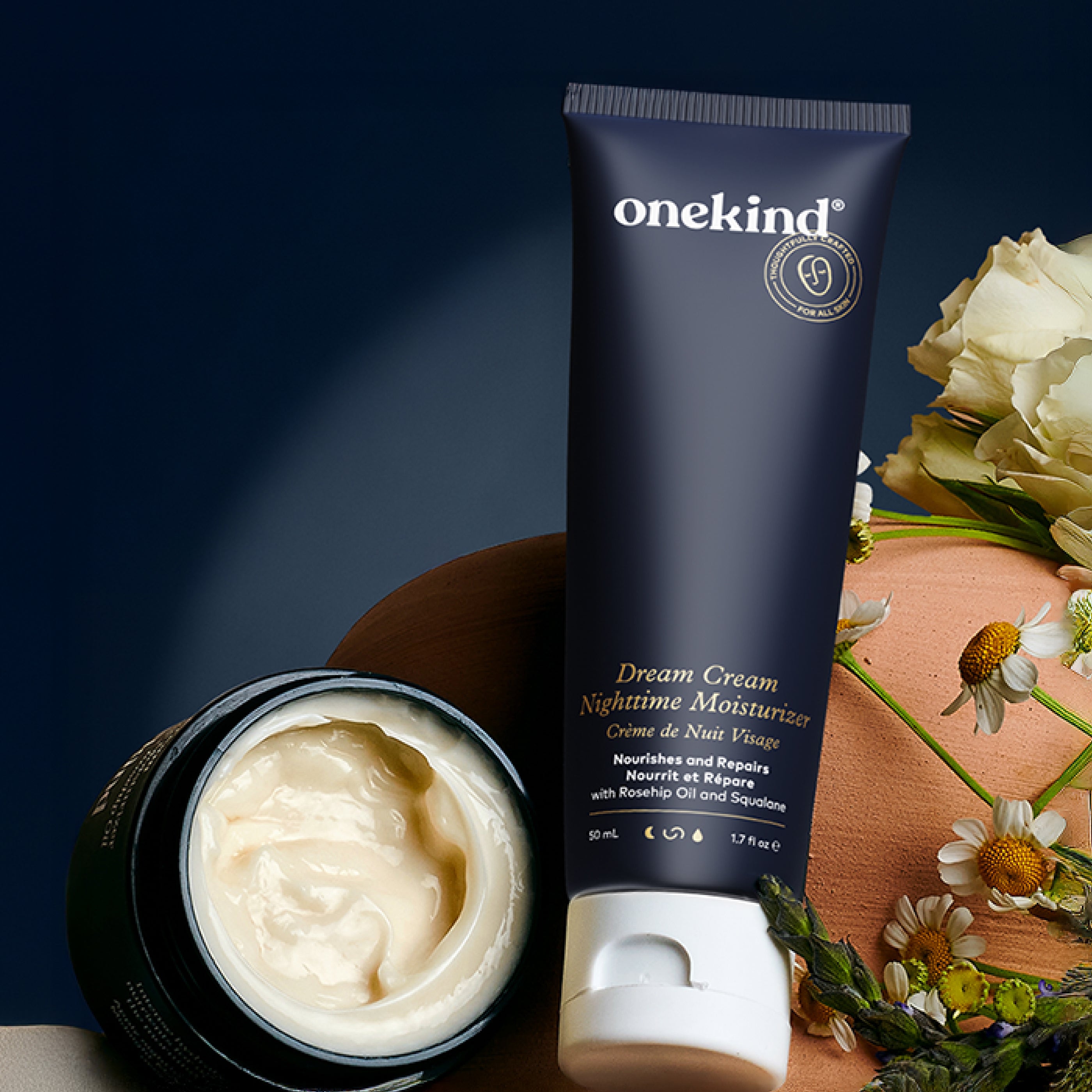
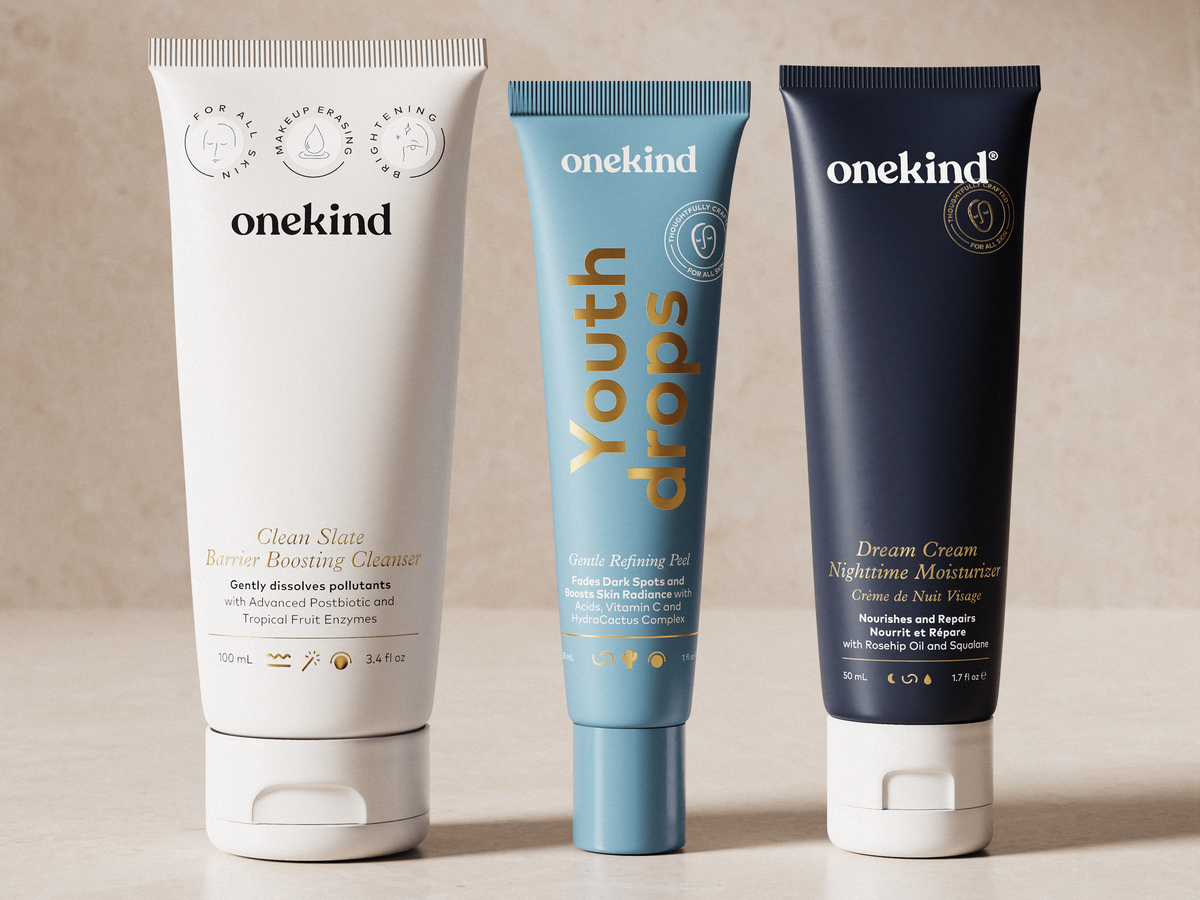
Dream Cream Nighttime Moisturizer is built around sugarcane-derived squalane and rosehip oil — two emollients that genuinely absorb rather than just sitting on the surface. Squalane is particularly effective at night because it mirrors the structure of skin's natural sebum, which means it integrates rather than accumulates. Chamomile and barley seed extract support the barrier's overnight recovery without adding weight or fragrance. Apply a generous amount — this isn't a product to skimp on — and let it absorb fully before you sleep.
The 2025 New Beauty Reader's Choice Award confirmed what we were hearing from customers: it's the night cream that finally works for people who'd given up on night creams.

How to Layer the Full Routine
The complete sequence, in order:
- Cleanse — Remove SPF, makeup, and the day's buildup. Cream or oil-based cleanser for dry and sensitive skin.
- Serum — Retinol on retinol nights; peptide or recovery serum on alternating nights. Wait 1–2 minutes for full absorption before the next step.
- Facial oil — Golden State, 3–4 drops pressed into skin. Seals in the serum and delivers overnight nourishment.
- Nighttime moisturizer — Dream Cream, applied generously. The final step that holds everything in place through the night.
A note on timing: you don't need to wait long between steps. Give each product 30–60 seconds to begin absorbing, then apply the next. The layering order — lightest to heaviest — matters more than waiting time. For a full breakdown of product layering logic, see What Order Should I Apply My Skincare Products?
The Two Nights That Do the Most Work
You don't need a complicated routine every night. What you need is consistency and the right products for two types of nights:
Retinol nights (3–5x per week once established): Cleanse → Retinol serum → Golden State → Dream Cream. This is your anti-aging, resurfacing, line-softening routine. The retinol does the active work; the oil and moisturizer support recovery and prevent the dryness that retinol can cause during initial adjustment.
Recovery nights (remaining nights): Cleanse → Peptide serum → Golden State → Dream Cream. Same structure, less intensity. Your skin gets nourishment and barrier support without the additional demand of retinol turnover. These nights are also useful when skin feels reactive or irritated — drop the serum and go straight from cleanse to oil to moisturizer.
Shop Dream Cream — $42 Shop Golden State — $48
Frequently Asked Questions
What is the correct order for a nighttime skincare routine?
The correct order is: cleanse → serum (retinol or peptide) → facial oil → nighttime moisturizer. The rule is lightest to heaviest — thinner products go first so they can reach skin before heavier products create a barrier. Cleansing always comes first, no matter what else follows.
Should I use a facial oil before or after moisturizer at night?
Before, in most cases. Facial oils are lighter than cream moisturizers and absorb more readily into skin — apply them after your serum and before your nighttime moisturizer. The moisturizer then helps seal the oil layer and prevent moisture loss overnight. An exception: some people prefer to mix a few drops of facial oil into their moisturizer and apply them together as the final step.
Do I need both a facial oil and a nighttime moisturizer?
Not strictly — but they do different things. A facial oil delivers emollient nourishment and helps slow transepidermal water loss (moisture escaping through skin overnight). A nighttime moisturizer adds water-binding hydration alongside occlusive ingredients that seal the skin barrier. Together, they address both moisture retention and active overnight nourishment. If you have very dry skin, using both is meaningful. If budget requires choosing, Dream Cream first.
Can I use retinol every night?
Once your skin has adjusted, yes. Most people start with every other night and build to nightly use over 4–6 weeks. If you experience dryness or sensitivity, alternate retinol nights with recovery nights and apply a barrier-supporting moisturizer like Dream Cream over your retinol to buffer absorption.
What should I apply after retinol at night?
A facial oil and nighttime moisturizer in that order. The moisturizer applied after retinol isn't just for hydration — it helps buffer the retinol's intensity and reduces the dryness and flaking that new retinol users commonly experience. Apply Golden State first, then Dream Cream on top. This combination is gentle enough for sensitive skin and supportive enough to help skin adjust to retinol quickly.
Is nighttime moisturizer different from day moisturizer?
Yes, by design. Nighttime moisturizers are typically richer and formulated to work over several hours of limited evaporation (since you're not outdoors or moving through the elements). They often contain more emollient ingredients — like squalane and rosehip oil in Dream Cream — that absorb slowly and deliver sustained nourishment. Day moisturizers are usually lighter, more comfortable under makeup, and sometimes contain SPF or antioxidants for environmental defense. The two serve different roles and aren't interchangeable for optimal results.
How long does it take to see results from a nighttime skincare routine?
For basic hydration, you'll notice a difference within days — skin feels more supple and comfortable by morning. For visible changes in texture, tone, and fine lines (especially with retinol), expect meaningful improvement at 6–8 weeks of consistent nightly use. The most significant results from a complete routine — cleanse, serum, oil, moisturizer every night — tend to show at the 90-day mark.
Matt Ruggieri is the Co-founder and Head of Product Development for Onekind. With over 15 years of experience, Onekind makes skin-friendly perfume oils and skincare products developed for sensitive skin.

Written by Matt Ruggieri, Co-Founder & Head of Product Development at Onekind, with 15+ years of experience in beauty product formulation and development.