






By Matt Ruggieri, Co-Founder and Head of Product Development
If you wear sunscreen, makeup, or both every day, one cleanse at night is probably not enough. Not because your cleanser is weak. Because of what it is being asked to remove, and the order in which different cleansing ingredients work.
Double cleansing solves this. It is a two-step method that became standard practice in Korean skincare before spreading globally, and for good reason: it works in a way that a single cleanse, no matter how thorough, often cannot match. This guide covers how to do it correctly, which skin types benefit most, and how to choose the right products for each step so the method actually improves your skin rather than stressing it.
Why One Cleanse Is Often Not Enough
Modern skincare creates a layering problem. SPF sits on top of skin as a physical or chemical UV filter. Makeup sits on top of that. Over the course of the day, sebum, pollution particles, and environmental debris accumulate on top of all of it.
Most water-based and foam cleansers are built around water-soluble surfactants. These work well at removing water-soluble debris: sweat, environmental pollutants, some skincare residue. They are less efficient at breaking down oil-based products like sunscreen, silicone-heavy foundations, and long-wear formulas. Some of these products are specifically engineered to resist water: that is the point of a waterproof mascara or a mineral SPF. A single water-based cleanse may leave behind a thin film of these oil-based products, sitting on the skin all night, potentially contributing to clogged pores, uneven texture, and reduced absorption of the serums and treatments you apply afterward.
An oil-based first cleanse breaks this down efficiently. Oil dissolves oil. Where a water-based surfactant has to work against the chemistry of an SPF or silicone-based product, an oil-based formula finds the path of least resistance and lifts everything away before the water-based second cleanse does the rest.
The Two-Step Method: How It Works
Step One: The Oil-Based Cleanse
The first cleanse uses an oil-based or emollient formula to dissolve makeup, sunscreen, and the day's surface buildup. The chemistry here is simple: lipophilic (oil-loving) ingredients bind to other lipophilic ingredients. SPF, foundation, and sebum are all oil-based to some degree, which means they respond to oil-based cleansing immediately and efficiently.
The first cleanse does not need to be a dedicated cleansing oil. A rich, non-foaming emollient cream cleanser works equally well, and is gentler on the skin for people who find straight cleansing oils too heavy or difficult to rinse. The goal is to lift and dissolve the surface layer so the second cleanse can do its job on clean skin rather than working through a layer of product residue.
Step Two: The Water-Based Cleanse
The second cleanse does the deep work: clearing what remains, cleansing the pores, and ideally depositing active ingredients that benefit the skin after rinsing. A well-formulated second cleanser uses a mild sulfate-free surfactant system that produces a genuine lather without stripping the lipids your skin barrier needs. Because the first cleanse has already removed the heavy surface layer, your second cleanser needs to work less hard, which means the surfactant load on the skin is lower and the barrier disruption is minimized.
This is the step where ingredient choice matters most for how your skin feels and looks after cleansing. A second cleanser that deposits humectant actives during the rinse leaves the skin in a meaningfully better state than one that simply cleans and leaves nothing behind.

How to Double Cleanse: Step by Step
- Start with dry hands and a dry face. Oil-based cleansers work best on dry skin. Wetting your face first dilutes the formula before it has a chance to bind to and dissolve surface buildup.
- Apply your first cleanser to dry skin. Massage gently for 30 to 60 seconds, focusing on areas where SPF and makeup tend to sit heaviest: around the nose, along the jawline, and across the forehead. You will see the product change color and texture as it emulsifies with the surface layer it is lifting.
- Emulsify with a small amount of water. Add a little water and continue massaging. The formula will shift from an oil or cream texture to a milky, rinse-ready consistency. This step is what separates an emollient cleanser from a straight oil: the formula breaks down into something that rinses cleanly rather than leaving a greasy residue.
- Rinse thoroughly with lukewarm water. Hot water increases skin permeability and contributes to the tight feeling many people experience after cleansing. Lukewarm is the right temperature: effective at lifting the emulsified product without stressing the barrier.
- Apply your second cleanser to damp skin. Massage for 30 to 60 seconds to work up a lather. At this point, your skin is already clear of the surface layer, so the second cleanser is working efficiently on skin that is genuinely ready for it.
- Rinse thoroughly and pat dry. Use a clean, soft towel or cloth. The goal is to remove moisture without dragging the skin.
- Follow with the rest of your routine while skin is still slightly damp: toner, serum, eye treatment, moisturizer in that order.
Which Skin Types Benefit Most From Double Cleansing
Daily SPF Wearers (All Skin Types)
If you wear sunscreen every day, which you should, double cleansing at night is close to essential. Modern SPF formulas, particularly mineral and long-wear chemical sunscreens, are built to resist breakdown. A single water-based cleanse is rarely sufficient to remove them completely. Double cleansing ensures your skin goes to sleep with nothing left over from the day that could interfere with nighttime repair and product absorption.
Makeup Wearers
The heavier and more long-wear the makeup, the more clearly double cleansing outperforms a single cleanse. Foundation, concealer, and eye makeup all contain pigments and binders that respond to oil-based removal far better than to water-based surfactants alone.
Oily and Combination Skin
Counterintuitively, oily skin types often benefit most from double cleansing. Using a stripping single cleanser to manage oil tends to trigger a compensatory sebum response: the skin interprets the dryness as a signal to produce more oil. A gentle first cleanse that efficiently removes surface sebum without over-stripping, followed by a mild second cleanse, results in skin that is genuinely cleaner without the rebound oiliness that aggressive single cleansing can cause.
Acne-Prone Skin
For skin prone to breakouts, thoroughly removing SPF, makeup, and daily buildup before sleep reduces one of the key contributing factors to congestion. The key is choosing a non-comedogenic first cleanse that removes effectively without clogging pores in the process.
Sensitive Skin
Double cleansing can feel counterintuitive for sensitive skin, but it is often gentler than a single aggressive cleanse. When the first cleanse does the heavy lifting, the second cleanse requires less surfactant work, which means less barrier disruption overall. The critical factor is product selection: both cleansers need to be genuinely gentle, sulfate-free, and formulated for reactive skin.
Common Double Cleansing Mistakes
Using a Stripping Second Cleanser
The most common error is doing the first cleanse correctly and then undoing the gentleness with a harsh second cleanser. If your second cleanser contains SLS or SLES, the double cleanse is stripping your barrier even as it cleans. A sulfate-free second cleanser with humectants built in is what makes the method work without leaving skin tight or dry.
Double Cleansing in the Morning
Double cleansing is a nighttime method. In the morning, your skin has not accumulated SPF, makeup, or heavy buildup: it only needs to remove what accumulated overnight (minimal sebum, product residue from your evening routine, and any environmental exposure from sleeping). A single gentle cleanser in the morning is enough and appropriate. Double cleansing every morning is unnecessary and, with repeated use, can over-strip the barrier.
Skipping the Emulsification Step
Applying an oil-based first cleanse and rinsing immediately without emulsifying first can leave an oily residue that makes the second cleanse work harder than it should. Adding a small amount of water and massaging until the formula turns milky ensures it rinses completely clean.
Rushing
Thirty seconds per step is a minimum, not a target. SPF and long-wear formulas need actual mechanical contact time with the first cleanser to break down. Moving too quickly through either step leaves residue behind.
The Onekind Double Cleanse Pairing
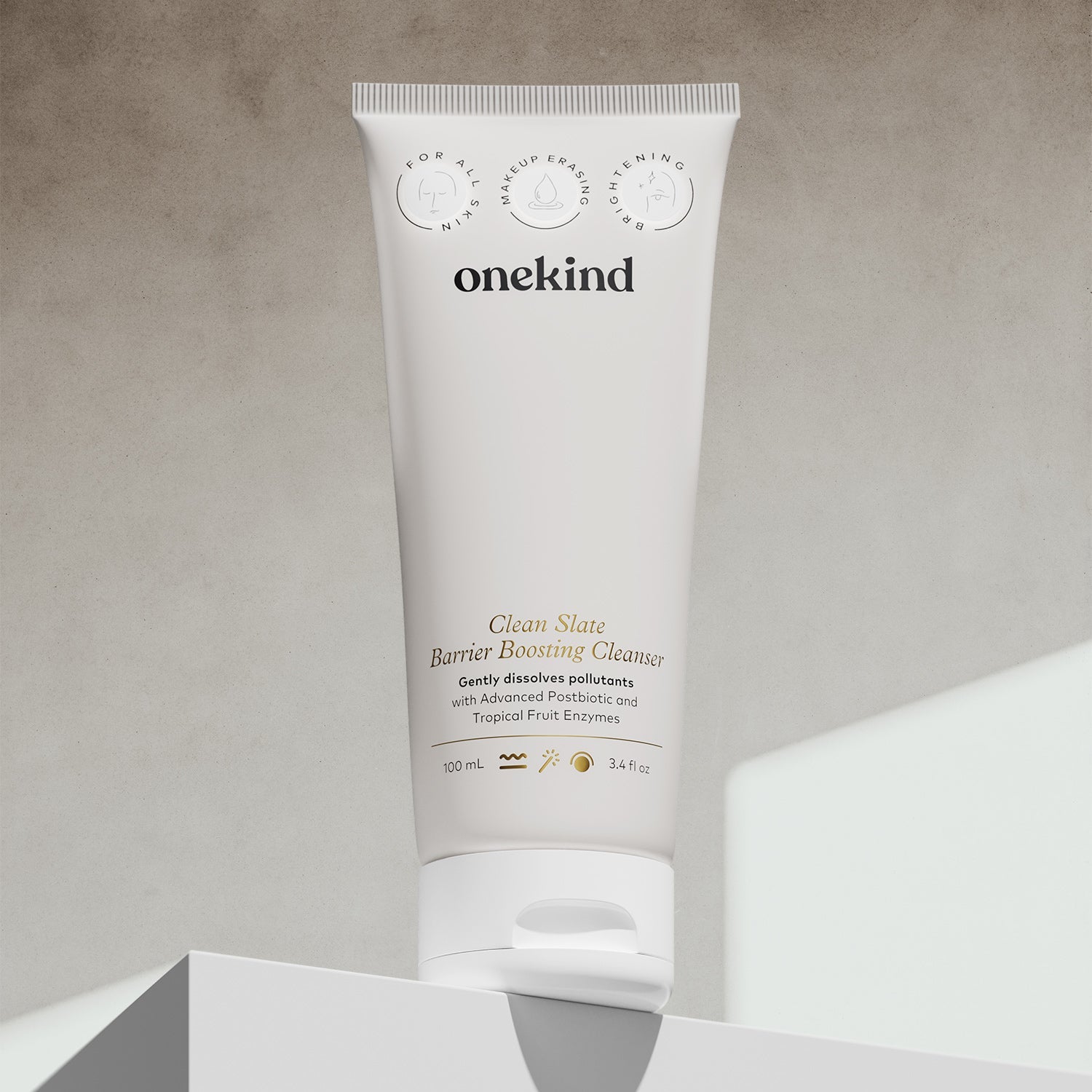
We designed the Clean Slate Barrier Boosting Cleanser and the Radical Repair® Nourishing Cream Cleanser to work independently, but they are genuinely excellent together as a double cleanse pairing.
First Cleanse: Clean Slate Barrier Boosting Cleanser
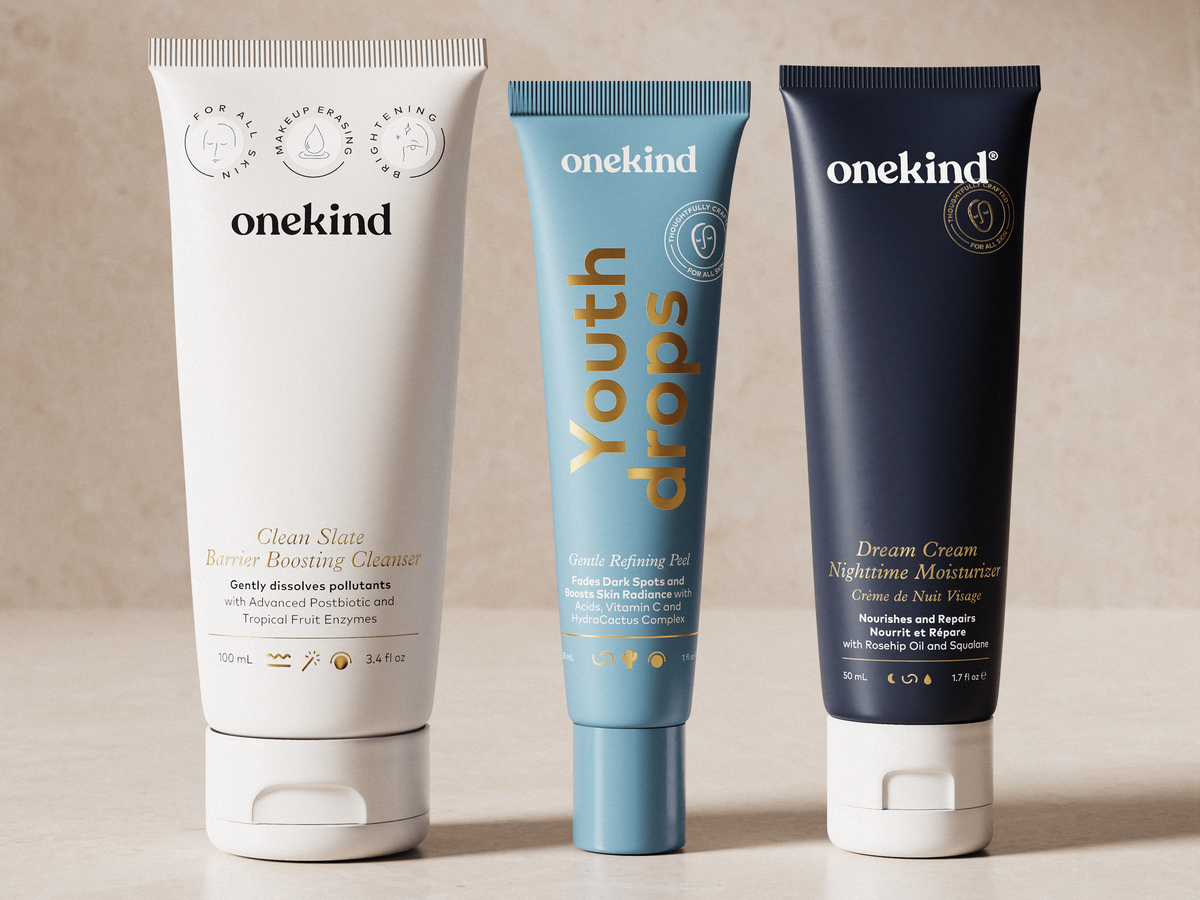
The Clean Slate Barrier Boosting Cleanser is a non-foaming emollient cream that melts away SPF, makeup, and surface buildup using a blend of five nourishing botanical oils: sunflower, sweet almond, meadowfoam, apricot kernel, and sea buckthorn. It uses a single mild sugar surfactant (Coco Glucoside) rather than a harsh surfactant system, which means it removes without stripping.
What sets it apart as a first cleanser is TeraBiome glycolipids, a postbiotic ingredient that supports the skin's natural microbiome balance. Most first cleansers focus purely on removal. The Clean Slate Barrier Boosting Cleanser removes and actively supports the skin environment while doing it. It leaves a light emollient finish on skin, which means the barrier is in a good state going into the second cleanse. Free of synthetic fragrance. The soft floral scent comes from damask rose, chamomile, and lavender essential oils.
Second Cleanse: Radical Repair® Nourishing Cream Cleanser
The Radical Repair® Nourishing Cream Cleanser is the second cleanse in this pairing. It is a cream-to-lather formula with an entirely sulfate-free surfactant system: sugar-based glucosides, an amino acid-derived surfactant, and a coconut-derived amphoteric surfactant. It produces a genuine lather, rinses completely clean, and leaves three active humectants on skin after rinsing.
Pentavitin® (Saccharide Isomerate) bonds directly to skin proteins and stays on skin through the rinse, keeping skin feeling hydrated and balanced. Hydrolyzed Hyaluronic Acid works below the skin surface to support moisture retention from within. Panthenol (Vitamin B5) draws moisture to the skin and helps the barrier feel comfortable and soft after cleansing.
HydraCactus Complex®, Onekind's proprietary blend of prickly pear cactus extract and desert date oil, helps calm the look of redness and supports a balanced, resilient-looking skin barrier. Free of synthetic fragrance. The fresh, cool scent and noticeable tingle come from spearmint, peppermint, and lavandin essential oils.
When the Clean Slate Barrier Boosting Cleanser has already handled the surface layer, the Radical Repair® Nourishing Cream Cleanser is working on genuinely clear skin. The result is a thorough cleanse that leaves skin hydrated, calm, and ready for the rest of your routine rather than tight and in need of rescue.
How to Follow Your Double Cleanse
After double cleansing, apply the rest of your nighttime routine while skin is still slightly damp to support absorption:
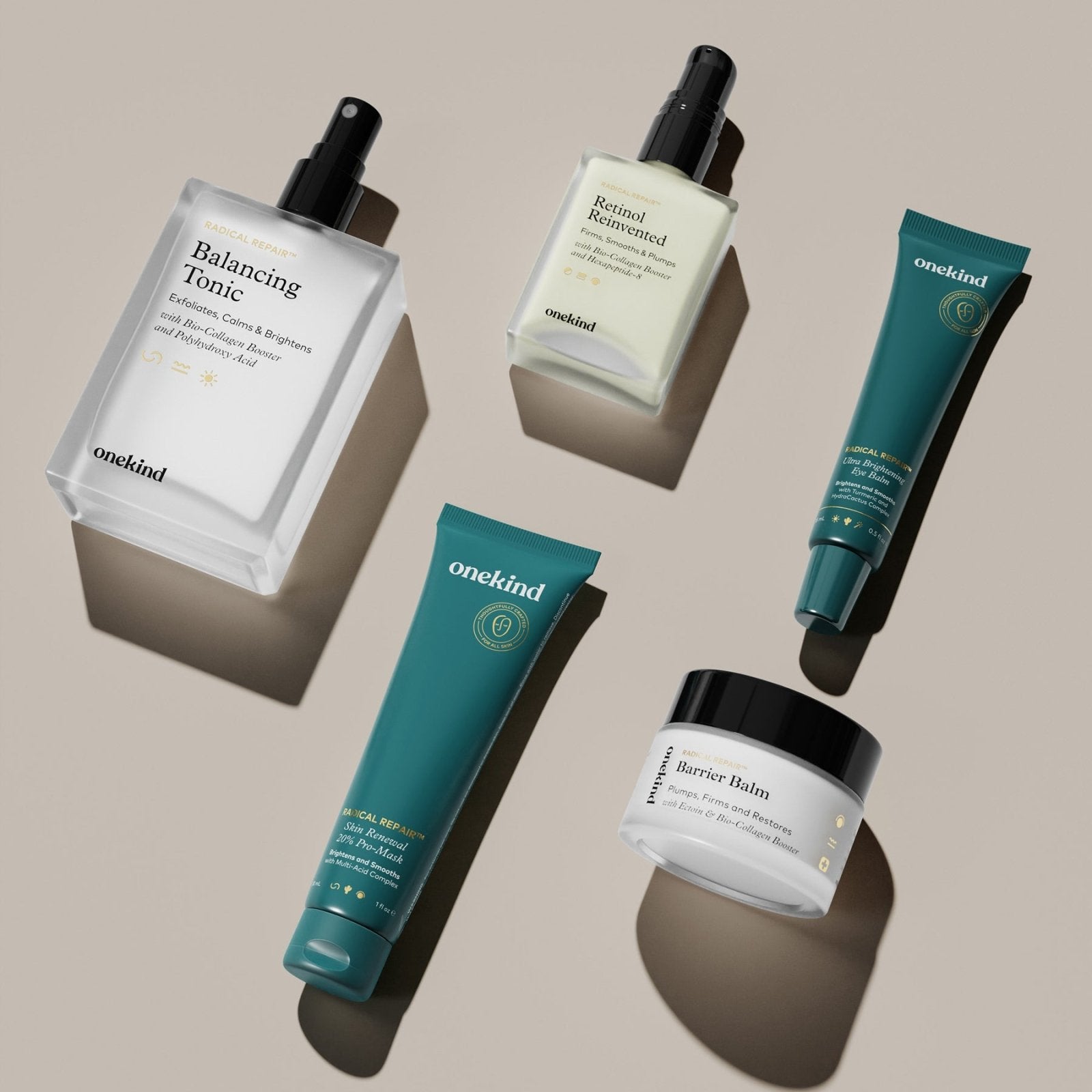
- Toner (if using): The Radical Repair® Balancing Tonic works well as a first post-cleanse layer, supporting the skin barrier and prepping skin for actives.
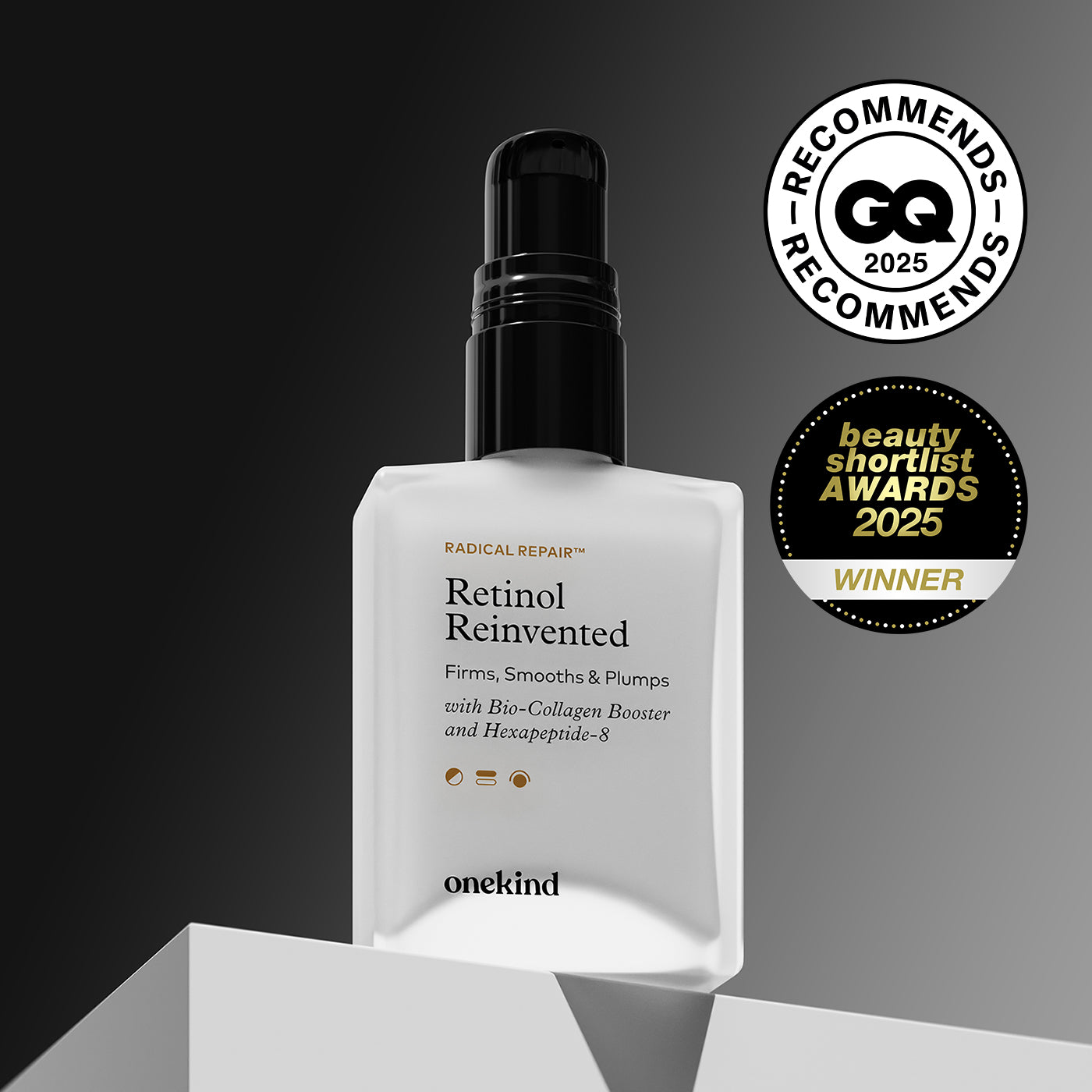
- Treatment serum: Apply any targeted treatments, such as the Radical Repair® Retinol Reinvented Serum for barrier-supported retinol use or the Glow Getter Radiant C Serum for brightening.
- Eye treatment: Apply any eye-specific product before your moisturizer.
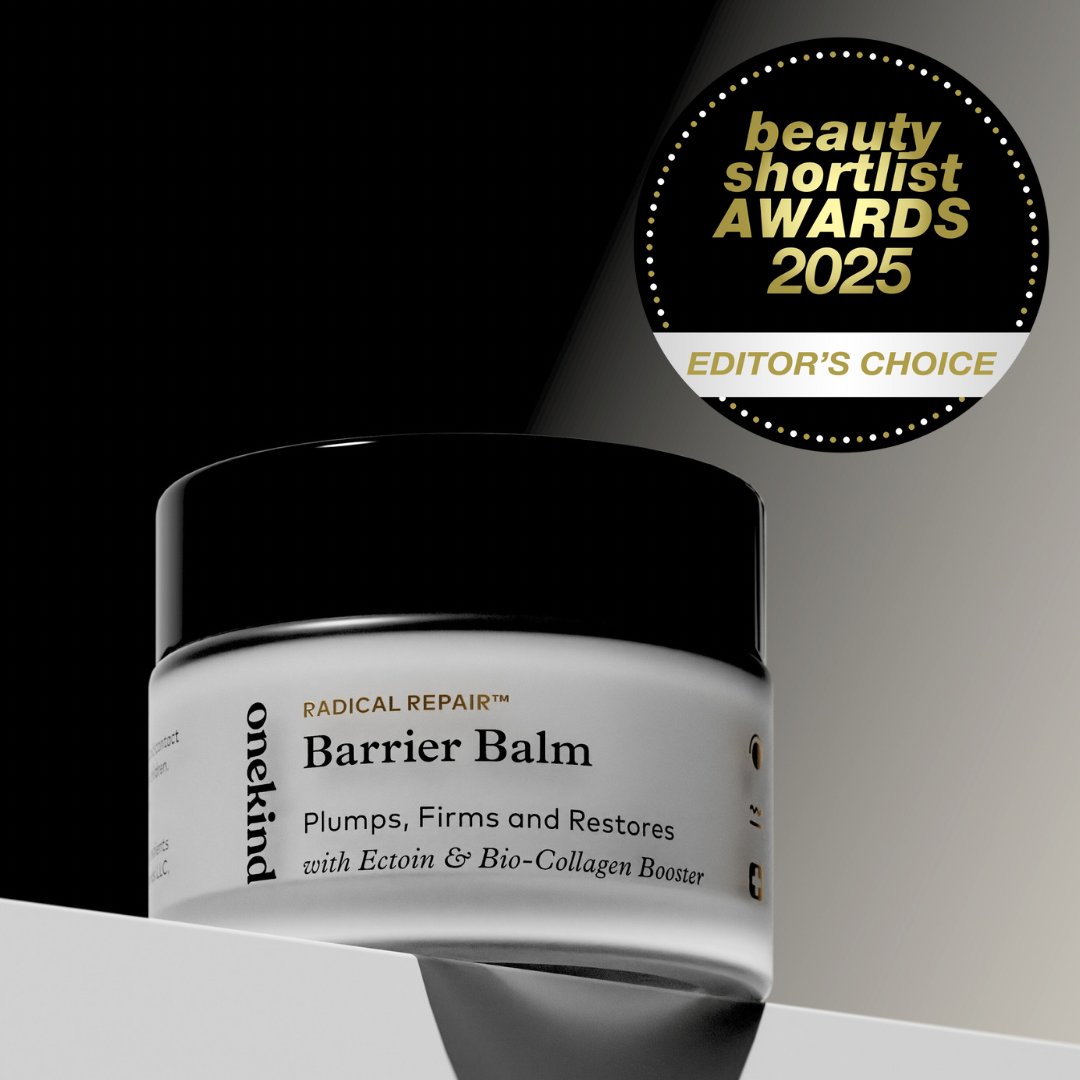
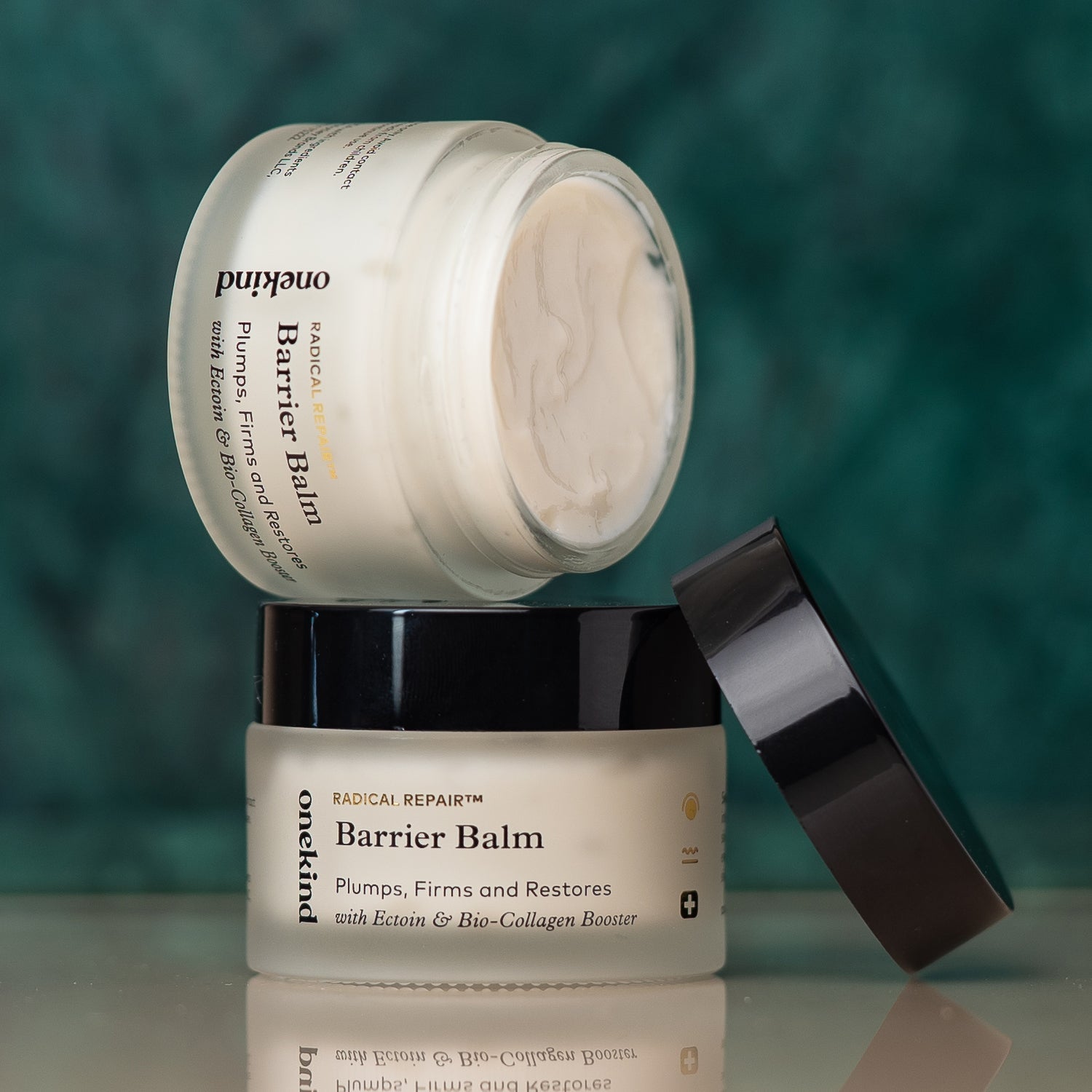
- Moisturizer or balm: Seal everything in with a moisturizer suited to your skin type, or the Radical Repair® Barrier Balm for targeted barrier repair overnight.
Frequently Asked Questions
What is double cleansing and why is it beneficial?
Double cleansing is a two-step cleansing method where an oil-based or emollient first cleanser removes SPF, makeup, and oil-based surface buildup, followed by a water-based second cleanser that purifies the skin and delivers active ingredients. The benefit is thoroughness: modern SPF and long-wear makeup formulas resist water-based cleansing, so a single water-based cleanse often leaves a thin residue of product on the skin overnight. Double cleansing removes this completely while keeping the method gentle enough to use daily.
Should I double cleanse every day?
Double cleansing is a nighttime-only method and most beneficial on nights when you have worn SPF and/or makeup. If you wear sunscreen daily, which most dermatologists recommend, double cleansing every evening is appropriate. In the morning, a single gentle cleanser is sufficient because your skin has only accumulated light overnight sebum and product residue, not a full day of environmental exposure and product buildup.
Does double cleansing dry out or irritate skin?
When done correctly with the right products, double cleansing is gentler on the barrier than a single aggressive cleanse. Because the first cleanse removes the surface layer, the second cleanser works more efficiently on clear skin and requires less surfactant work. The critical factors are using a genuinely gentle first cleanser (oil-based or emollient, not stripping) and a sulfate-free second cleanser with hydrating actives. A double cleanse using one or two harsh products will stress the barrier. A double cleanse using two well-formulated gentle products will not.
Is double cleansing good for oily skin?
Yes. Oily skin types often do best with double cleansing specifically because an oil-based first cleanse efficiently removes surface sebum without triggering the compensatory oil production that an overly aggressive single cleanse can cause. Stripping the skin with a harsh cleanser communicates to the skin that it is under-lipid and needs to produce more oil. A thorough but gentle double cleanse removes what is on the surface without signaling distress.
Is double cleansing safe for sensitive skin?
Yes, provided both cleansers are formulated for sensitive skin. Look for a first cleanser that is free of potential sensitizers, uses minimal and mild surfactants, and leaves the barrier calm rather than disrupted. For the second cleanse, choose a sulfate-free formula without artificial fragrance that includes soothing and barrier-supporting ingredients. The Clean Slate Barrier Boosting Cleanser and the Radical Repair® Nourishing Cream Cleanser are both dermatologist tested and formulated to be appropriate for sensitive skin.
What is the difference between a first cleanser and a second cleanser?
A first cleanser is oil-based or emollient, designed to dissolve and lift SPF, makeup, and oil-based surface buildup. It typically does not foam, or foams very minimally, and emulsifies with water to rinse away cleanly. A second cleanser is water-based and usually foams to some degree. Its job is to remove what the first cleanser lifted, cleanse the pores, and optionally deliver skin-benefiting actives. First cleansers prioritize dissolution efficiency. Second cleansers prioritize pore cleansing, barrier gentleness, and post-rinse skin feel.
Can I double cleanse with the same cleanser twice?
You can, but you lose most of the benefit. The reason double cleansing works is that the chemistry of an oil-based first cleanse is specifically suited to breaking down oil-based surface buildup, which a water-based cleanser is not. Using the same water-based cleanser twice just increases the surfactant load on your skin without improving your ability to remove SPF and long-wear makeup. Using two different formulas, each doing what it does best, is what makes double cleansing effective.
Do I need to moisturize after double cleansing?
Yes, as part of your regular routine. Moisturizer is always the final step in a cleansing routine regardless of how many cleansing steps you use. When you double cleanse with well-formulated products, your skin should feel comfortable and hydrated after rinsing, not tight or dry, and moisturizer applied to that well-prepared skin will absorb and perform better. If your skin feels stripped after double cleansing, the problem is the product selection, not the method itself.
Which comes first in a double cleanse: oil or water?
Oil always comes first. The oil-based or emollient first cleanser is applied to dry skin to dissolve the surface layer before water is introduced. Adding water too early dilutes the formula and reduces its effectiveness at breaking down oil-based products. Apply your first cleanser to dry hands and a dry face, massage thoroughly, then add water to emulsify before rinsing. The water-based second cleanser follows on damp skin.
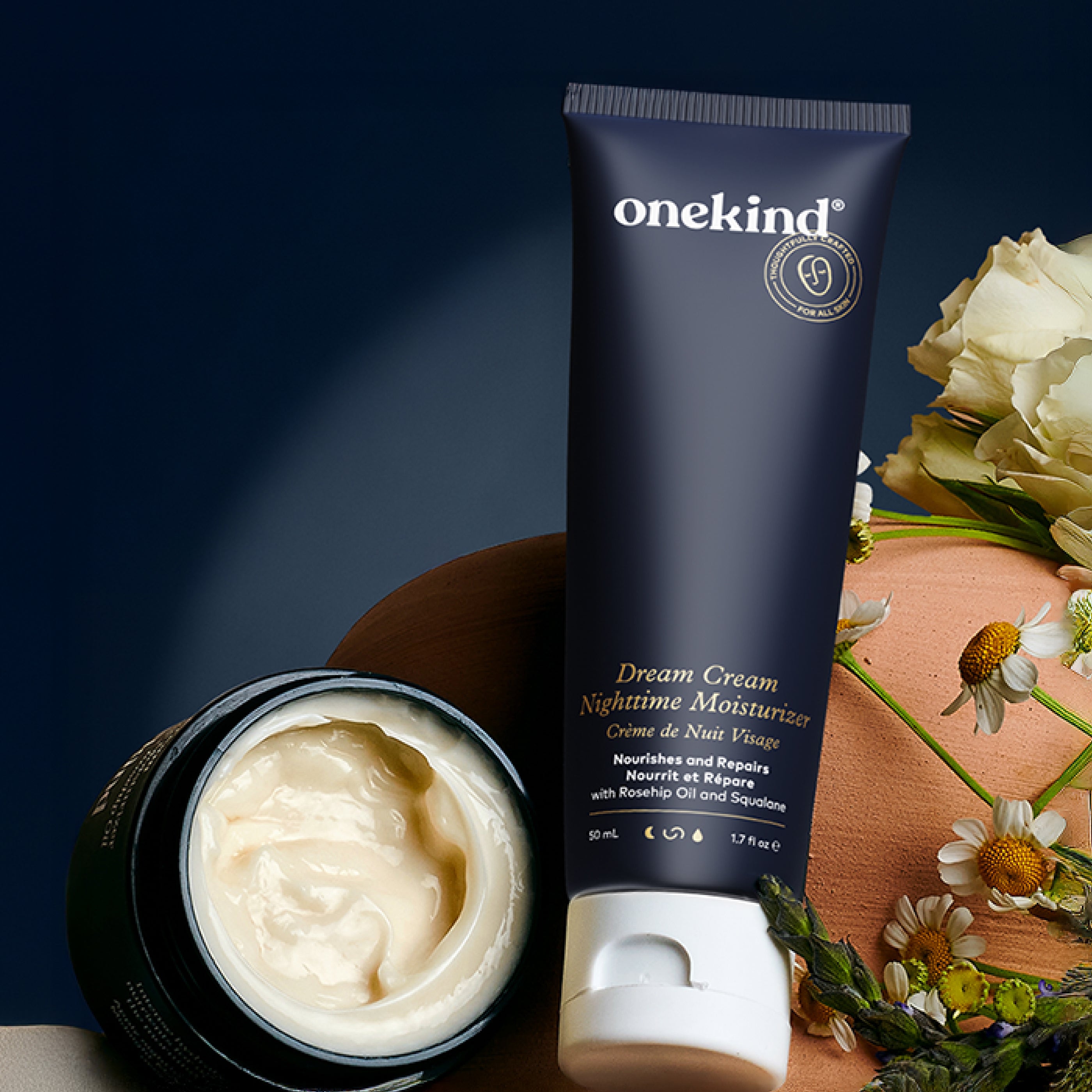
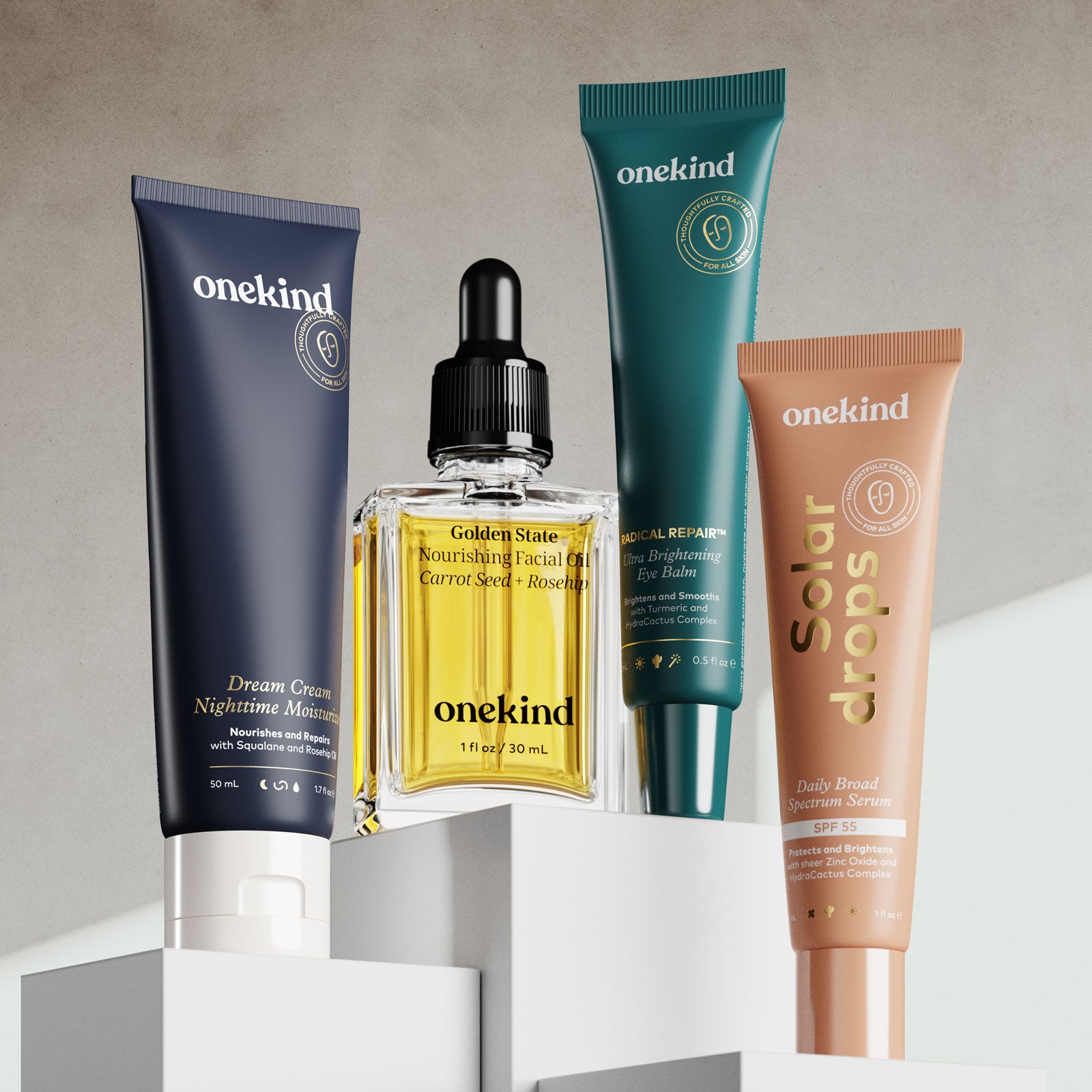
After double cleansing, your skin is primed to absorb what comes next. The Dream Cream Nighttime Moisturizer makes an effective final step in an evening double-cleanse routine — its squalane and rosehip oil base absorbs well on freshly cleaned skin and helps support a deeply hydrated look by morning.
Written by Matt Ruggieri, Co-Founder & Head of Product Development at Onekind, with 15+ years of experience in beauty product formulation and development.