





By Matt Ruggieri, Co-Founder & Head of Product Development, Onekind
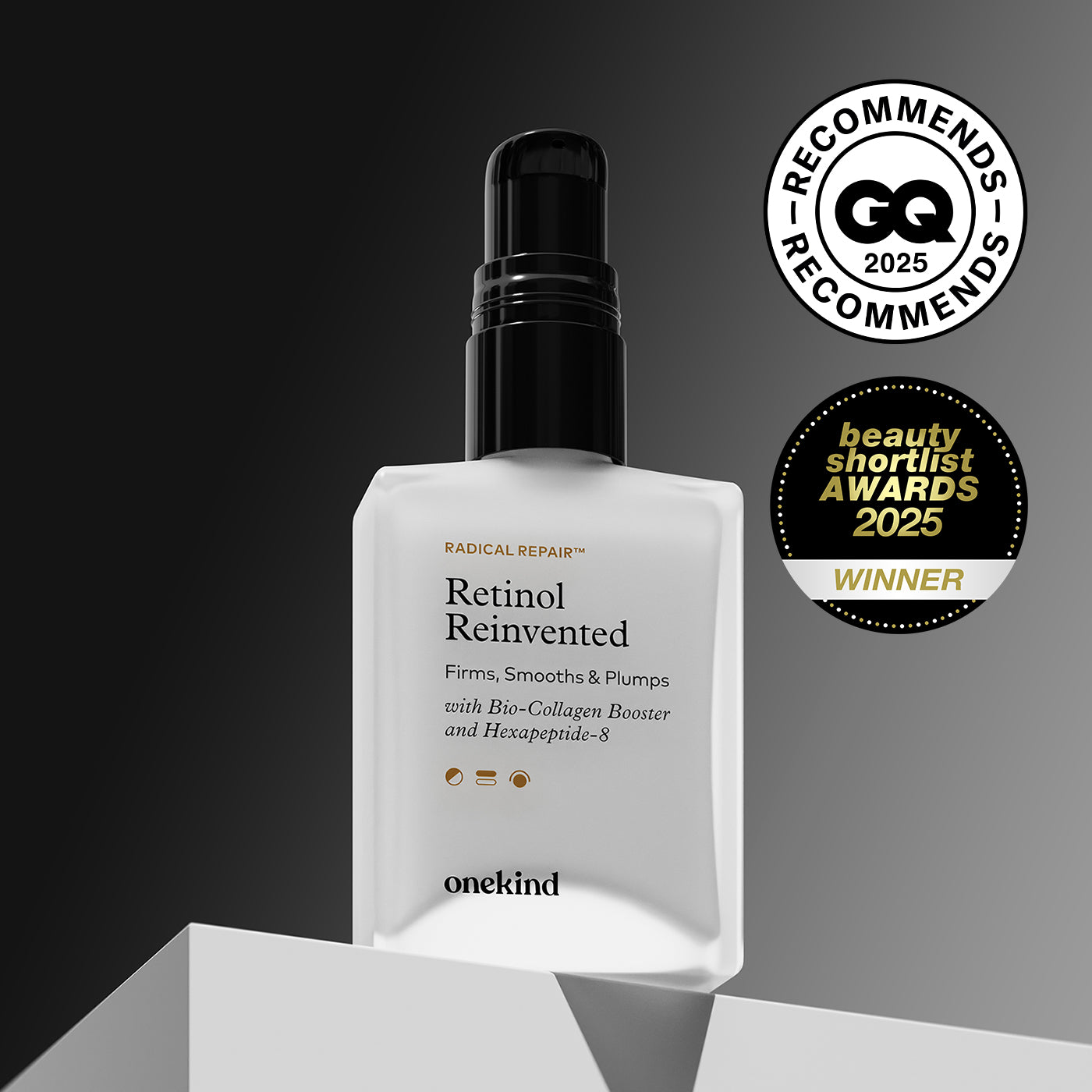
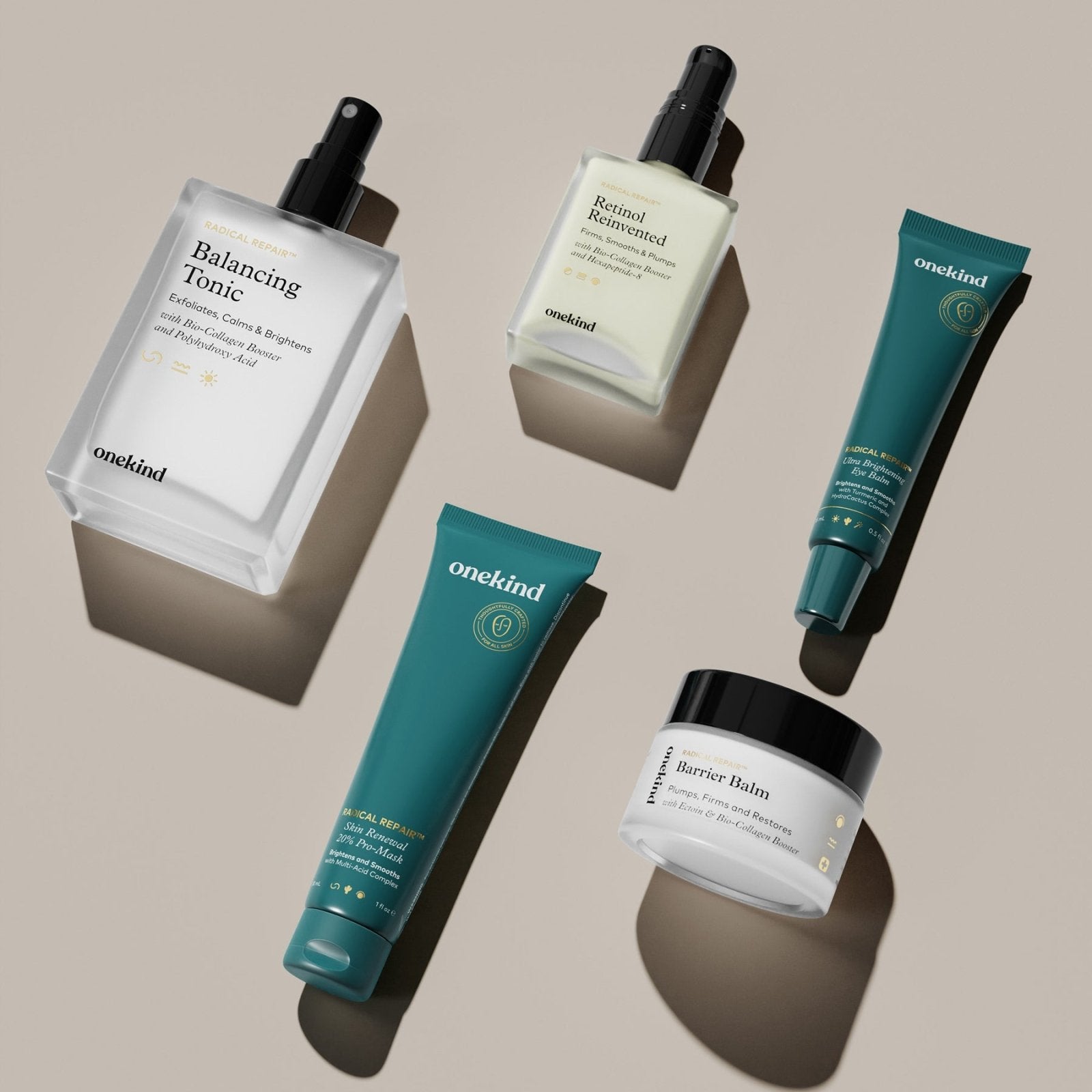
Ectoin is a naturally occurring molecule produced by extremophile bacteria -- microorganisms that survive conditions most life cannot tolerate: salt lakes, hot springs, and arctic ice. To survive these environments, the bacteria generate ectoin as a protective shield around their cells. Applied to skin, it creates the same kind of protection -- shielding cells from UV exposure, pollution, heat, and osmotic stress. That is what makes it particularly useful in sensitive skin routines, and why it is a key ingredient in the Radical Repair® Retinol Reinvented Serum.
When we set out to formulate the Radical Repair® Retinol Reinvented Serum, the challenge wasn't only finding a good retinol. It was figuring out how to deliver real retinol results to people with sensitive skin — the people who'd been told retinol wasn't for them after one too many rounds of redness and peeling.
Ectoin was a significant part of our answer. It's one of those ingredients that doesn't get the credit it deserves, because it works quietly in the background — protecting, stabilizing, and supporting skin while the more headline-grabbing actives do their job. Here's everything I think you should know about it.
Where Ectoin Comes From
Ectoin is a naturally occurring molecule — an amino acid derivative — first discovered in 1985 in Halomonas elongata, a type of salt-loving bacterium found living in a salt lake in the Egyptian desert. These bacteria thrive in conditions that would destroy most organisms: extreme salinity, intense UV radiation, dramatic temperature swings, and near-total dehydration.
To survive, they produce ectoin. It's their primary stress-protection mechanism — a molecule that essentially creates a stabilizing water shield around their cellular structures, proteins, and membranes, protecting them from environmental damage. Scientists classify it as an extremolyte: a molecule produced by microorganisms adapted to survive extreme conditions.
What makes ectoin interesting for skincare isn't just the biology — it's the fact that the same stress-protection properties the bacteria use to survive a salt desert also turn out to be remarkably useful for protecting human skin from modern environmental stressors.
Industrially, ectoin is produced through a process called "bacterial milking," where Halomonas elongata is first grown in high-salt conditions to stimulate ectoin biosynthesis, then transferred to low-salt conditions to cause the bacteria to release their ectoin into the surrounding medium. It's then harvested and purified. The process is efficient, scalable, and produces a highly pure ingredient — which is why ectoin is now manufactured at scale for use across skincare, pharmaceutical, and medical applications.
How Ectoin Works on Skin
Ectoin's primary mechanism is what chemists call kosmotropic activity — it binds water molecules in a highly organized way, forming a stable hydration complex. In practical terms, it creates a structured "shell" of water molecules around skin cells, proteins, and biological structures, protecting them from physical and chemical stress.
Think of it like a protective cushion made of water. That cushion:
- Stabilizes cell membranes, making them less vulnerable to environmental damage
- Protects proteins from denaturation (breakdown) caused by heat, UV, or chemical stress
- Locks moisture at the cellular level rather than just sitting on the surface
- Helps support the structural integrity of the skin barrier over time
Because ectoin has a relatively low molecular weight compared to hyaluronic acid, it penetrates further into the skin — delivering its hydration and protection at a deeper level rather than primarily on the surface.
What makes it particularly valuable in a formulation context is how it interacts with adjacent ingredients. Ectoin doesn't just protect skin from the environment — it helps protect skin from certain active ingredients that, while delivering real results, can also cause visible stress responses. That's exactly why it ended up in the Radical Repair® Retinol Reinvented Serum.
What Ectoin Does for Your Skin
Lasting, Deep Hydration
Ectoin is one of the most effective hydration ingredients I've worked with — not because it holds an extraordinary amount of water on the skin's surface, but because its water-binding mechanism operates at a cellular level. It helps skin maintain its own moisture rather than relying on a topical reservoir. For dry and sensitive skin types, this tends to produce a more resilient kind of hydration than traditional humectants alone.
Visible Barrier Support
A compromised skin barrier is at the root of most sensitive skin struggles — it's why skin reacts, feels tight, looks dull, and has a hard time tolerating active ingredients. Ectoin helps support the appearance of a healthier, more resilient barrier by stabilizing the lipids and proteins that make up the barrier structure. Clinical studies at concentrations of 5–7% have shown meaningful improvements in skin barrier function in people with eczema and atopic dermatitis.
Calming the Appearance of Visible Redness
Ectoin's protective mechanism extends to the skin's immune cells — specifically Langerhans cells, the epidermal cells responsible for triggering visible inflammatory responses. By helping to stabilize these cells against UV and environmental stress, ectoin contributes to a calmer-looking complexion over time. For people whose skin tends toward visible redness or reactivity, this makes ectoin a particularly meaningful ingredient.
Environmental and Pollution Defense
Modern skin is up against more than just sun exposure. Urban pollution — including particulate matter (PM), polycyclic aromatic hydrocarbons (PAHs), and heavy metals — contributes to accelerated visible aging and skin barrier damage. Research shows ectoin offers meaningful protection against both UV and visible pollution exposure, including blue light from screens. For anyone who lives in a city or spends significant time in front of digital devices, that's genuinely useful.
Why We Chose Ectoin for Radical Repair®
The formulation brief for Radical Repair® Retinol Reinvented Serum was specific: create a retinol product that actually works for sensitive skin — not a dumbed-down retinol with a tiny dose and a lot of marketing, but a meaningful retinol formula that the sensitive-skin community could realistically use and see real results from.
Retinol's reputation for irritation comes from a few things: the concentration, the delivery system, and the lack of supporting ingredients that buffer the skin's response. We addressed all three. The dual-retinoid system — retinol linoleate paired with algae-derived bio-retinol — is gentler and more stable than conventional retinol. The time-released delivery system means the retinoid activity unfolds gradually rather than in a sudden burst. And ectoin works alongside the formula to help skin stay hydrated and supported as retinol does its work — reducing the likelihood of visible irritation, tightness, or redness.
The result is a serum where retinol delivers visible results — helping soften the appearance of fine lines, supporting a more even-looking tone, and refining the look of skin texture — without the barrier disruption that makes traditional retinol difficult for sensitive skin to tolerate. Ectoin is a key part of why that works. 

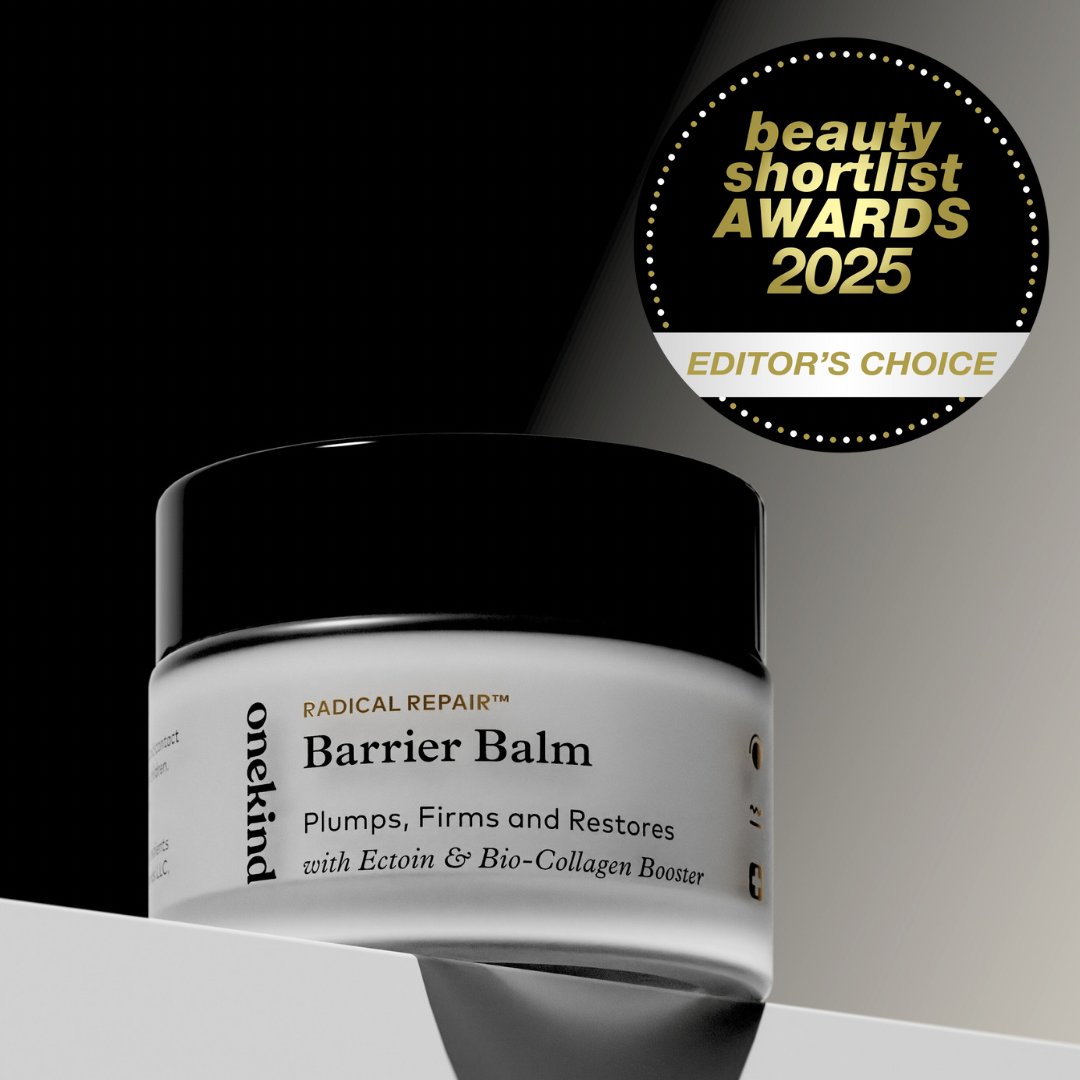
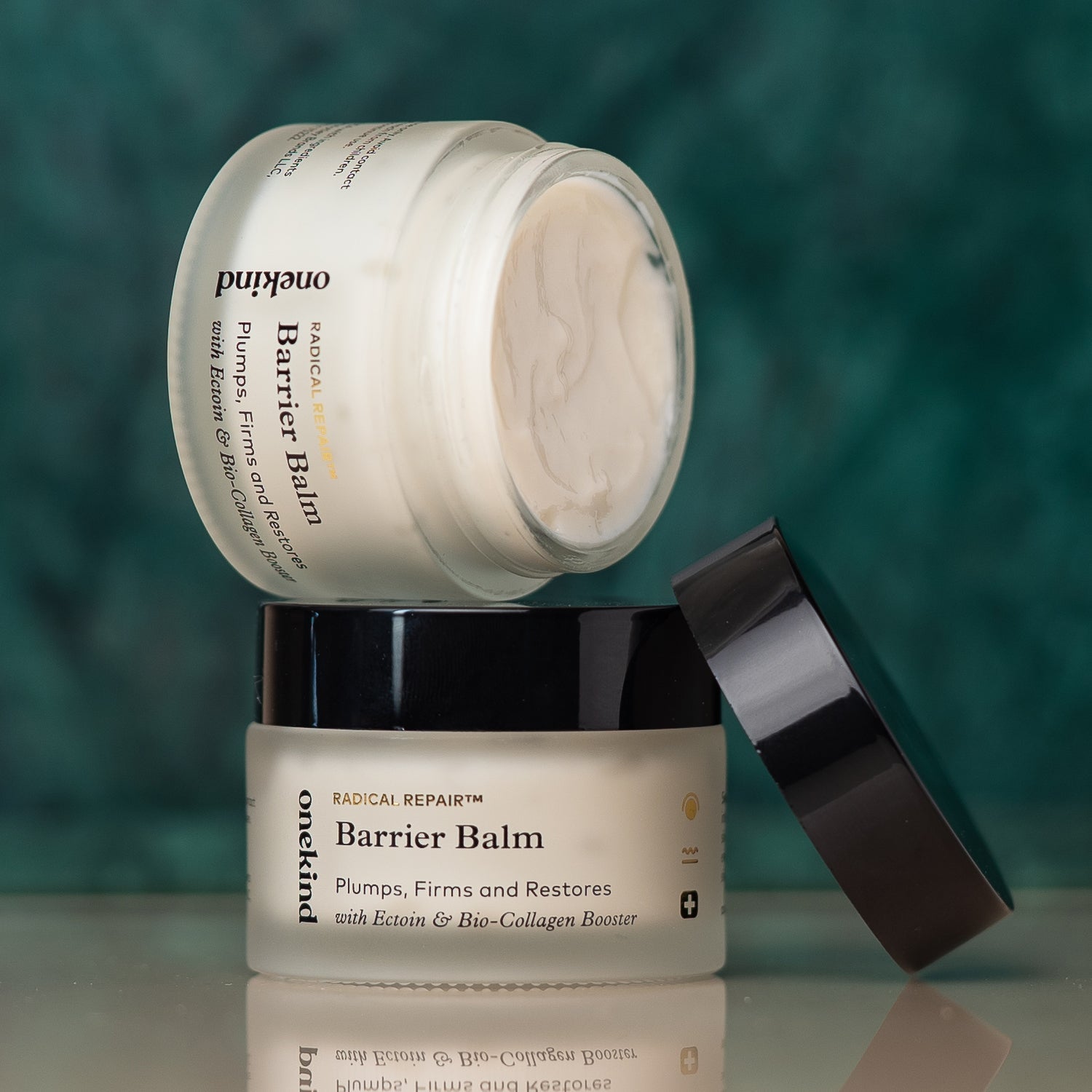
Ectoin in the Radical Repair® Barrier Balm
The Radical Repair® Barrier Balm is designed to do something different from most moisturizers: actively support the repair and reinforcement of a compromised skin barrier, not just coat the surface.
Ectoin is one of the three core active ingredients in the Barrier Balm, alongside Desert Date Oil and a 15% Hydration Boosting Complex. Here, ectoin's barrier-stabilizing and deep hydration properties take center stage. The Barrier Balm is formulated as a companion to the Retinol Reinvented Serum — and ectoin's presence in both products is intentional. When you layer the serum and the balm together, ectoin is present at both stages of the routine, supporting the skin's barrier integrity throughout.
It also works standalone, as an intensive moisturizer for dry, depleted, or reactive skin that simply needs extra support — whether you're using retinol or not.


Who Benefits Most from Ectoin
In my experience formulating with it, ectoin delivers the most visible benefit for:
- Sensitive and reactive skin types — particularly those who struggle to tolerate active ingredients
- Retinol users — ectoin directly helps buffer the visible stress response that retinol can cause in sensitive skin
- Dry or dehydrated skin — the deep cellular hydration mechanism is especially meaningful when surface hydration isn't enough
- Barrier-compromised skin — including skin recovering from over-exfoliation, environmental damage, or persistent reactivity
- Anyone with significant urban or digital screen exposure — ectoin's pollution and blue light defense is genuinely relevant for daily use
That said, it's a non-irritating ingredient that works well for virtually every skin type. There's no reason not to use it — only progressively more reason to include it, depending on your skin's needs.
Frequently Asked Questions
Can ectoin be used with retinol?
Yes — and this is one of ectoin's most compelling use cases. Ectoin helps protect the skin barrier and support cellular stability while retinol drives cell turnover, which means the two ingredients complement each other rather than competing. Using ectoin alongside retinol helps buffer the visible irritation that retinol can cause, making it easier for sensitive skin types to use retinol consistently and see results. This is exactly why both are present in the Radical Repair® Retinol Reinvented Serum.
Is ectoin safe for sensitive skin?
Ectoin is one of the most well-tolerated skincare ingredients available. Clinical trials have consistently shown it to be non-irritating even for highly reactive and sensitive skin types. Unlike many active ingredients, it doesn't require a tolerance-building period — it can be used daily from the start. It's actually the sensitivity-prone skin types who tend to see the most benefit from it.
What concentration of ectoin is effective?
Clinical data supports a range of applications depending on the target benefit. At 0.3–0.5%, ectoin provides meaningful UV protection for epidermal immune cells. At 1%, it delivers soothing and hydration effects. At 2%, it demonstrates measurable anti-wrinkle activity — a placebo-controlled study found a 19% reduction in mean wrinkle depth at 0.5% in the crow's feet area after four weeks. At 5–7%, it's used in medical-grade treatments for eczema and atopic dermatitis.
Is ectoin the same as hydroxyectoin?
No — they're related but distinct. Hydroxyectoin is a derivative of ectoin, also produced by extremophilic bacteria, with slightly different properties. Hydroxyectoin is generally considered more potent at protecting against heat and dryness stress. Ectoin is more widely researched across a broader range of skin applications, which is why it's the more common choice in skincare formulations.
Is ectoin synthetic?
No. Ectoin is a naturally produced molecule — derived from bacteria via a fermentation and extraction process. It's not synthesized chemically. The production method (bacterial milking from Halomonas elongata) is a biotechnology process, but the molecule itself is natural and identical to what the bacteria produce in their native environment.
The Bottom Line
Ectoin is one of those ingredients that earns its place in a formula not by doing one flashy thing, but by doing several important things reliably and without causing problems — which, for sensitive skin, is genuinely rare. It hydrates deeply, supports the barrier, calms visible reactivity, and directly complements the ingredients that tend to be hardest on sensitive skin.
That's why it's a featured ingredient in both the Radical Repair® Retinol Reinvented Serum and the Radical Repair® Barrier Balm — not as a filler, but as a core part of what makes these formulas work for the people they were designed for.
If you've been avoiding retinol because of how your skin reacts, or if you've been stuck in a cycle of barrier disruption and recovery, ectoin is worth understanding. And if you're already using either Radical Repair® product, it's quietly doing some of its best work right there in your routine.
— Matt Ruggieri
Co-Founder & Head of Product Development, Onekind
If you are building a sensitive skin routine around ectoin-containing products, the complete Radical Repair skincare routine guide walks through how to layer the serum, barrier balm, and supporting products in the right order. For a broader look at the protective ingredients used in mineral sunscreens for sensitive skin, our guide to non-nano zinc oxide in sunscreen covers the other key stress-shielding ingredient worth knowing.
Written by Matt Ruggieri, Co-Founder & Head of Product Development at Onekind, with 15+ years of experience in beauty product formulation and development.