




If you've ever wondered whether toner is actually doing anything for your skin — or whether it's just an extra step you can skip — you're not alone. Toner is one of the most misunderstood products in skincare. Here's the honest answer: a well-formulated toner does several things your cleanser can't, and it sets up the rest of your routine to work better. Here's what you need to know.
What Is a Toner?
A toner is a lightweight, water-based liquid applied to skin after cleansing and before serums or moisturizer. It was originally developed to help remove residual soap and restore skin's pH after older alkaline cleansers threw it off balance. Modern toners have evolved significantly — today's formulas are designed to hydrate, balance, refine, and prep skin, not strip it.
The category now includes several distinct types:
- Hydrating toners — replenish moisture immediately after cleansing
- Exfoliating toners — contain AHAs (glycolic, lactic acid) or BHAs (salicylic acid) to help smooth skin texture
- Balancing toners — restore skin's natural pH and help calm post-cleansing disruption
- Essence-style toners — richer formulas that blur the line between toner and serum
What Does Toner Do for Your Skin?
Toner does five distinct things when used consistently in your routine:
1. Restores Your Skin's pH Balance
Cleansing — even with a gentle formula — temporarily disrupts skin's natural pH (which sits around 5.5, slightly acidic). When pH is off, skin can feel tight, look dull, or feel more reactive. A balancing toner helps return skin to its optimal range, so your follow-up products can absorb as intended.
2. Removes What Your Cleanser Leaves Behind
Even a thorough cleanse leaves trace amounts of impurities, makeup residue, and hard water minerals on the skin's surface. Toner picks up what your cleanser missed — functioning as a second-pass cleanse without disrupting your skin barrier.
3. Improves Absorption of Serums and Moisturizers
Applying serum or moisturizer to clean-but-dry skin can limit how well those ingredients absorb. A hydrating toner creates a slightly damp surface that helps subsequent products penetrate more evenly and effectively — a layering technique sometimes called "wet layering."
4. Delivers an Immediate Hydration Boost
Many modern toners contain humectants like glycerin, hyaluronic acid, or panthenol that begin drawing moisture into the skin on contact. For dry or dehydrated skin types, this makes toner one of the most impactful steps in the whole routine.
5. Helps Minimize the Appearance of Pores and Uneven Texture
Toners formulated with mild exfoliating acids help smooth the surface of skin over time, which can help pores appear smaller and skin texture look more refined. Results typically become visible within four to six weeks of consistent use.
Do You Actually Need a Toner?
Toner is not strictly necessary for everyone — but for most skin types, it's one of the easiest ways to make the rest of your routine more effective. If you cleanse and go straight to serum, you may be skipping a step that helps everything else absorb better. If your skin tends to feel tight after cleansing, look dull, or react to products, a hydrating or balancing toner is often the fix.
You can skip toner if your skin is consistently balanced, your cleanser is ultra-gentle, and your other products are performing well as-is.
How to Use Toner in Your Skincare Routine
Toner belongs immediately after cleansing — before serums, treatments, and moisturizer. Here's the correct order:
- Cleanse — wash your face and pat skin damp, not bone dry
- Apply toner — pour a small amount onto a cotton pad or into your palms and press gently into skin
- Wait 20–30 seconds — let toner absorb before layering
- Apply serum — while skin is still slightly damp from toner
- Moisturize — seal everything in
Frequency: Most toners can be used morning and evening. If your toner contains exfoliating acids, start with once daily (evening) and increase as your skin tolerates it.
How to apply: Cotton pad or hands both work. Hands are gentler and waste less product; cotton pads offer a light second-cleanse effect. Avoid rubbing — always press and pat.
How to Choose the Right Toner for Your Skin Type
Not all toners are formulated the same. Here's what to look for based on your skin's needs:
| Skin Type | What to Look For | What to Avoid |
|---|---|---|
| Dry / Dehydrated | Hyaluronic acid, glycerin, aloe, panthenol | High alcohol content, strong acids |
| Oily / Acne-Prone | Salicylic acid (BHA), niacinamide, witch hazel | Heavy occlusive ingredients |
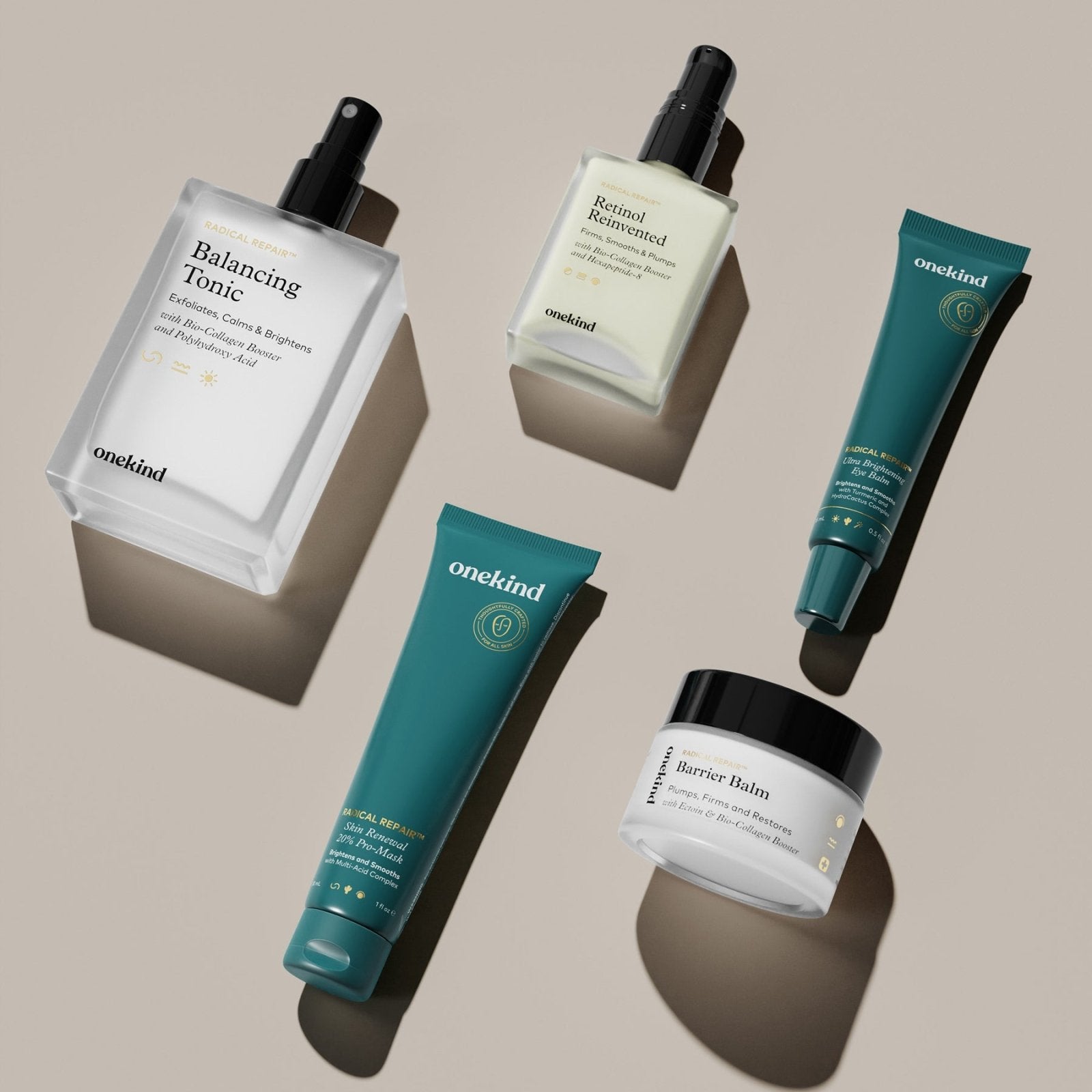
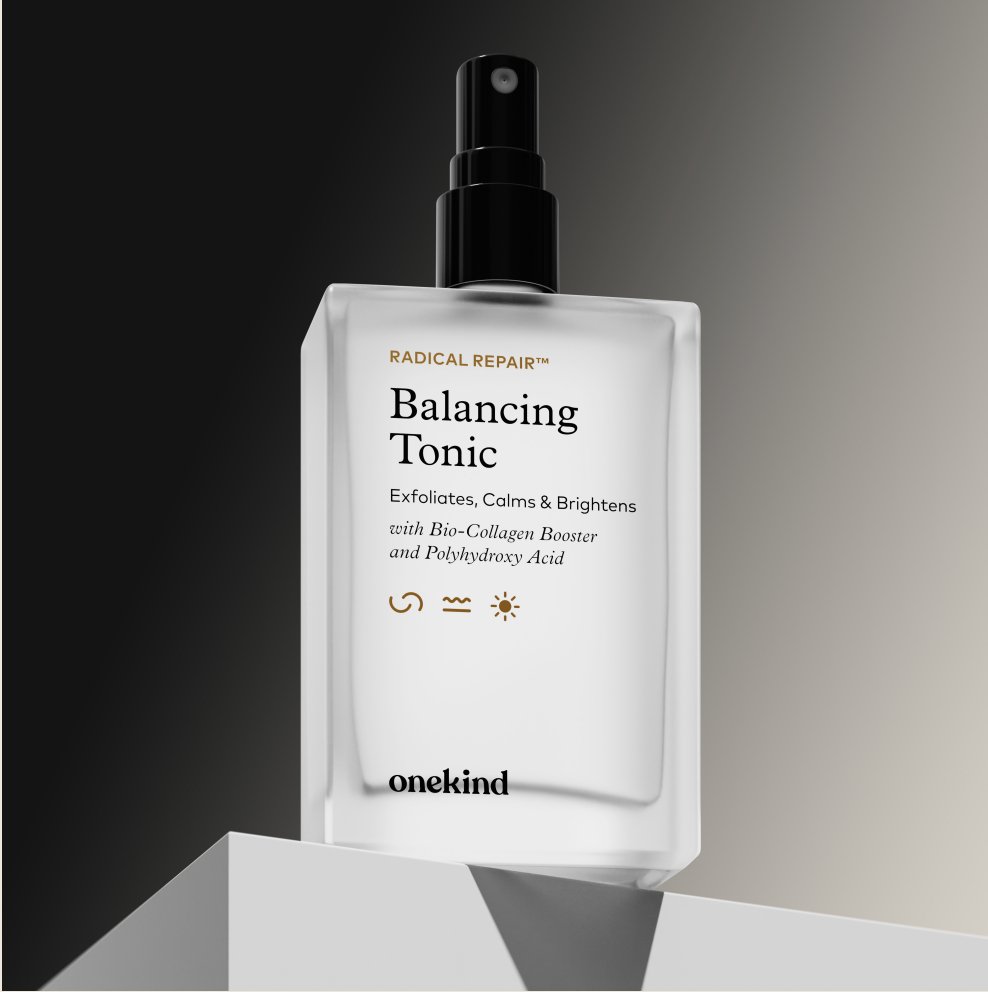
| Sensitive / Reactive | Simple ingredient lists, free of synthetic fragrance, calming botanicals — try the Radical Repair® Balancing Tonic | AHAs, alcohol, essential oils |
| Combination | Balancing formulas, light hydration | Overly stripping or overly rich formulas |
| Normal | Hydrating or mild exfoliating toners | Nothing specific — most well-formulated toners work |
Why We Created the Radical Repair® Balancing Tonic
Our Radical Repair® Balancing Tonic was formulated specifically for skin that needs more than a basic toner — particularly skin that feels stressed, reactive, or tight after cleansing.
The formula is built around three priorities:
Barrier support. Stressed skin benefits from ingredients that help support the appearance of a healthy barrier. The Balancing Tonic includes actives that help skin look calmer and feel more resilient.
Immediate hydration. Humectants in the formula begin working on contact, helping skin hold onto moisture rather than losing it between cleansing and moisturizing.
pH restoration. The formula is designed to gently bring skin back to its natural balance — making it an ideal first step before layering the rest of your Radical Repair® routine.
The Balancing Tonic is formulated free of synthetic fragrance and is suitable for sensitive skin. It can be used morning and evening.
Frequently Asked Questions About Toner
What is the purpose of a toner in skincare?
Toner restores skin's pH balance after cleansing, removes residual impurities, and prepares skin to absorb serums and moisturizers more effectively. It also delivers an immediate hydration boost and can help smooth skin texture over time with consistent use.
When should I use toner in my skincare routine?
Apply toner immediately after cleansing, before any serums, treatments, or moisturizer. It's the second step in most routines — after cleanser, before everything else.
How often should I use toner?
Most hydrating and balancing toners can be used morning and evening. Exfoliating toners (with AHAs or BHAs) are best used once daily, starting in the evening, and increased gradually as skin adjusts.
Does toner help with skin texture?
Yes — toners formulated with exfoliating acids like glycolic acid (AHA) or salicylic acid (BHA) can help improve the appearance of skin texture over time. Results typically become visible after four to six weeks of consistent use.
What's the difference between a toner and a serum?
Toners are thinner and more water-based — applied first to prepare skin and restore balance. Serums are more concentrated and targeted, delivering active ingredients for specific concerns like brightening or firming. Toner always goes before serum.
After toner, what should I use next?
After toner, apply your serum or treatment while skin is still slightly damp. Then follow with moisturizer. If you use SPF in the morning, that goes last.
Can I use toner if I have sensitive skin?
Yes — choose a toner formulated without synthetic fragrance, alcohol, or strong acids. Look for calming ingredients like aloe, centella asiatica, or panthenol. The Radical Repair® Balancing Tonic is formulated free of synthetic fragrance and is suitable for sensitive and stressed skin.
Is toner the same as an astringent?
No. Astringents are typically alcohol-based and designed to aggressively remove oil — they can be drying and irritating. Modern toners are a different product category: gentler, more hydrating, and designed to balance rather than strip the skin.