






By Matt Ruggieri, Co-founder & Head of Product Development, Onekind
Facial oil is the most misunderstood product category in skincare — and that confusion costs people real results. I hear the same questions constantly: Does a facial oil replace my moisturizer? Will it make me break out? Is it just for dry skin? Should I put it on before or after everything else?
The confusion makes sense. "Oil" sounds heavy. Most people's only reference point is cooking oil or the grease from an unwashed face. But a well-formulated facial oil is one of the most skin-compatible ingredients you can apply — and it does things a moisturizer fundamentally cannot.
Here's what's actually going on, and how to decide what belongs in your routine.
What a Facial Oil Actually Is
A facial oil is a concentrate of plant-derived lipids — oils pressed or extracted from seeds, fruits, nuts, and botanicals. These lipids are structurally similar to the sebum your skin naturally produces, which is why well-chosen oils absorb readily rather than sitting on the surface.
The key word is "well-chosen." Not all oils are equal. Heavier oils with large molecular structures — coconut oil is the classic example — can't penetrate skin efficiently and tend to sit on top, which is where the "oils clog pores" reputation comes from. Lighter oils like jojoba, rosehip, and squalane have smaller molecular structures that absorb quickly, deliver nourishment where it's needed, and don't leave a greasy residue.
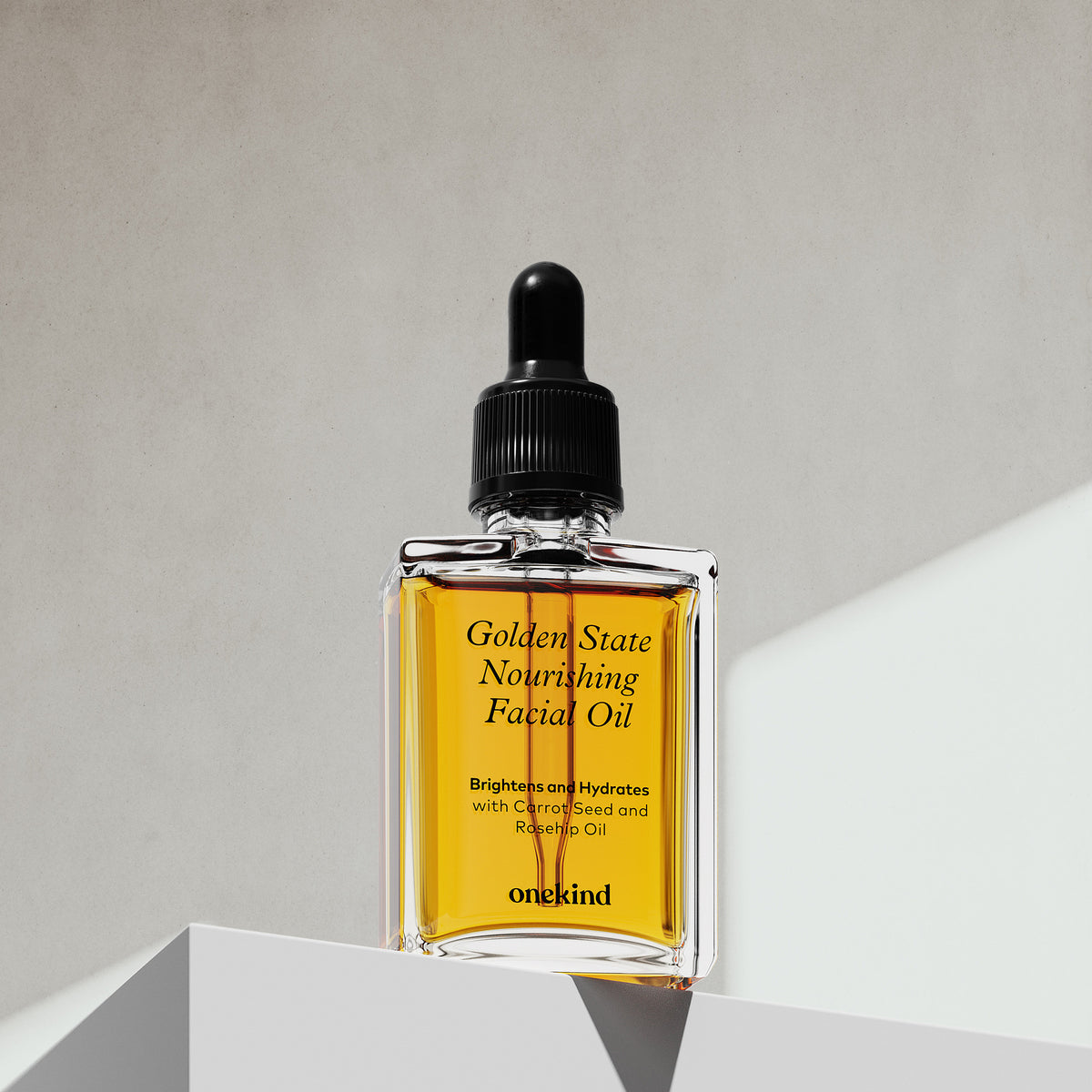
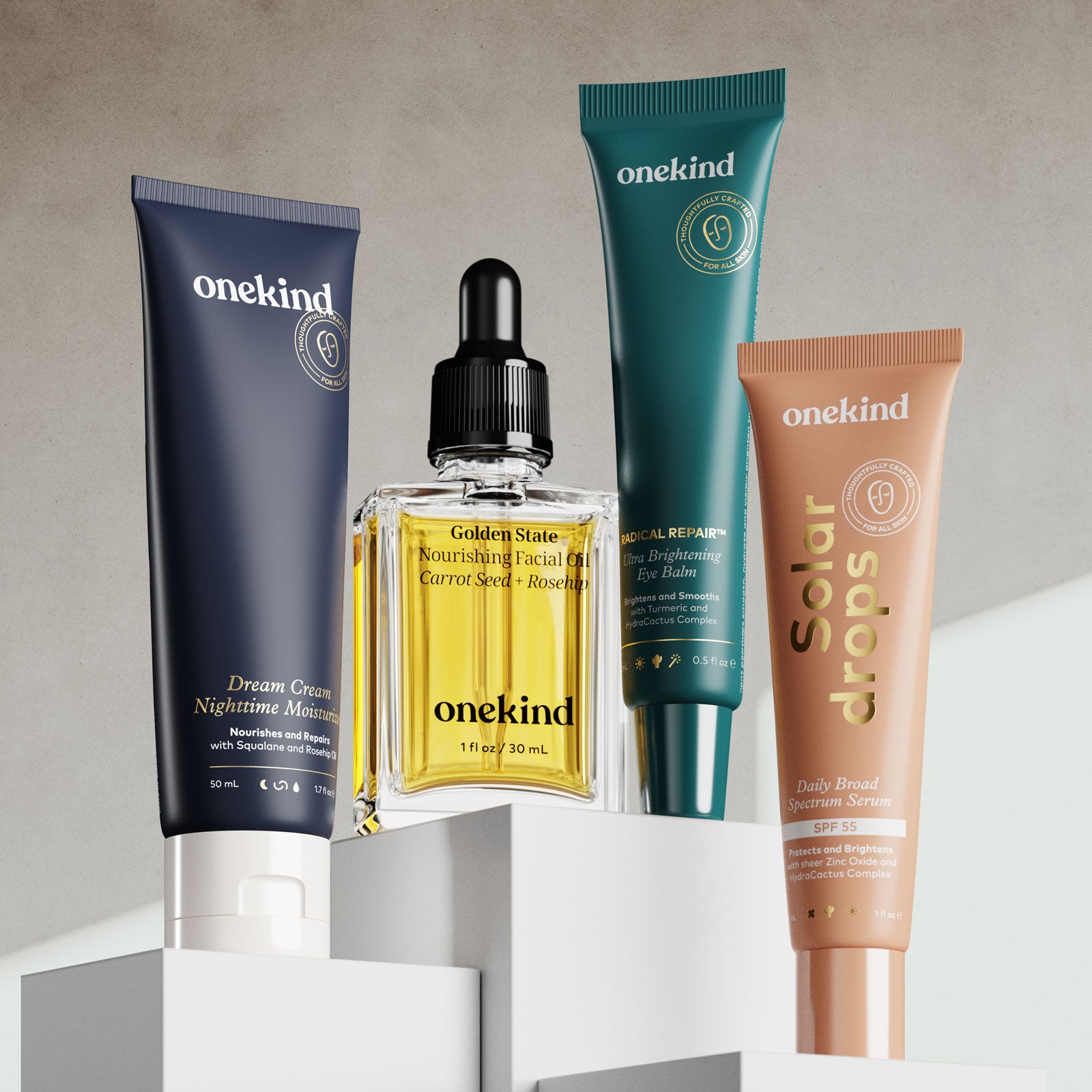
When I was formulating Golden State Nourishing Facial Oil, I made the decision early on not to build it around a single hero oil. The "single oil" approach — pure rosehip oil, pure argan oil — is clean and marketable, but it's also limiting. Different oils have different molecular weights, fatty acid profiles, and bioactive compounds. A blend of oils can do more than any single oil can. Golden State uses 20+ hand-selected oils and botanical extracts, chosen specifically because each one contributes something the others don't.
What a Moisturizer Actually Is
A moisturizer is a water-in-oil or oil-in-water emulsion — meaning it combines water-based and oil-based ingredients in a way that delivers both hydration and emollient support. The water component adds moisture (hydration) directly to skin; the emollient and occlusive components help seal that moisture in and support the skin barrier.
Most moisturizers also contain humectants — ingredients like hyaluronic acid and glycerin that attract water from the environment and deeper skin layers and hold it at the surface. This is something a pure facial oil cannot do on its own, because oils don't contain water-binding molecules.
The practical upshot: a moisturizer hydrates. A facial oil nourishes and protects. They're targeting different aspects of skin health, which is why the most effective routines usually use both.
The Real Difference: What Each One Does That the Other Can't
This is where most explanations get it wrong by framing facial oil and moisturizer as competitors. They're not. They're complementary.
Facial oil can't replace a moisturizer because: Oils don't contain water or water-binding humectants. If your skin is dehydrated — lacking water, not lacking oil — a facial oil alone won't fix it. You need a moisturizer's water component and humectants to address dehydration.
Moisturizer can't replace a facial oil because: Most moisturizers don't contain the concentrated levels of plant lipids, fatty acids, and fat-soluble vitamins (like the vitamin A in rosehip oil) that a good facial oil delivers. They're emulsified — meaning the oil-based ingredients are diluted into a water base. A facial oil delivers those compounds in their most concentrated, bioavailable form.
The analogy I always come back to: a moisturizer fills the water tank. A facial oil reinforces the tank walls. You need both working together for skin that's genuinely healthy and resilient.

So — Do You Actually Need Both?
It depends on your skin and your goals, but here's an honest answer: for most people, yes — and not because I'm selling both products.
If you have dry skin, you almost certainly need both. Dry skin lacks oil (sebum) at the surface, which means the barrier is compromised and moisture escapes faster than it should. A facial oil helps rebuild that lipid layer; a moisturizer addresses the water deficit. Using both, in the right order, is significantly more effective than using either alone.
If you have oily skin, the counterintuitive answer is that you still likely benefit from a facial oil — just a lighter one applied strategically. Oily skin overproduces sebum partly because the barrier is compromised and skin is compensating for dehydration. Introducing a lightweight oil can actually help normalize sebum production over time, while a lightweight moisturizer addresses the underlying dehydration. The key is choosing non-comedogenic oils (jojoba, squalane, rosehip) and a non-greasy moisturizer.
If you're on a tight budget and can only choose one, choose your moisturizer first. It addresses a broader range of skin needs. Then add a facial oil when you can — you'll feel the difference almost immediately in how much better your skin holds moisture overnight.
How to Layer Them Correctly
Order matters. The rule is always lightest to heaviest — thinner products go first so they can reach skin without a heavier barrier blocking them.
In a full nighttime routine:
- Cleanse
- Serum (retinol, peptides, or vitamin C — the thinnest products)
- Facial oil — pressed into damp or freshly serumized skin
- Moisturizer — applied over the oil to seal everything in
Yes, facial oil goes under your moisturizer at night — not on top. The moisturizer creates an occlusive layer that helps the oil absorb slowly and keeps both products in contact with skin through the night. In the morning, if you use a facial oil, you can apply it before your moisturizer as well, though I find most people do more with oils at night. For the complete layering logic, see Your Complete Nighttime Skincare Routine.

Why I Built Golden State the Way I Did
When I started working on Golden State Nourishing Facial Oil, I was trying to solve a personal frustration. Every facial oil I tried did one thing well and then fell short in other ways. Rosehip oil is exceptional for vitamin A and brightening but oxidizes quickly and smells medicinal. Argan oil is lightweight and absorbs well but doesn't have the same depth of fatty acid nourishment. Squalane is clean and brilliant for sensitive skin but lacks the bioactive richness of plant oils.
The 20+ oil blend in Golden State exists because the answer wasn't one oil — it was building around the strengths of each one while the others cover its weaknesses. Rosehip and carrot seed oil provide vitamin A, beta-carotene, and antioxidants for brightening and skin-tone evening. Sea buckthorn contributes rare omega-7 fatty acids and a high antioxidant load. Jojoba and apricot kernel keep the texture lightweight and help the formula absorb without heaviness. Squalane brings barrier support and works as a natural stabilizer for the more reactive oils in the blend.
The result absorbs in under a minute and leaves skin looking luminous — not oily. That distinction was non-negotiable for me.
A Note on Skin Type and Oil Phobia
The biggest obstacle I see is people with oily or acne-prone skin ruling out facial oils entirely. I understand the instinct. But sebum — the oil your skin produces — is not the same as a topical facial oil. Your skin is already producing oil; the question is whether the oil you produce is well-balanced and the barrier is intact. Many people with oily skin are simultaneously dehydrated, and the oiliness is a compensation mechanism.
If you've had bad experiences with facial oils before, the issue is almost always which oil — not oil itself. Heavy, comedogenic oils (coconut, cocoa butter) clog pores. Lightweight, non-comedogenic oils like jojoba, rosehip, and squalane — all in Golden State — don't carry that risk. Start with a few drops at night on clean skin before your moisturizer and give it four weeks. Most people who "can't use oils" discover they can use the right ones.
Shop Golden State Nourishing Facial Oil — $48
Frequently Asked Questions
Should I use a facial oil before or after moisturizer?
At night, apply facial oil before moisturizer — lighter products first, heavier products on top. Apply your serum, then press in 3–4 drops of Golden State, then finish with your nighttime moisturizer. The moisturizer creates an occlusive layer that helps the oil absorb slowly over several hours. In the morning, if you use a facial oil, the same order applies: oil before moisturizer before SPF.
Can I mix facial oil into my moisturizer?
Yes — mixing 2–3 drops of facial oil into your moisturizer and applying them together as one step is a legitimate approach. It works especially well in the morning when you want to streamline your routine. You get some of the nourishing benefit of the oil without the additional layering step. The one trade-off is that you're diluting both products slightly, so the effect is more modest than layering them separately.
Will facial oil make oily or acne-prone skin worse?
Not if you choose the right oils. Heavy, comedogenic oils like coconut oil can clog pores and contribute to breakouts. Lightweight, non-comedogenic oils — jojoba, rosehip, squalane, apricot kernel — have a different molecular structure and don't carry that risk. Golden State uses non-comedogenic oils throughout. Start with a small amount (2–3 drops) at night and increase as your skin adjusts.
Is facial oil the same as a serum?
No. A facial oil is a lipid-based product delivering emollient nourishment. A serum is typically water-based (though some are oil-based) and designed to deliver high concentrations of active ingredients — like retinol, peptides, or vitamin C — that target specific skin concerns. In a routine, serums go first because of their lighter texture; facial oil goes over the serum to help it absorb and add its own nourishment.
What does facial oil do that a moisturizer doesn't?
A facial oil delivers concentrated plant lipids, fatty acids, and fat-soluble vitamins (like the vitamin A in rosehip oil) in their most bioavailable form — without the dilution of a water-based emulsion. It also provides emollient nourishment that supports the lipid layer of the skin barrier in a way that most moisturizers, which contain higher proportions of water and water-binding ingredients, don't match. Think of it as the difference between eating a food and taking a supplement — the moisturizer handles hydration; the oil handles targeted lipid nourishment.
How many drops of facial oil should I use?
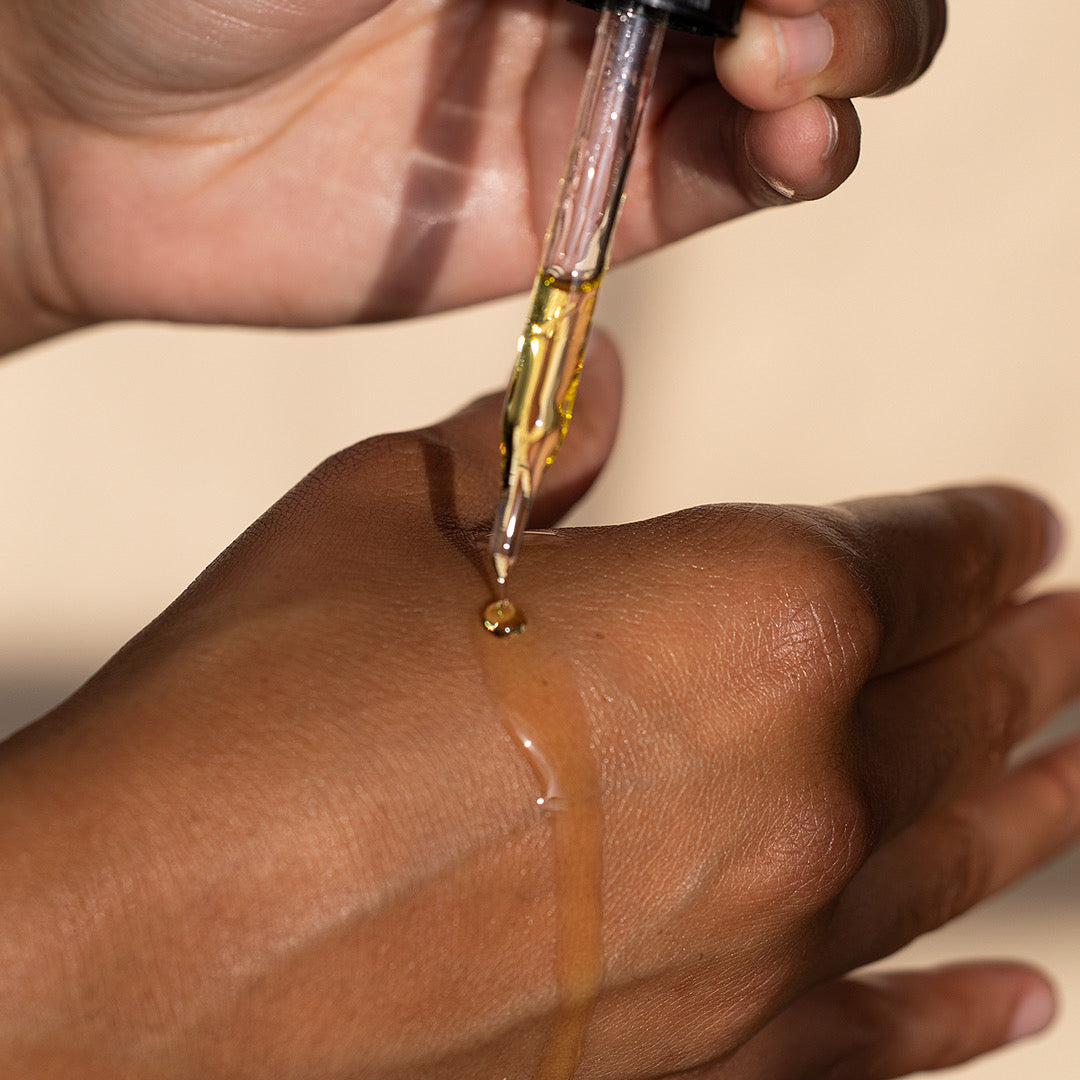
Start with 3–4 drops for the face and neck. Press the oil between your palms to warm it slightly, then press into skin rather than rubbing — this gives more even coverage and doesn't drag on recently-serumized skin. You can add another drop or two if your skin feels like it wants more, especially in colder months when the air is drier and skin loses moisture faster overnight.
Can I use Golden State in the morning?
Yes — though most people find it works best at night when the oil has hours to absorb. In the morning, 1–2 drops pressed into skin before moisturizer gives a healthy-looking luminosity under makeup. Avoid applying too much in the morning if you're wearing foundation — you want a light glow, not a slip layer that makes makeup move. If you're skipping foundation, a morning application of Golden State followed by SPF is a genuinely beautiful look on its own.
Matt Ruggieri is the Co-founder and Head of Product Development for Onekind. With over 15 years of experience, Onekind makes skin-friendly perfume oils and skincare products developed for sensitive skin.

Written by Matt Ruggieri, Co-Founder & Head of Product Development at Onekind, with 15+ years of experience in beauty product formulation and development.