






Quick Answer
Yes — retinol and peptides can be used together and work well as a pair. Retinol accelerates cell turnover to smooth texture and even tone; peptides signal collagen synthesis to support firmness and elasticity. Because they address skin aging through different mechanisms, combining them covers more ground than either does alone. The one caveat: some copper peptides can interact with retinol — if you use both, apply them in separate steps rather than layered directly on top of each other.
By Matt Ruggieri, Co-founder & Head of Product Development, Onekind
Retinol and peptides are the two most talked-about anti-aging ingredients in skincare right now — and one of the most common questions I get is whether you can use them in the same routine, or whether they cancel each other out. The short answer is that not only can you use them together, you probably should. They work through entirely different mechanisms, and used correctly, each one makes the other more effective.
Here's what's actually happening when you use both — and why I formulated Radical Repair around the combination rather than choosing one or the other.
What Retinol Does
Retinol is a vitamin A derivative that works by accelerating skin cell turnover — the process of shedding old, damaged cells and generating new ones. As turnover speeds up, collagen production increases, pigmentation evens out, pores appear smaller, and the texture of skin becomes measurably smoother. It's one of the most rigorously studied ingredients in dermatology, with decades of clinical research behind it.
The mechanism is cell-level. Retinol converts to retinoic acid in the skin, which then binds to retinoid receptors and activates the genes that regulate cell turnover and collagen synthesis. It's not a surface treatment — it changes how skin behaves over time.
The trade-off, especially when starting out, is that accelerated turnover can cause temporary dryness, flaking, and sensitivity while skin adjusts. This is why the introduction matters as much as the ingredient itself. For a full breakdown of how to start without irritating your skin, see The Beginner's Guide to Retinol.

What Peptides Do
Peptides are short chains of amino acids — the building blocks of proteins like collagen, elastin, and keratin. Applied topically, different peptide sequences signal different responses in skin: some stimulate collagen production directly, some improve the look of firmness and elasticity, some support the appearance of a healthy skin barrier.
The key distinction from retinol is in the mechanism. Retinol drives change through cell turnover — it essentially pushes skin to regenerate faster. Peptides work by signaling — they communicate with skin cells to produce more of what they're already designed to produce, but do so without the same level of cellular disruption. Peptides don't typically cause sensitivity, redness, or the adjustment period that retinol does. They're additive, not disruptive.
This is precisely why the combination is so effective: retinol drives the acceleration, peptides support the scaffolding. One pushes turnover, the other reinforces what's being built.

Why They Work Better Together
The "retinol vs. peptides" framing is a false choice, and I think it comes from the way these ingredients tend to be marketed — as competing heroes rather than complementary mechanisms.
Retinol's limitations are real. Accelerated cell turnover is productive but demanding — skin needs raw materials to keep pace, and sensitivity during the adjustment period is a sign the skin is working hard without quite enough support. This is where peptides earn their place. A peptide complex alongside retinol doesn't blunt the retinol's effect — it gives skin more of what it needs to execute the turnover process with less visible stress.
Think of it this way: retinol is the training stimulus. Peptides are the recovery nutrition. You wouldn't push harder in training while cutting protein — and you shouldn't push cell turnover without giving skin the amino acid signals it needs to rebuild efficiently.
There's also evidence that certain peptides support the skin barrier during retinol use specifically — reducing the transepidermal water loss that makes retinol adjustment uncomfortable for some people. Peptides don't cancel retinol out; they make it more tolerable and, over time, more effective.
Why I Put Both in Radical Repair
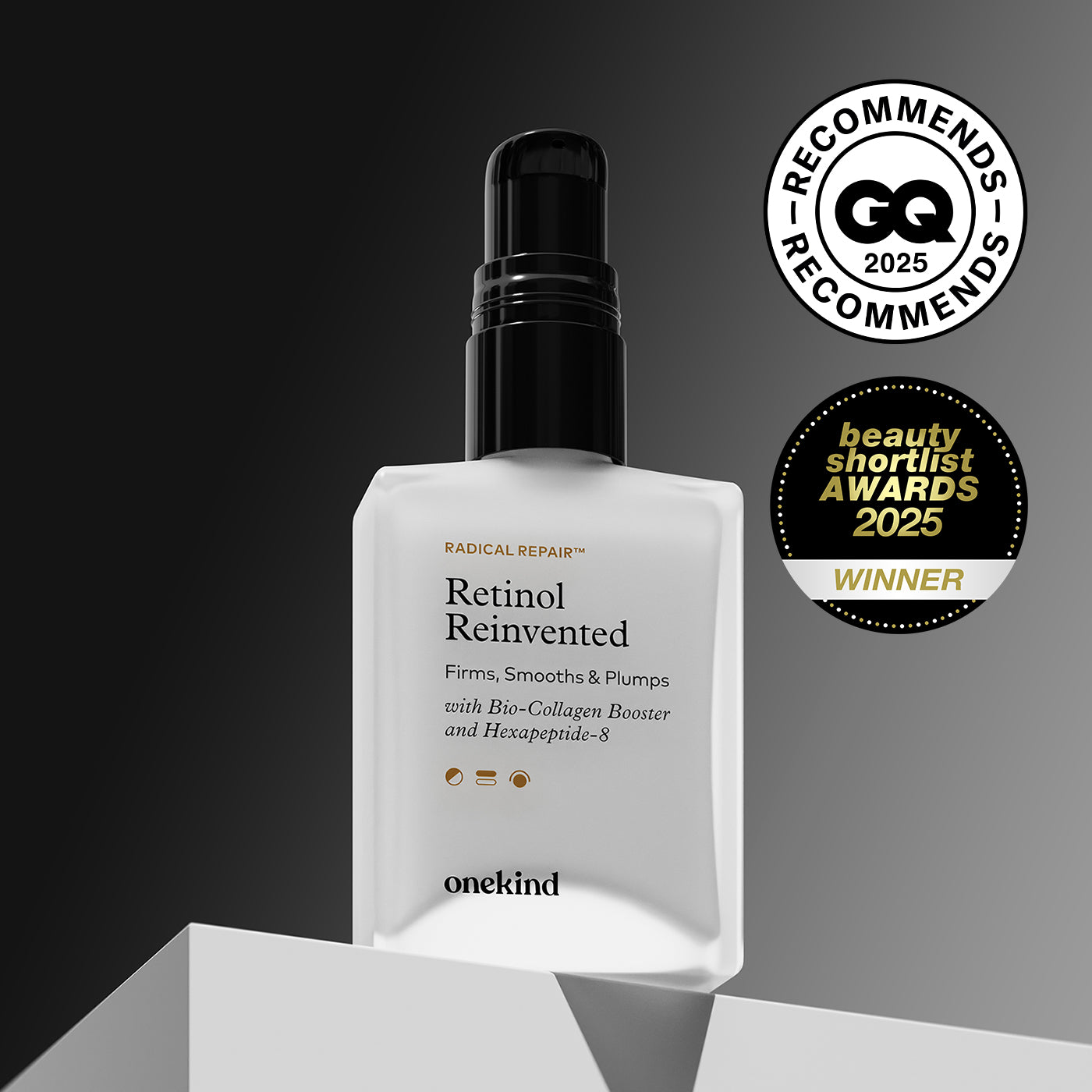
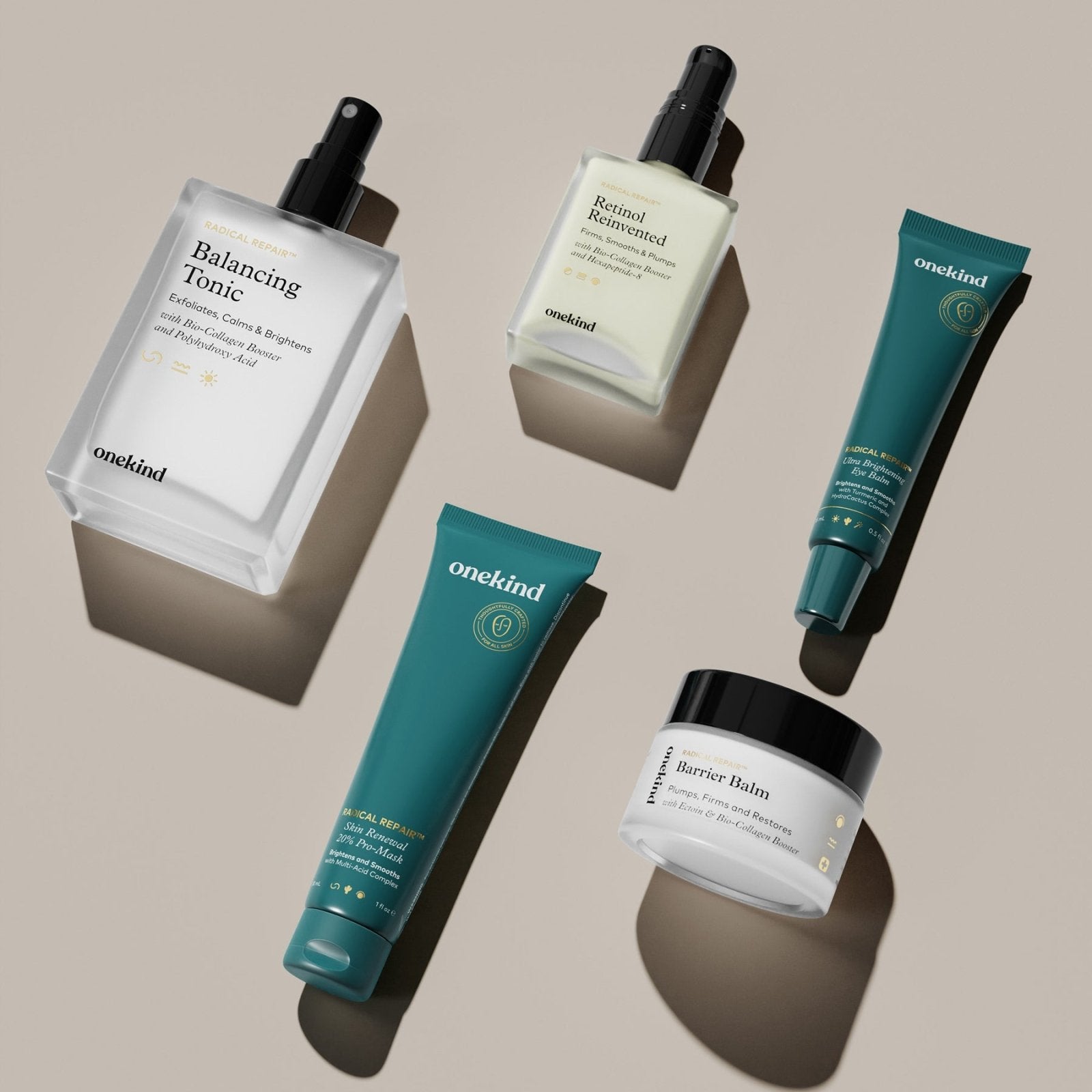
When I was developing Radical Repair® Retinol Reinvented Serum, the brief was simple and difficult at the same time: make a retinol serum that works for people who've been told their skin is too sensitive for retinol.
The obvious solution was to just lower the retinol concentration. That's what most "gentle retinol" products do — and the problem is that a low enough concentration to avoid all irritation is also often a low enough concentration to avoid meaningful results. You end up with a product that's gentle because it's not really doing the work.
The more interesting approach was to keep effective retinol levels and solve the sensitivity problem differently. That meant building a support system around the retinol rather than neutering it. A peptide complex to support collagen synthesis and barrier function. Ectoin — a stress-adaptation molecule that helps skin look resilient during the adjustment process. Squalane and botanical extracts for emollient support. The retinol is genuinely active. Everything else is making sure your skin can keep up with it.
The result is a formula where the retinol and peptides aren't fighting each other — they're working in sequence. Retinol accelerates turnover. The peptide complex supports what's being built. Ectoin and squalane maintain comfort through the process. It's one of the few retinol products formulated this way, which is why it works for skin types that have bounced off retinol before.

How to Use Retinol and Peptides Together
If you're using a combined retinol-and-peptide formula like Radical Repair, the layering question is already solved — they're in the same serum. Apply it at night after cleansing, before your moisturizer.
If you're layering separate products — a retinol serum and a peptide serum — apply the retinol first and the peptide serum after, or use them on alternating nights. Retinol typically has a lower pH and benefits from direct skin contact without another product diluting or interfering with its conversion to retinoic acid. Applying peptides after gives skin the signaling support after the retinol has had its initial contact.
A few practical notes:
- Always follow with moisturizer at night. Whether retinol-only or combined, a good nighttime moisturizer is what seals in your serums and keeps skin comfortable through the hours of active repair. See Your Complete Nighttime Skincare Routine for full layering order.
- SPF is non-negotiable the morning after retinol. Retinol increases photosensitivity — skin that's undergoing faster turnover is more vulnerable to UV damage. Peptides don't create this sensitivity, but retinol does, so SPF every morning is essential.
- Start slowly if you're new to retinol. Even a well-supported retinol formula benefits from a gradual introduction — every other night for the first few weeks, building to nightly as skin adjusts. The peptide and Ectoin support in Radical Repair makes that adjustment faster and more comfortable, but it doesn't eliminate the need for it entirely.
Can You Use Retinol With Other Actives Too?
Yes, with some caveats. Peptides and retinol are a clean combination — no pH conflicts, no competing mechanisms, no irritation amplification. Other actives require more thought:
Vitamin C + Retinol: These work well together when the formulas are stable — vitamin C in the morning for antioxidant protection, retinol at night for turnover. Using them at the same time of day can cause irritation, particularly for sensitive skin. For a detailed breakdown, see Can You Use Retinol and Vitamin C Together?
AHAs/BHAs + Retinol: Both are exfoliating — combining them increases the risk of barrier disruption. Use them on separate nights or separate AM/PM, not together.
Niacinamide + Retinol: A well-tolerated combination. Niacinamide can help reduce the visible redness some people experience during retinol adjustment.
Shop Radical Repair® Retinol Reinvented — $66
Frequently Asked Questions
Can you use retinol and peptides together in the same routine?
Yes — and they work better together than apart. Retinol drives cell turnover and collagen production through an accelerated renewal mechanism. Peptides signal skin to produce collagen and support the barrier through a separate, non-disruptive pathway. Used together, peptides help skin keep pace with the demands of retinol without the sensitivity or dryness that makes retinol difficult for some people.
Do peptides cancel out retinol?
No. This is one of the most persistent myths in skincare. Peptides and retinol work through different mechanisms — retinol activates retinoid receptors to regulate cell turnover, while peptides send amino acid signals to stimulate collagen and support the skin barrier. There is no chemical interaction between them that reduces either ingredient's effectiveness. Using peptides alongside retinol adds support without interference.
Should I use retinol or peptides first?
If they're in separate products, apply retinol first — it benefits from direct skin contact and typically has a lower pH. Apply peptide serum after the retinol has begun absorbing. If you're using a combined formula like Radical Repair® Retinol Reinvented, the question is already answered — both are active in the same formula at the same time.
Are peptides or retinol better for anti-aging?
They address overlapping concerns through different mechanisms, so the honest answer is that you don't have to choose. Retinol has more clinical evidence behind it for visible reduction of fine lines, improved skin texture, and pigmentation. Peptides have a strong record for supporting firmness, elasticity, and barrier integrity. For most people, a well-formulated product that combines both — alongside supportive ingredients like Ectoin and squalane — delivers better results than either alone.
Can sensitive skin use retinol and peptides?
Yes, when the formula is built for it. The reason retinol is associated with sensitive-skin problems is typically about formulation, not the ingredient itself. A retinol serum that pairs the active with peptides, Ectoin, and barrier-supporting emollients — as Radical Repair does — delivers meaningful retinol results with a significantly reduced irritation profile. Starting every other night and building gradually also allows even reactive skin to adjust.
What is Ectoin and why is it in a retinol serum?
Ectoin is a stress-adaptation molecule naturally produced by microorganisms that survive in extreme environments. In skincare, it helps skin look more resilient when under stress — including the cellular stress of retinol-accelerated turnover. In Radical Repair, Ectoin works alongside the peptide complex to help skin maintain a comfortable, healthy-looking state during the adjustment period that comes with starting retinol. It's one of the key reasons the formula works for people who've found other retinol products too irritating.
How long does it take to see results from a retinol and peptide serum?
Skin texture typically begins improving within 4–6 weeks of consistent use. Fine lines and pigmentation respond more slowly — expect meaningful visible change at 8–12 weeks. Collagen synthesis, which is where the long-term anti-aging benefit comes from, builds over months of consistent use. The key word is consistent: retinol results are cumulative, and skipping nights resets some of the progress.
Matt Ruggieri is the Co-founder and Head of Product Development for Onekind. With over 15 years of experience, Onekind makes skin-friendly perfume oils and skincare products developed for sensitive skin.

For a deeper look at one of the key ingredients that makes retinol tolerable for sensitive skin, our guide to what ectoin does for skin covers the stress-protection molecule paired with retinol in the Radical Repair® Retinol Reinvented Serum. If you are building a full routine around retinol and peptides, the Radical Repair system routine guide walks through how to layer each product in the right order for sensitive skin.
Written by Matt Ruggieri, Co-Founder & Head of Product Development at Onekind, with 15+ years of experience in beauty product formulation and development.