





By Matt Ruggieri, Co-founder & Head of Product Development, Onekind
Quick Answers
What is a santal scent?
"Santal" is the French word for sandalwood. In fragrance, it refers to a warm, creamy, woody scent that sits close to the skin — intimate rather than bold. The word became popular as a cultural shorthand for a certain effortless, gender-free luxury.
What does santal smell like?
Santal smells warm, soft, and skin-like — creamy without being sweet, woody without being sharp. It tends to smell less like a perfume you're wearing and more like an elevated version of your natural scent. Most people describe it as intimate, cozy, and impossible to place exactly.
Is santal the same as sandalwood?
Yes — santal is simply the French word for sandalwood. The two refer to the same fragrance note. "Santal" caught on as a term because it carries a more refined, perfumery-specific connotation than the more familiar "sandalwood."
Is santal safe for sensitive skin?
It depends on the formula. Santal in alcohol-based spray perfumes can be irritating for sensitive skin. Santal in a perfume oil base — like Onekind's Santal Era — is gentler: no alcohol, no synthetic fragrance carriers, just the scent in a skin-nourishing oil base.
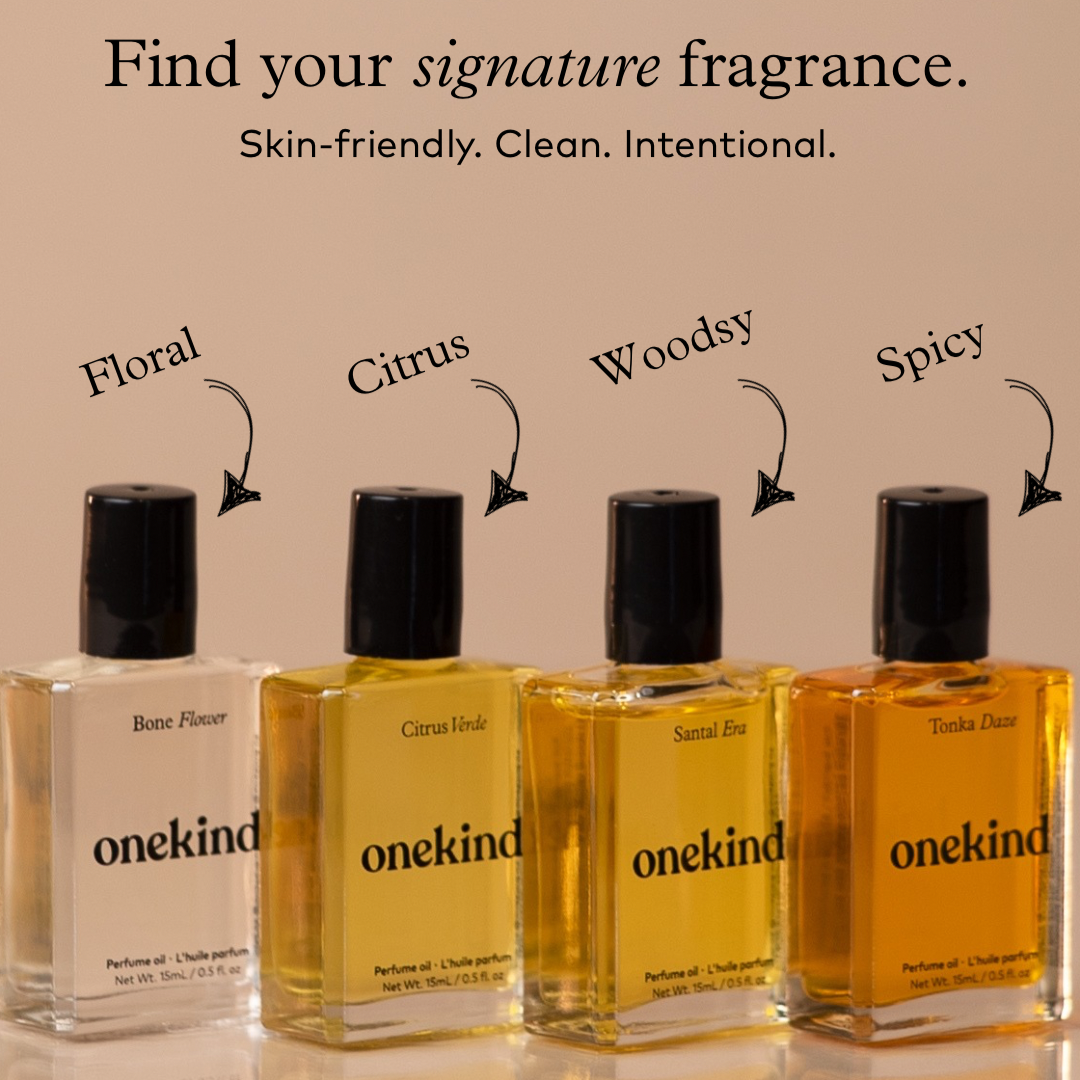
If you are ready to try a santal fragrance, the Santal Era Perfume Oil is Onekind's take on the note -- warm sandalwood layered with amber, musk, and vanilla, in a skin-close oil base rather than an alcohol spray. For a comparison of how perfume oils and sprays behave differently on skin, our breakdown of perfume oil vs. spray covers what changes when you switch the base. And if you want a contrasting warm-sweet take on the fragrance family, Tonka Daze Perfume Oil pairs tonka bean and vanilla with a warmer, more gourmand character.
Sandalwood became the defining fragrance note of the last decade — and most people know it by a different name: santal. When I started paying attention to how people talk about fragrance — not in the perfume industry, but in real life — that word kept coming up. On Reddit threads about "what's that smell in nice hotels." In TikTok comments under videos of people discovering their first cult perfume. In text messages that just say "you smell incredible, what is that?"
Santal became the scent of the decade. And I've spent a lot of time thinking about why.
What Is a Santal Scent?
"Santal" is simply the French word for sandalwood. There's no mystery ingredient — it's not a proprietary note or a synthetic compound. It's sandalwood, named in the language of fine fragrance. But the reason "santal" stuck as a cultural descriptor has more to do with what sandalwood actually smells like than what the word means.
Sandalwood is creamy. It's warm without being heavy. It's woody without being sharp or resinous the way cedar or pine are. It has a faint sweetness that reads as intimate rather than sugary ��� more skin than dessert. And crucially, it's deeply skin-like. When sandalwood is good, it smells less like a perfume you're wearing and more like you — amplified, elevated, like the best version of your natural scent.
That last quality is rare. Most fragrance notes announce themselves. Sandalwood merges with you.
Why Sandalwood Became the Dominant Fragrance Trend
By the mid-2010s Santal had become shorthand for a certain kind of effortless, genderless luxury. People weren't buying it because it smelled like sandalwood; they were buying it because it smelled like something — warm, intimate, sophisticated, impossible to place exactly. It rewarded curiosity. You had to get close to appreciate it.
That shift mattered. Fragrance had spent decades chasing projection — big, loud opening notes that fill a room. Santal was the opposite. It was quiet, skin-close, personal. It matched a broader cultural turn toward understated luxury: less logo, more intention. The word itself started appearing in product names because it signaled something: this is a fragrance for people who know.
What Actually Makes a Sandalwood Perfume Good
Here's where it gets interesting from a product development perspective.
Not all sandalwood is the same. Mysore sandalwood — from Karnataka, India — is considered the gold standard. It's richer, creamier, and more complex than Australian or synthetic sandalwood alternatives. It's also significantly more expensive and harder to source, which is why many "sandalwood" fragrances are built on synthetic substitutes that capture the woody quality but miss the creaminess entirely.
The second variable is what you build around the sandalwood. A sandalwood note on its own can be beautiful but static. What makes a santal scent worth wearing every day is the journey — the way it opens, how it transitions, where it lands on your skin after a few hours. That arc is what separates a memorable fragrance from a pleasant one.

How We Built Santal Era
I'd been thinking about a sandalwood fragrance for a long time before we made Santal Era. The category was crowded, and I didn't want to add another sandalwood scent just to have one. I wanted to make the sandalwood oil I'd actually want to wear — something that had the warmth and intimacy of the best sandalwood fragrances but felt distinctly ours.
The brief I gave myself was: start somewhere unexpected, arrive somewhere inevitable.
We open with sweet violet and a hint of cardamom. Violet is powdery and a little surprising — it gives the opening a soft, almost nostalgic quality that you don't expect from something called a sandalwood fragrance. The cardamom sharpens it, adds a brightness that prevents the violet from feeling too soft. Together they create an opening that makes you pay attention.
From there, the fragrance deepens into warm leather and amber. This is the middle of the scent — the part you experience for the first hour or two on skin. The leather is not aggressive; it's more of a warmth, a suggestion of something rich and lived-in. Amber adds sweetness and weight. This is where Santal Era earns its complexity.
And then the base arrives: sandalwood and soft musk. Creamy, warm, skin-close. After the violet and cardamom open and the leather and amber deepen, the sandalwood landing feels inevitable — like this is where the fragrance was always headed. The musk holds it close to the skin, extends the longevity, and gives it that intimate quality that makes people lean in.
The whole arc takes about four to six hours to fully unfold, and the dry-down — that final sandalwood and musk stage — can linger on skin for eight hours or more.

Why We Made It an Oil
The format wasn't incidental. Alcohol-based spray perfumes have one significant problem: they evaporate. The alcohol carrier launches the fragrance into the air, which is impressive as a first impression but means the scent dissipates faster and dries out skin in the process. The same fragrance in an oil base performs completely differently — it adheres to skin, releases scent gradually, and gets warmer and richer as your skin heats it throughout the day.
Sandalwood in particular responds well to oil. The creaminess of the note is amplified when it's carried in a skin-friendly oil rather than alcohol. When we tested Santal Era in both formats, the oil version was measurably better — more skin-like, longer-lasting, truer to the original brief. If you're new to perfume oils and want to understand the full case for making the switch, we've written a detailed breakdown: 7 Reasons Sensitive Skin Loves Perfume Oils.
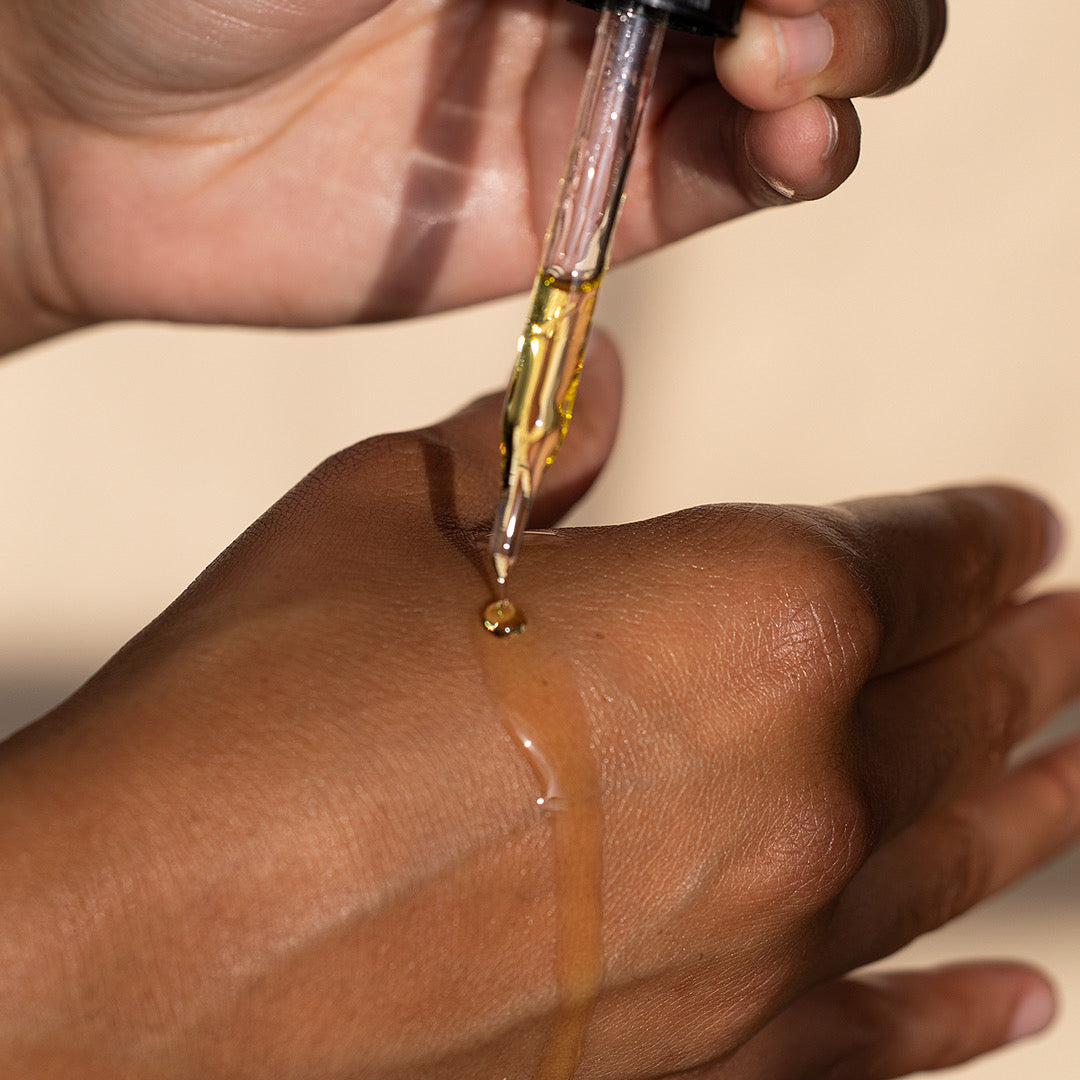
We use fractionated coconut oil as the carrier. It's lightweight, odorless, and absorbs without leaving a greasy feel. The rollerball delivers it directly to pulse points — wrists, neck, inner elbow, collarbone — where body heat activates and amplifies the fragrance throughout the day.
How to Wear Santal Era
Apply to pulse points on clean skin for maximum longevity. Wrists, neck, and inner elbow are the classics. If you want something more subtle, the collarbone and behind the ears create a close, personal sillage rather than projection.
Santal Era also layers well. On its own it's complete — the note pyramid is designed to stand alone. But if you want to customize, it pairs naturally with warmer, spicier fragrances. We've had customers layer it with our vanilla-forward Tonka Daze and report that the combination reads as a warmer, denser amber-sandalwood — something richer than either scent on its own. For the full guide to building a layered signature scent, see How to Layer Perfume Oils.
One practical note: because this is an oil rather than a spray, a little goes further than you'd expect. Start with two or three rolls and build from there.
The Scent That Started a Trend — and Where It's Going
Santal as a fragrance category isn't going anywhere. What's shifting is the expectation level. The first wave of santal popularity came from novelty — people discovering a different way for fragrance to feel. The next wave is about quality and specificity. Customers know what good sandalwood smells like now. They're looking for something with a real point of view.
That's what I tried to build with Santal Era. Not another sandalwood scent, but the one I'd been looking for — with an opening that surprises, a heart that builds, and a dry-down that doesn't let go.
Shop Santal Era Perfume Oil — $65
Frequently Asked Questions
What is a santal scent?
Santal is the French word for sandalwood. A santal scent is a fragrance built around sandalwood as the dominant note — typically warm, creamy, woody, and deeply skin-like. The term became a cultural shorthand for a certain type of understated, genderless luxury fragrance popularized in the 2010s.
What does sandalwood smell like?
Sandalwood smells warm, creamy, and woody — without the sharp or resinous quality of other woods like cedar or pine. It has a faint natural sweetness and a deeply skin-like quality that makes it feel intimate rather than perfume-y. Good sandalwood reads less like something you're wearing and more like an elevated version of your own natural scent.
Is santal the same as sandalwood?
Yes. "Santal" is simply the French word for sandalwood. The two terms refer to the same fragrance note. "Santal" became widely used in product naming because of its association with fine French perfumery — it signals a certain quality and sophistication — but there is no difference in the underlying ingredient.
How long does a sandalwood perfume oil last on skin?
A high-quality sandalwood perfume oil like Santal Era will typically last 6–10 hours on skin. The oil base is the key factor — because it doesn't contain alcohol, it adheres to skin rather than evaporating, releasing scent gradually over hours. The sandalwood and musk dry-down in particular is known for its longevity.
Is sandalwood fragrance gender-neutral?
Yes — sandalwood is one of the most genuinely gender-neutral notes in fragrance. Its warmth and creaminess read as neither masculine nor feminine; it functions more like a skin enhancer than a gendered scent. This is a large part of why santal became so culturally dominant — it works on everyone, and it works differently on everyone depending on their natural skin chemistry.
What notes go well with sandalwood?
Sandalwood pairs naturally with amber and musk (which deepen and extend it), vanilla and tonka bean (which add warmth and sweetness), cardamom and pepper (which brighten and add spice), and leather (which adds depth and complexity). In Santal Era, we built around violet and cardamom on the top, leather and amber in the heart, with sandalwood and musk anchoring the base.
What is the difference between a sandalwood perfume oil and a sandalwood spray perfume?
The main differences are longevity, skin feel, and how the scent develops. Spray perfumes use alcohol as the carrier, which evaporates quickly and launches fragrance into the air — giving a strong first impression that fades faster. Perfume oils use a skin-safe carrier oil (like coconut oil) that adheres to skin, releases scent slowly over hours, and amplifies the creaminess of sandalwood in a way alcohol doesn't. Oil-based sandalwood fragrances tend to feel more intimate and skin-close.
Matt Ruggieri is the Co-founder and Head of Product Development for Onekind. With over 15 years of experience, Onekind makes skin-friendly perfume oils and skincare products developed for sensitive skin.

If you are ready to try a santal fragrance, the Santal Era Perfume Oil is Onekind's take on the note -- warm sandalwood layered with amber, musk, and vanilla, in a skin-close oil base rather than an alcohol spray. For a comparison of how perfume oils and sprays behave differently on skin, our breakdown of perfume oil vs. spray covers what changes when you switch the base. And if you want a contrasting warm-sweet take on the fragrance family, Tonka Daze Perfume Oil pairs tonka bean and vanilla with a warmer, more gourmand character.
If you are ready to try a santal fragrance, the Santal Era Perfume Oil is Onekind's take on the note -- warm sandalwood layered with amber, musk, and vanilla, in a skin-close oil base rather than an alcohol spray. For a comparison of how perfume oils and sprays behave differently on skin, our breakdown of perfume oil vs. spray covers what changes when you switch the base. And if you want a contrasting warm-sweet take on the fragrance family, Tonka Daze Perfume Oil pairs tonka bean and vanilla with a warmer, more gourmand character.
Written by Matt Ruggieri, Co-Founder & Head of Product Development at Onekind, with 15+ years of experience in beauty product formulation and development.