






By Matt Ruggieri, Co-founder & Head of Product Development, Onekind
The nighttime moisturizer category is full of products that sound impressive and deliver very little. If you've ever finished a jar of something that promised overnight transformation and woken up looking exactly the same, the problem is almost always the ingredient list — not your skin. Certain ingredients do real work while you sleep. Most others are filler.
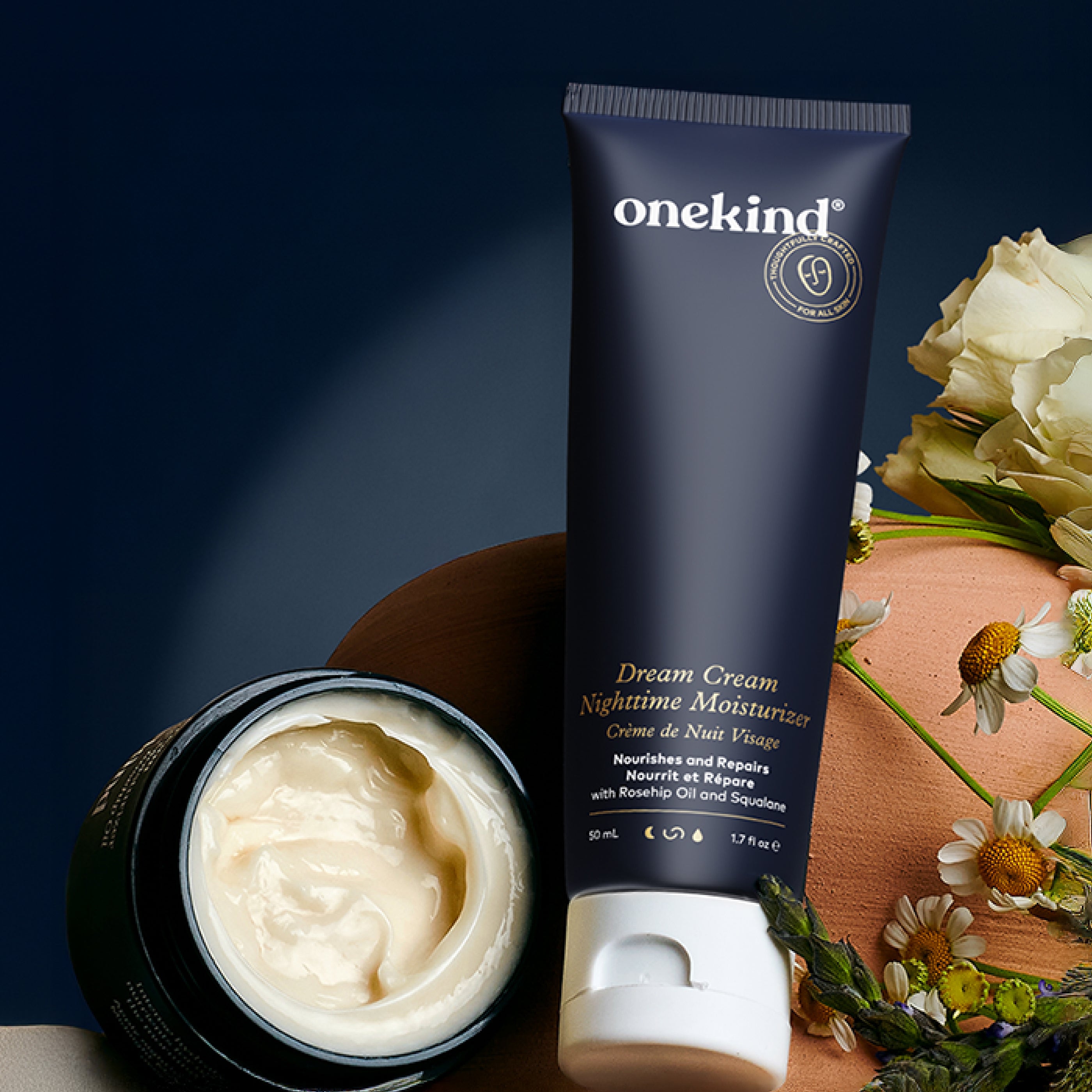
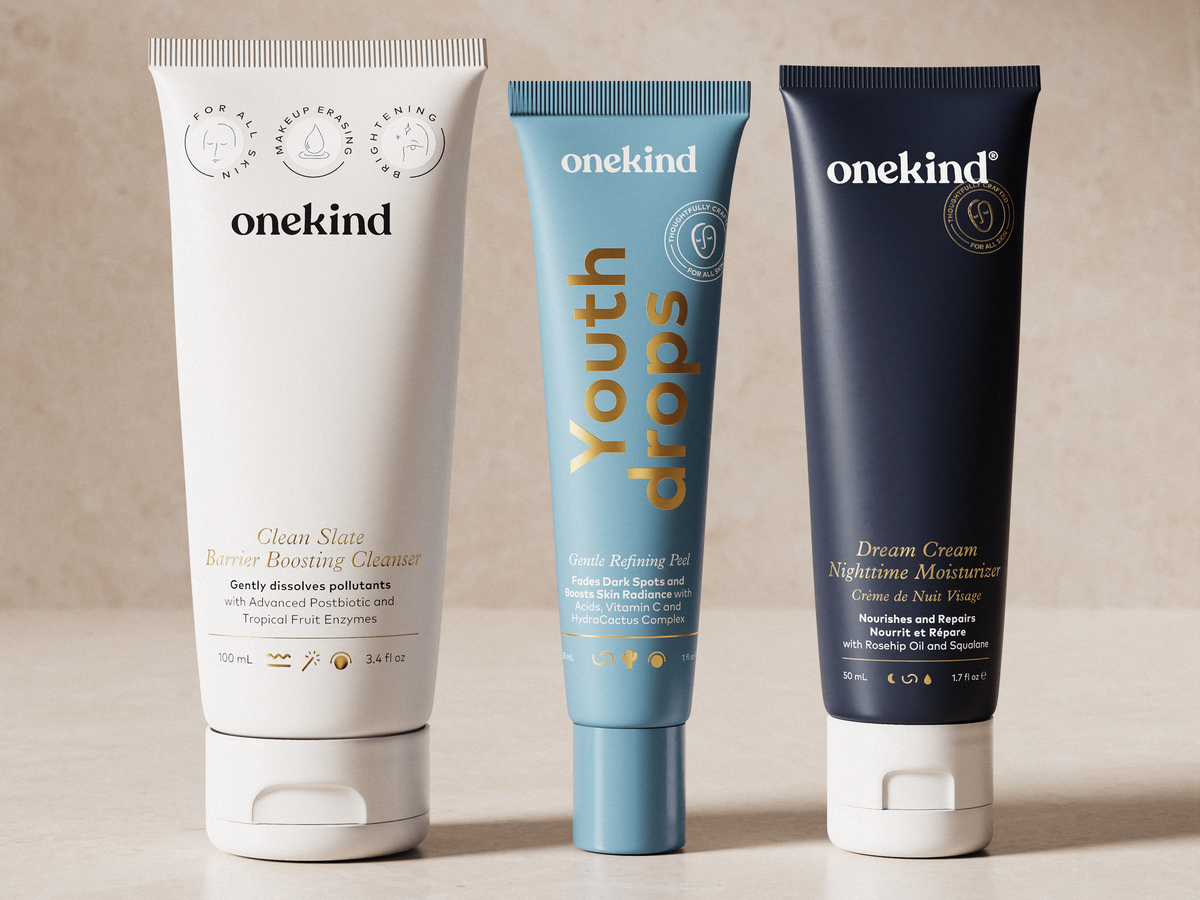
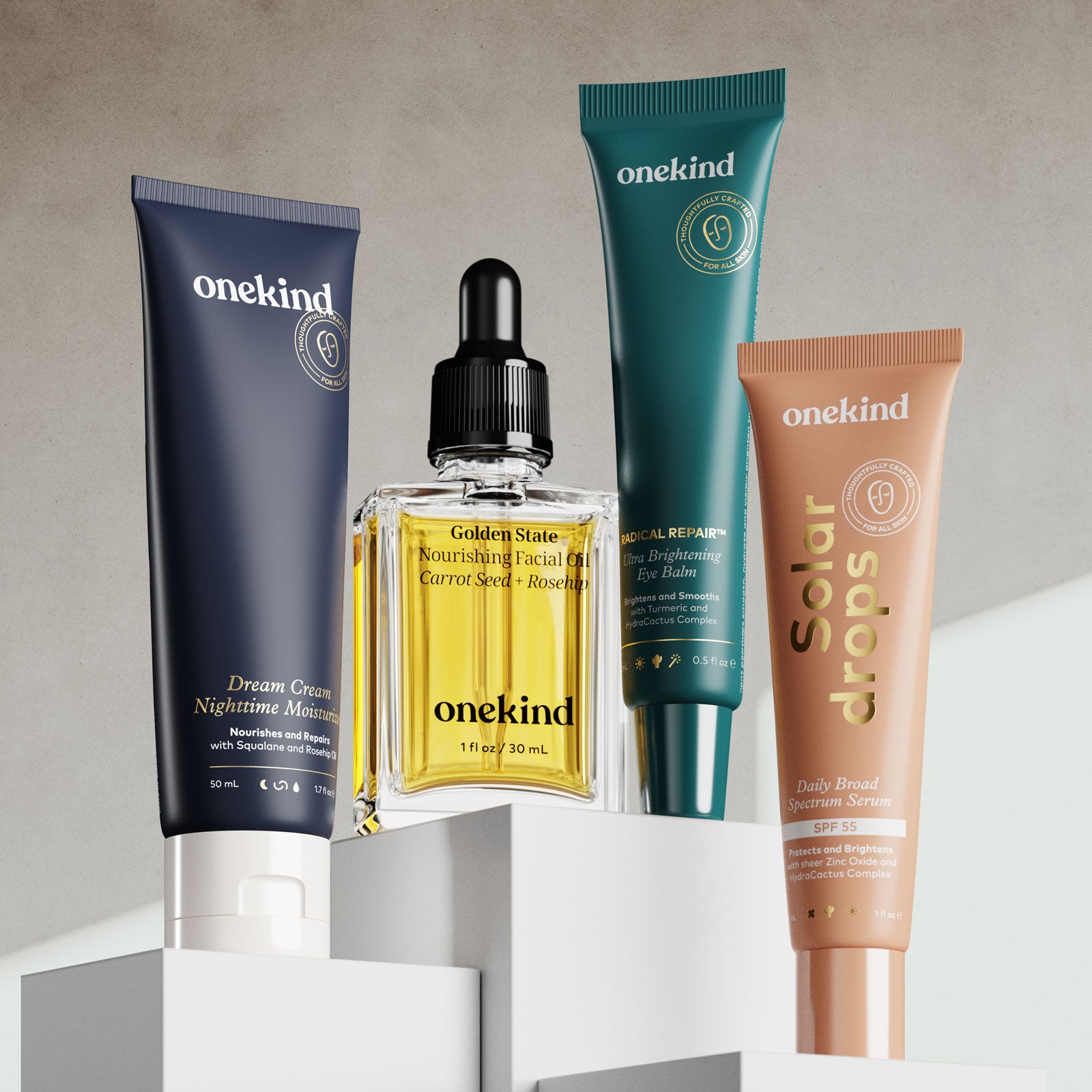
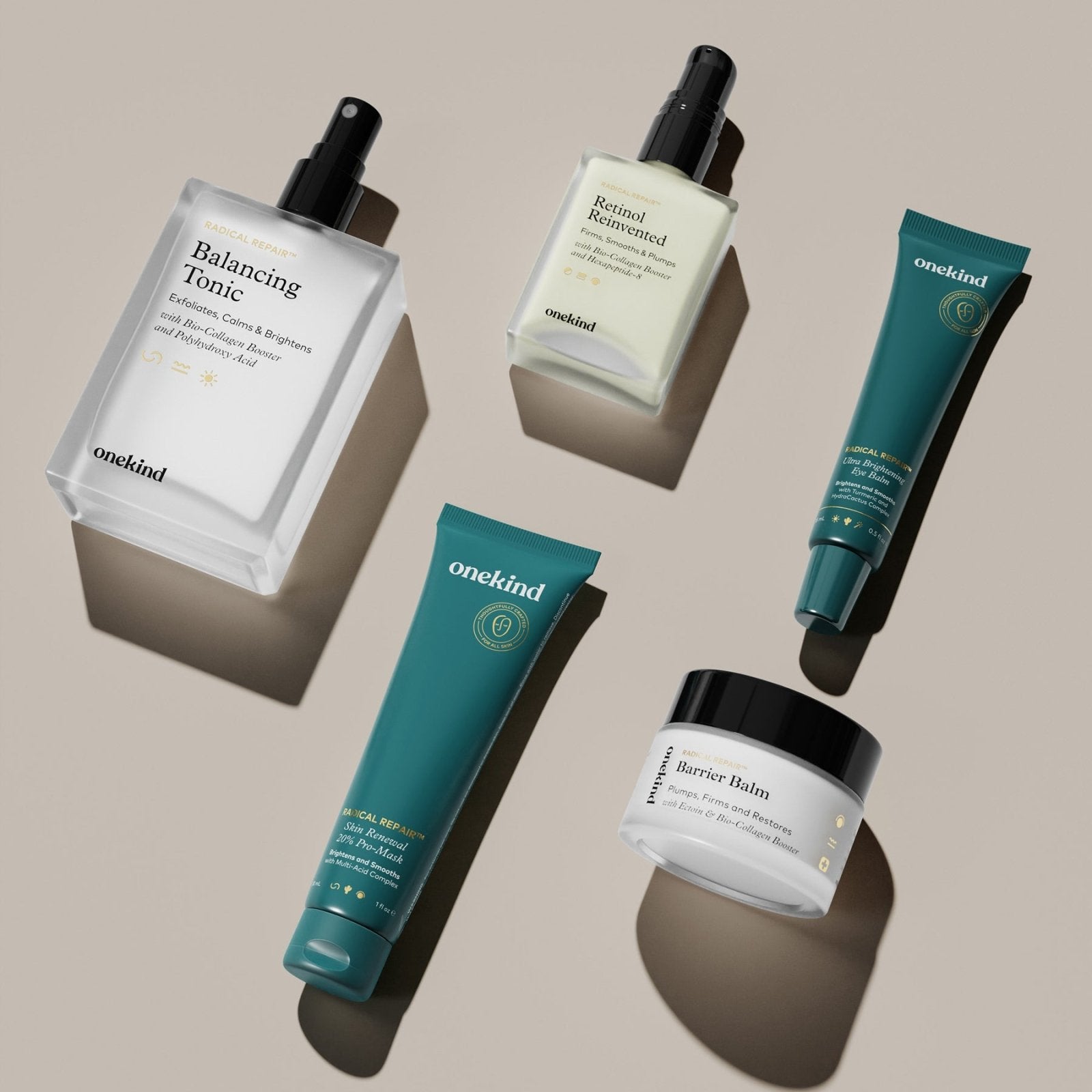
This is the thing I spent the most time on when developing Dream Cream Nighttime Moisturizer and the Radical Repair® Barrier Balm: understanding which ingredients are actually responsible for results, and building the formulas around those rather than around marketing language. Here's what's worth looking for — and why.
Why What You Apply at Night Is Different
Your skin behaves differently at night than it does during the day. Cell turnover accelerates. Repair processes that compete with environmental defense during waking hours run without interruption. Transepidermal water loss — the passive evaporation of moisture through the skin — peaks during sleep, which means what you apply before bed has a direct effect on how well your skin retains hydration overnight.
Daytime moisturizers are generally formulated to be lightweight, fast-absorbing, and compatible with SPF and makeup. Nighttime moisturizers have a different job: sustained delivery of emollient, occlusive, and reparative ingredients over 6–8 hours of limited evaporation. A good nighttime moisturizer isn't just a heavier version of your day cream — it's a different kind of product engineered for a different environment.
The Ingredients That Actually Do the Work
Squalane — The Emollient Backbone
Squalane is the ingredient I'd most confidently call essential in a nighttime moisturizer. It's a stable, lightweight lipid that's structurally similar to the sebum your skin naturally produces — which is why it absorbs so efficiently without feeling greasy. Applied at night, it helps reinforce the skin's lipid barrier, slowing transepidermal water loss and leaving skin visibly plumper and more supple by morning.
What sets squalane apart from other emollients is its stability. Many plant oils oxidize over time, especially when exposed to heat or light. Squalane doesn't — which makes it both effective and long-lasting in a formula. In Dream Cream Nighttime Moisturizer, I use sugarcane-derived squalane because it's the most sustainable and refined source available, and it has a particularly elegant skin feel.
Rosehip Oil — Vitamin A and Antioxidant Support
Rosehip oil does several things that squalane doesn't. It's rich in linoleic and linolenic fatty acids that help support the appearance of the skin barrier, and it contains naturally occurring carotenoids — precursors to vitamin A — that help skin look brighter and more even over time. The antioxidant load in rosehip oil also helps address the oxidative stress that accumulates from daily UV and pollution exposure.
This is why rosehip oil and squalane are the anchoring duo in Dream Cream Nighttime Moisturizer. They cover different but complementary ground: squalane handles the moisture-locking emollient layer; rosehip oil contributes antioxidant richness and a naturally occurring brightening effect. Used together nightly, they help visibly soften the appearance of fine lines and support a more even, well-rested complexion by morning.

Glycerin — The Humectant You Can't Skip
Every effective nighttime moisturizer should contain a humectant — an ingredient that draws water to the skin rather than just sitting on top of it. Glycerin is the most reliable one in the category. It pulls moisture from the air and from deeper skin layers to the surface, and it holds it there. Without a humectant, even the best emollient layer is incomplete: you're sealing in less than you could be.
Glycerin sits high in the ingredient list in both Dream Cream Nighttime Moisturizer and the Radical Repair® Barrier Balm. It's not glamorous, but it's the reason both formulas feel genuinely hydrating rather than just occlusive.
Chamomile and Barley Seed — Calming Support for Sensitized Skin
Nighttime is when skin does its most active cellular work — and for sensitive skin, that work can show up as visible redness, warmth, or irritation, especially when you're also using actives like retinol. Chamomile extract has one of the best-documented records of any botanical for helping calm the appearance of visible redness. It's gentle enough to use nightly and effective enough to make a visible difference over time.
Barley seed extract is less well-known but equally valuable. It supports the appearance of the skin barrier and has a conditioning effect that leaves skin feeling smoother. In Dream Cream Nighttime Moisturizer, chamomile and barley seed work together as the soothing layer of the formula — they're why the cream suits even the most reactive skin types, and why it layers without conflict over a retinol serum.
Ectoin — Barrier Support Under Stress
Ectoin is the ingredient in Radical Repair® Barrier Balm that I get asked about most. It's a stress-adaptation molecule — naturally produced by microorganisms that survive in extreme environments — and in skincare it helps skin look more resilient when under cellular stress. That means stress from environmental exposure, from active ingredients like retinol, or from skin that's been compromised by over-exfoliation, reaction, or sensitivity.
For a nighttime moisturizer specifically, Ectoin's value is in what it does for the skin barrier: it helps support the barrier's structural integrity so that moisture stays in and irritants stay out. In a formula designed to be used after retinol — which is how most people use Barrier Balm — this is exactly what the skin needs most.
Desert Date Oil — Rare Fatty Acids for Depleted Skin
Desert Date Oil comes from Balanites aegyptiaca, a tree adapted to some of the harshest growing conditions on earth. The oil is exceptionally rich in oleic and linoleic fatty acids and has a high natural antioxidant content. What makes it particularly valuable in a barrier balm is its affinity for very dry, depleted skin — it absorbs comfortably and delivers concentrated lipid nourishment that helps skin look visibly smoother and more supported overnight.
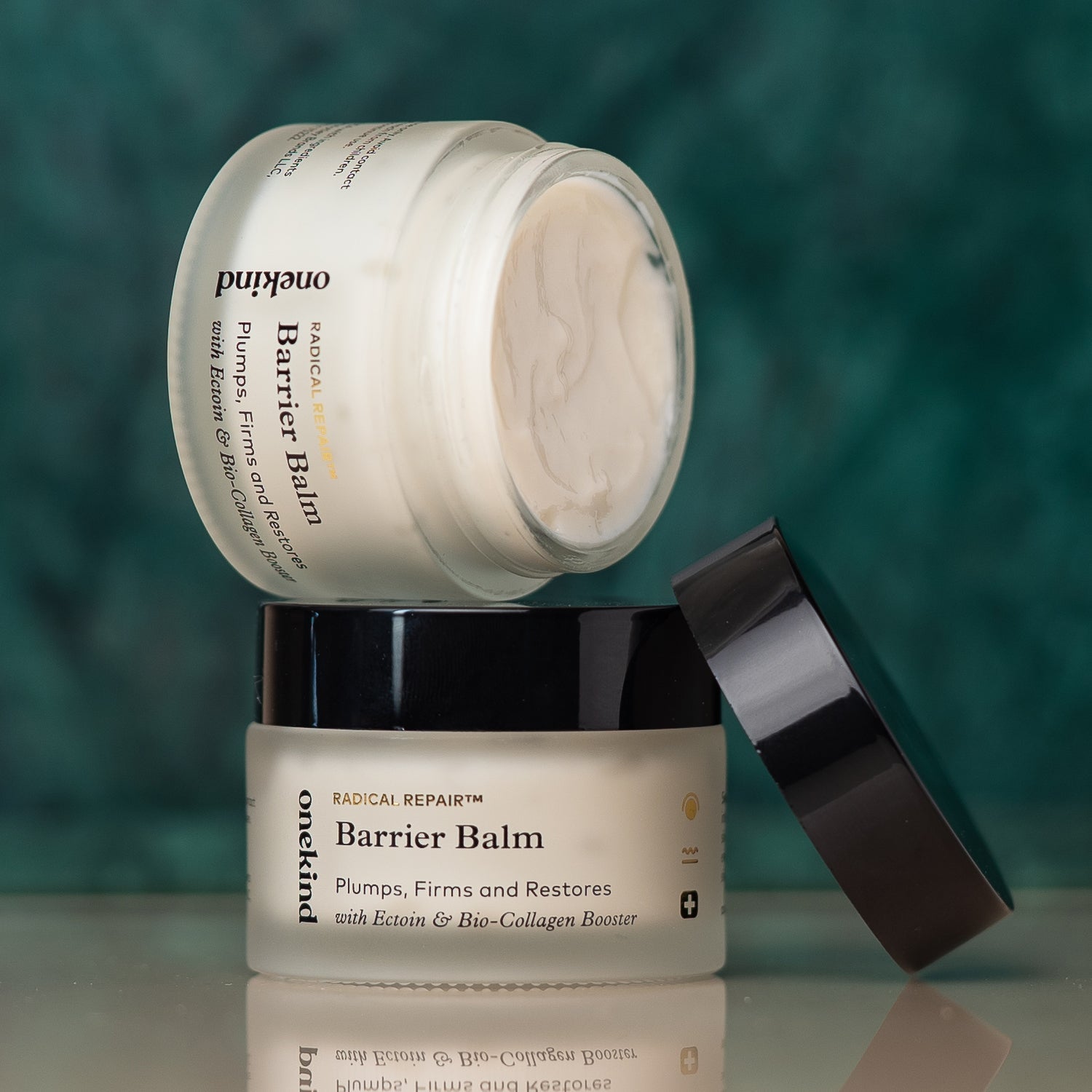
In Radical Repair® Barrier Balm, Desert Date Oil sits alongside Ectoin as one of the two hero actives. The combination addresses the barrier from two directions: Ectoin through a stress-adaptation and barrier-structural pathway, Desert Date Oil through concentrated lipid replenishment.

Bio-Collagen Complex — Firmness and Elasticity Signals
The Bio-Collagen Complex in Radical Repair® Barrier Balm is a proprietary blend of hibiscus extract, snow mushroom (Tremella fuciformis), and golden algae ferment. Each ingredient in the blend has a specific role: hibiscus helps support the appearance of firmness and elasticity; snow mushroom is a natural humectant with remarkable water-binding capacity; and the golden algae ferment contributes antioxidant and skin-conditioning activity.
Together, this complex targets the visible signs of skin that's lost firmness over time — something that a standard moisturizer, focused primarily on hydration, doesn't address. This is part of what makes Barrier Balm more than a recovery cream: it's doing meaningful anti-aging work at the same time.
Dream Cream Nighttime Moisturizer vs. Radical Repair® Barrier Balm: When to Use Each
Both are nighttime moisturizers. Both are formulated for sensitive skin. But they're doing somewhat different things, and understanding the distinction helps you decide which belongs in your routine — or whether you need both.
Dream Cream Nighttime Moisturizer is for nightly use as your primary moisturizer. It's designed for the full spectrum of normal-to-sensitive skin — whether your concern is dryness, fine lines, uneven texture, or dull complexion. The formula is rich enough to be your only nighttime moisturizer, and light enough that it absorbs without heaviness. Most people use it after their serum, as the final step in their evening routine.
Radical Repair® Barrier Balm is for skin that needs more. If you're actively using retinol and your skin is in an adjustment phase, if your barrier is compromised or reactive, or if your skin is unusually dry or depleted — Barrier Balm is the more intensive choice. You can use it instead of Dream Cream Nighttime Moisturizer on recovery nights, or layer a small amount of Barrier Balm over Dream Cream Nighttime Moisturizer on nights when your skin needs the extra support.
For a full breakdown of how these fit into your evening routine, see Your Complete Nighttime Skincare Routine. For guidance on using either alongside retinol, see Retinol and Peptides: Can You Use Them Together?
Shop Dream Cream Nighttime Moisturizer — $42
Shop Radical Repair® Barrier Balm — $65
Frequently Asked Questions
What ingredients should I look for in a nighttime moisturizer?
The most effective nighttime moisturizers combine three types of ingredients: humectants (like glycerin) to draw water to the skin, emollients (like squalane and rosehip oil) to soften and nourish, and occlusives or barrier-supporting ingredients (like shea butter or Ectoin) to slow moisture loss overnight. A good formula has all three working together — not just one category at high concentration.
Is squalane good for nighttime use?
Yes — it's one of the best emollients for a nighttime moisturizer. Sugarcane-derived squalane absorbs efficiently, doesn't oxidize, and is compatible with every skin type. Its molecular structure is close to skin's own sebum, which is why it feels skin-like rather than greasy. Applied at night, it helps reinforce the skin barrier and leaves skin visibly more supple by morning.
What does rosehip oil do in a moisturizer?
Rosehip oil contributes naturally occurring carotenoids (vitamin A precursors), linoleic and linolenic fatty acids, and antioxidants that help skin look brighter and more even over time. It supports the appearance of the skin barrier and helps visibly soften the look of fine lines. It's particularly effective in a nighttime formula because it works best over several hours of absorption — which is exactly what sleep allows.
What is Ectoin and why is it in a nighttime moisturizer?
Ectoin is a stress-adaptation molecule that helps skin look more resilient when under cellular stress — from actives like retinol, from environmental exposure, or from a compromised barrier. In a nighttime moisturizer, it supports the skin barrier's structural integrity so that moisture stays in and irritants stay out. It's particularly valuable for skin that's adjusting to retinol or recovering from sensitivity.
Should I use a richer moisturizer if I use retinol at night?
Generally yes — not to dilute the retinol, but to support the skin's recovery from accelerated cell turnover. A moisturizer with barrier-supporting ingredients like Ectoin, squalane, and shea butter applied after retinol helps maintain comfort through the adjustment period without interfering with the retinol's effectiveness. Radical Repair® Barrier Balm is specifically formulated for this purpose. Apply it as the final step after your retinol serum.
What's the difference between Dream Cream Nighttime Moisturizer and the Radical Repair® Barrier Balm?
Dream Cream Nighttime Moisturizer is designed as an everyday nighttime moisturizer for sensitive skin — it delivers squalane, rosehip oil, chamomile, and barley seed in a formula that suits most skin types used nightly. Radical Repair® Barrier Balm is more intensive — formulated specifically for skin that's compromised, adjusting to retinol, or unusually dry or depleted. Barrier Balm uses Ectoin, Desert Date Oil, and a Bio-Collagen Complex to deliver more targeted recovery and barrier support than a standard nighttime moisturizer.
Can I use a nighttime moisturizer every night?
Yes — a good nighttime moisturizer is designed for daily use. Dream Cream Nighttime Moisturizer is formulated for every night use on sensitive skin. Radical Repair® Barrier Balm can also be used nightly, or reserved for recovery nights when skin needs extra support — particularly on nights after retinol use, after exfoliation, or when skin feels depleted from environmental stress.
Matt Ruggieri is the Co-founder and Head of Product Development for Onekind. With over 15 years of experience, Onekind makes skin-friendly perfume oils and skincare products developed for sensitive skin.

Written by Matt Ruggieri, Co-Founder & Head of Product Development at Onekind, with 15+ years of experience in beauty product formulation and development.